Ebola Outbreak: WHO Declares ‘Emergency Of International Concern’.

New York; May 2026: The World Health Organisation (WHO) has declared the outbreak of Ebola in Africa an international health emergency. In a statement released today (Monday – 18th May 2026; IST), the world body has added that it (Ebola0 has not yet met the criteria for a pandemic.
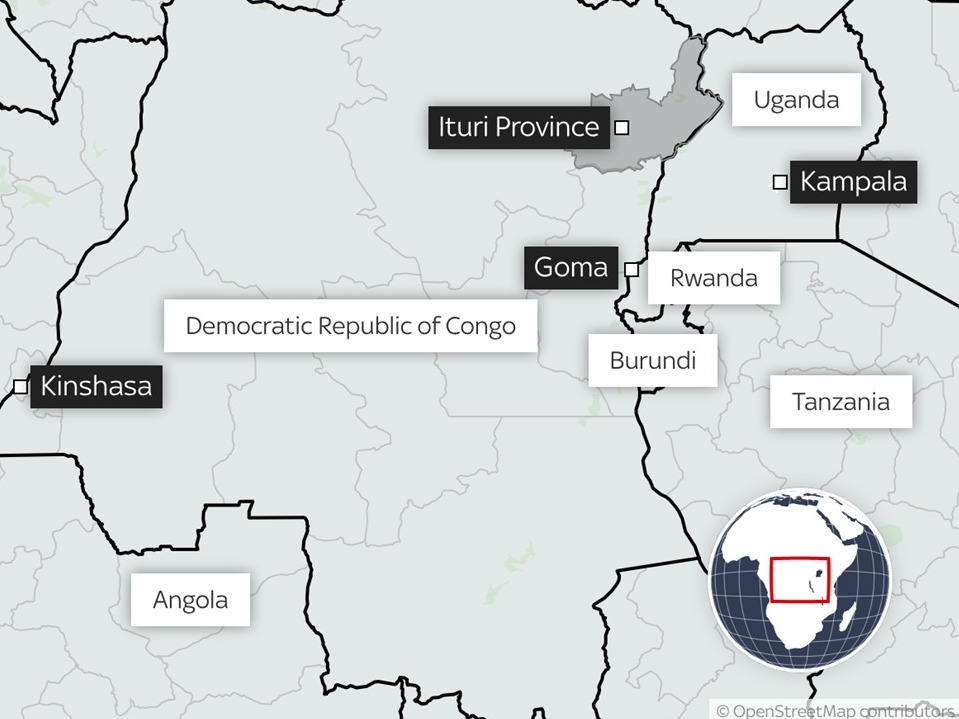
However, WHO has warned that there was a public health risk to other states through the international spread of the disease, with it having already spread from the Democratic Republic of Congo to Uganda.
The WHO said: “Neighbouring countries sharing land borders with the Democratic Republic of the Congo are considered at high risk for further spread due to population mobility, trade and travel linkages, and ongoing epidemiological uncertainty”. It also called for international cooperation and coordination to understand and deal with the outbreak.
The WHO has said there are, as of 16th May, 80 suspected deaths and 246 suspected cases. These are in the Ituri Province of the Democratic Republic of Congo, but at least two lab-confirmed cases, including 01 death, have been found in Kampala, Uganda.
This comes as the WHO has admitted there are ‘significant uncertainties’ in the true number of infected people and the spread of the disease. It also said that there were unusual clusters of community deaths with symptoms compatible with the dangerous Bundibugyo virus- including at least four healthcare worker deaths. Patient zero is thought to be a nurse in the DRC who, on 24 April, presented with symptoms including fever, vomiting and bleeding.
Difference Between An International Health Emergency And A Pandemic –
The World Health Organisation has declared this Ebola outbreak in Africa a public health emergency of international concern (PHEIC). However, the health body said that the spread had not yet hit the threshold for a pandemic, as defined by the International Health Regulations (IHR). The IHR defines what countries are supposed to prevent, prepare for and respond to and according to them, here are the differences between a PHEIC and a pandemic:
PHEIC – This is among the strongest global alerts the WHO can make, but it is a step down from a pandemic emergency.
A PHEIC; what’s been declared in relation to this Ebola outbreak, is defined by two strands, according to the IHR. An ‘extraordinary event’ that constitutes a public health risk to other states through the international spread of disease; And one that potentially requires a coordinated international response.
This is what we’re seeing currently, with the Ebola outbreak having spread beyond the Democratic Republic of Congo.
Pandemic Emergency – Many people’s impression of a pandemic will be the COVID outbreak that hit much of the globe in recent years. A pandemic emergency builds on a PHEIC, according to the IHR. It is a PHEIC that is caused by a communicable disease and:
Has, or is at high risk of having, a high geographical spread; Is exceeding, or at high risk of exceeding, the capacity of the health systems in the affected states; Is causing, or at high risk of causing, substantial social and/or economic disruption; And requires rapid, equitable and enhanced coordinated international action with whole-government and whole-society approaches.
The World Health Body has further asserted that the Ebola outbreak is fuelled by dangerous virus that has no vaccine or treatment. The ongoing Ebola outbreak is caused by the Bundibugyo virus. At present, there are no Bundibugyo virus-specific therapeutics or vaccines available, the World Health Organisation said.
As such, it described the current outbreak as ‘extraordinary’. This is in contrast to the Ebola-Zaire virus, which has caused all but one of the country’s previous Ebola outbreaks and has approved treatments.
BUNDIBUGYO VIRUS –
- Ebola is a zoonotic disease, meaning it is caught from wild animals. Bundibugyo is a rare and deadly virus that is spread by contact with the blood or bodily fluids of an infected person, the US Centres for Disease Control and Prevention (CDC) said.
- The virus can also be caught from contact with contaminated objects (clothes, bedding, needles and medical equipment), or animals infected with it (bats).
- Symptoms include: fever, headache, muscle pain, weakness, diarrhoea, vomiting, stomach pain, and unexplained bleeding or bruising (a late stage of illness).
- Historically, the Bundibugyo virus has death rates ranging from 25-50%, the CDC said.
- The Bundibugyo virus was first detected in Uganda’s Bundibugyo district during a 2007-2008 outbreak that infected 149 people and killed 37; The second time was in 2012, in an outbreak in Isiro, Congo, where 57 cases and 29 deaths were reported.
Team Maverick.





Parliament Paralysed for Second Day as Opposition Protests Over NEET Leak, Student Crackdown
New Delhi, July 2026 : Parliament remained deadlocked for the second consecutive day of th…

Parliament Paralysed for Second Day as Opposition Protests Over NEET Leak, Student Crackdown
New Delhi, July 2026 : Parliament remained deadlocked for the second consecutive day of …