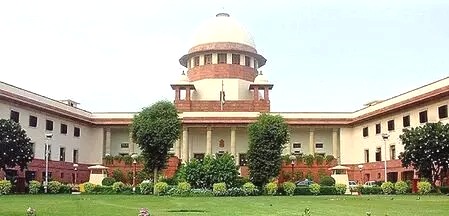
Supreme Court Declines to Entertain PIL Seeking Uniform Wage Framework for Temple Priests and Staff

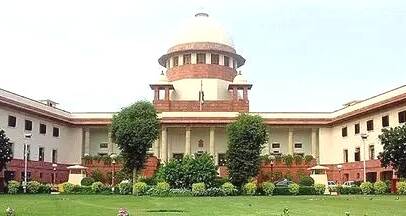
New Delhi, May 2026 : The Supreme Court of India on Monday refused to entertain a public interest litigation (PIL) seeking directions for the creation of a uniform wage and welfare framework for priests, sevadars and temple staff working in government-controlled temples across the country.
A Bench comprising Justices Vikram Nath and Sandeep Mehta expressed its unwillingness to interfere in the matter and declined to examine the petition filed by advocate Ashwini Upadhyay, who appeared before the court in person.
During the hearing, the apex court indicated that it was not inclined to consider the issue through judicial intervention. Following the court’s observations, Upadhyay sought permission to withdraw the petition while requesting liberty to approach the appropriate authorities or government bodies for relief.
Accepting the request, the Bench led by Justice Vikram Nath dismissed the plea as withdrawn.
“The petitioner seeks permission to withdraw the plea with liberty to approach the appropriate authorities. The petition is dismissed as withdrawn,” the Supreme Court recorded in its order.
The petition had urged the Centre and state governments to constitute either a judicial commission or an expert committee to examine the wages, service conditions and welfare measures applicable to priests, sevadars and temple employees working in temples managed or controlled by state authorities.
It also sought a declaration that priests and temple workers should be treated as “employees” under Section 2(k) of the Code on Wages, 2019. According to the plea, such recognition would entitle them to statutory minimum wages and labour welfare protections available to other categories of workers.
The petitioner argued that once governments assume administrative, financial and operational control over temples, an employer-employee relationship effectively comes into existence between temple authorities and the priests or staff serving there.
The plea claimed that in many states, priests and temple workers continue to survive on “arbitrary honorariums, dakshina-based payments and meagre remuneration”, often receiving between Rs 1,000 and Rs 5,000 per month without access to pension, healthcare, insurance or other forms of social security.
Referring to laws governing temple administration in states such as Tamil Nadu, Andhra Pradesh, Telangana, Karnataka and Kerala, the petition contended that governments exercise extensive control over temple management, including appointments, disciplinary supervision, service conditions and administration of temple revenues.
Despite this control, the petition argued, temple staff are denied labour protections and welfare benefits ordinarily available to employees in other sectors.
The plea also invoked constitutional guarantees under Articles 14 and 21, asserting that denial of fair wages and dignified livelihood violates the fundamental rights of priests and temple workers.
According to the petition, many temple employees continue to work under economically vulnerable conditions despite performing regular religious and administrative duties essential to temple functioning.
The petitioner further referred to earlier judicial observations, including remarks made by the Allahabad High Court regarding payment of minimum wages to temple workers, and argued that the issue had nationwide significance requiring intervention by the apex court.
However, the Supreme Court ultimately chose not to examine the merits of the case and allowed the petitioner to pursue the matter before appropriate authorities outside the judicial forum.
Team Maverick.
Preserve Maharashtra’s Saint Heritage, Develop Pilgrimage Centres: CM Devendra Fadnavis
Revised Development Plans for Gangakhed, Amravati and Katol Approved; ₹115 Crore Projects …
Preserve Maharashtra’s Saint Heritage, Develop Pilgrimage Centres: CM Devendra Fadnavis
Revised Development Plans for Gangakhed, Amravati and Katol Approved; ₹115 Crore Projects Get Green …