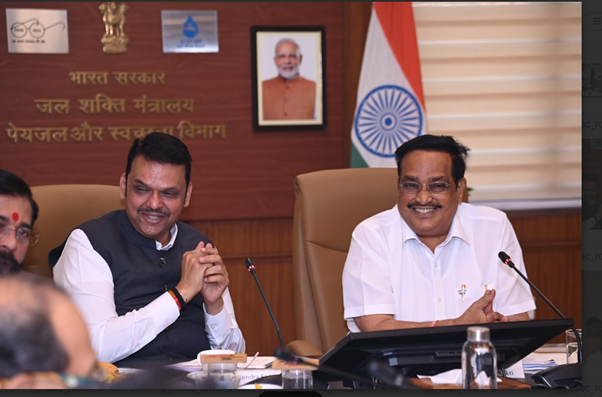
Union Minister of Jal Shakti C. R. Patil Reviews Drinking Water and Water Resources sector in Maharashtra

Centre and State Align Strategies for Long-Term Water Security and Drought Mitigation in Maharashtra
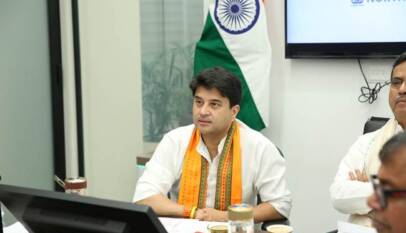
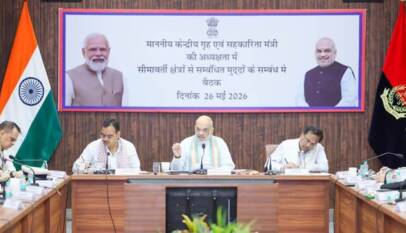
The Ministry of Jal Shakti convened a high-level review meeting with the State of Maharashtra today, to assess the progress of rural drinking water supply schemes, water resources, irrigation infrastructure, at DDWS office, New Delhi.
The meeting was chaired by Union Minister of Jal Shakti, Shri C. R. Patil in the presence of Chief Minister of Maharashtra, Shri Devendra Fadnavis; and Deputy Chief Ministers, Shri Eknath Shinde and Smt. Sunetra Pawar.
The high-level review meeting was also attended by Maharashtra Minister for Water Resources, Shri Radhakrishna Vikhe Patil; Minister for Water Resources (Tapi, Vidarbha, and Konkan), Shri Girish Mahajan; Minister for Water Supply and Sanitation, Shri Gulabrao Patil; and senior officials from both the Central and State governments, including Shri V. L. Kantha Rao, Secretary, Department of Water Resources, River Development and Ganga Rejuvenation and Shri Ashok K. K. Meena, Secretary, Department of Drinking Water and Sanitation.
During the meeting, detailed reviews were conducted regarding the implementation status of major Central Government schemes in Maharashtra, including Jal Jeevan Mission (JJM), Jal Sanchay Se Jan Bhagidari and Pradhan Mantri Krishi Sinchai Yojana (PMKSY).
Addressing the meeting, Union Minister of Jal Shakti Shri C. R. Patil emphasised that Jal Sanchay Jan Bhagidari must be taken up on priority as a people-led movement for groundwater recharge, source sustainability and long-term water security. He noted that while large infrastructure such as dams and canals plays an important role in carrying water to command areas, many villages and farms located away from canal networks continue to face water stress. In such areas, small, low-cost and community-owned recharge structures can provide immediate and visible benefits.
Shri Patil also emphasised the need to integrate water conservation efforts with the Jal Jeevan Mission, stating that long-term water security cannot be achieved through pipeline infrastructure alone without ensuring sustainable water sources.
Referring to global assessments, the Minister noted that studies by the World Bank have also underlined the importance of sustainable water management and source strengthening, highlighting that improved access to safe and reliable water under JJM has the potential to reduce economic losses and enhance community resilience. He added that water conservation efforts not only support long-term water availability but also contribute to improved public health and reduced expenditure, complementing findings from international organisations.
Shri Patil further noted the positive social impact of improved water availability, especially in reducing the burden on women and lowering health-related expenses. He urged district administrations to implement these initiatives in mission mode with continuous monitoring, cautioning against underestimating the impact of small-scale works. He also called for stronger coordination between the Centre and States to advance water conservation as a national priority.
In addition to ensuring drinking water access, Shri Patil stressed the need to enhance water availability for irrigation, promoting the vision of “Har Ghar Jal” alongside “Har Khet Pani.” He encouraged states to integrate various schemes and develop comprehensive proposals for effective implementation. Addressing concerns raised regarding financial contributions from rural communities, particularly in water-scarce regions, he underscored the need for balanced solutions that ensure tangible benefits such as infrastructure support.
Referring to discussions held in the meeting on April 30, the Minister stated that financial and technical aspects are being carefully assessed, with inputs from all stakeholders. He concluded by affirming that sustained efforts, coordinated planning, and community participation will be key to achieving long-term water security in the country.
Referring to Maharashtra’s JalTara model, the Minister highlighted that even a simple recharge pit filled with stones, can help recharge a significant quantity of rainwater into the ground at a very low cost per structure. He observed that if one or two such structures are created on a farm, farmers are able to see the results themselves and are encouraged to replicate the model voluntarily. Such decentralised water conservation structures, he said, can also support Jal Jeevan Mission by strengthening drinking water sources in areas where source sustainability remains a concern.
He further informed that Jal Sanchay Jan Bhagidari, launched in September 2024, has seen rapid progress and efforts are underway to reach more structures by the end of May 2026.
He urged Ministers, officers, government employees and citizens owning agricultural land to create at least one water conservation structure on their land and report the same, so that the initiative becomes a truly collective movement. He also underlined the need for convergence with VB-G RAM G, CSR support, community contribution and local government resources, especially in critical, semi-critical and water-stressed areas.
He highlighted that village runoff often flows into drains, rivers and eventually into the sea without being used locally. By creating recharge bores, recharge wells, farm ponds, percolation structures and small pits at appropriate locations, this water can be guided back into the ground. He cited the example of Gujarat’s Banaskantha region, where community participation and large-scale recharge structures helped improve groundwater conditions and revive dry wells, benefiting farmers directly.
He said that the coming years will require focused action on water conservation, especially in view of growing drinking water, irrigation and groundwater challenges. He called upon States and districts to prioritise Jal Sanchay Jan Bhagidari as a practical, low-cost and scalable approach to ensure that rainwater is conserved locally, groundwater is recharged and rural drinking water sources are made sustainable.
Speaking during the review meeting on implementation of major water sector schemes in Maharashtra, Chief Minister Shri Devendra Fadnavis stated that the discussions were highly productive and comprehensive. He said that the State Government would systematically address all identified gaps and shortcomings and ensure stronger support for drought-prone regions through future budgetary provisions. Emphasising the importance of Jan Bhagidari, he noted that Maharashtra continues to face recurring drought conditions and therefore water conservation must become a people’s movement. He appreciated the ongoing efforts related to Jal Sanrakshan, rainwater harvesting, source sustainability and groundwater recharge, and reiterated that the State Government’s vision is fully aligned with the objectives of the Central Government.
While highlighting the river-linking projects as a long-term solution for water security, CM Fadnavis mentioned that completion of the proposed projects could significantly benefit drought-prone areas of Maharashtra. He further stated that studies and technical preparations undertaken since 2016 are nearing implementation stage and stressed the need for substantial Central Government support, multi-source financing and inter-State coordination for timely execution of these long-term projects.
While setting the context for the meeting, Shri V. L. Kantha Rao, Secretary, DoWR, RD, and GR stated that considerable progress has been achieved in the implementation of irrigation projects under Pradhan Mantri Krishi Sinchai Yojana (PMKSY) and Special Package for Maharashtra. He requested the state government to provide adequate funds and complete the pending projects. He assured that central assistance will be released immediately on receipt of demand from state government. Further, various irrigation projects and intra-state river-linking project etc. are being technically examined as part of long-term water resource planning for Maharashtra.
Shri Ashok K.K Meena, Secretary, DDWS, shared key operational aspects related to water quality, monitoring and project implementation. It was noted that water quality testing and remedial action activities were progressing smoothly up to 2024–25; however, with increasing demand, the pace of testing has slowed in some areas. He said that emphasis was laid on expediting water quality testing at the PHED level to ensure regular and robust monitoring.
The Secretary further highlighted the importance of strengthening institutional mechanisms, stating that District Water and Sanitation Mission (DWSM) meetings should be conducted regularly on a monthly basis under the chairmanship of District Collectors. It was observed that in 13 districts, no meetings had been held since December, and it was decided to engage with the concerned collectors to ensure consistency and accountability in this regard.
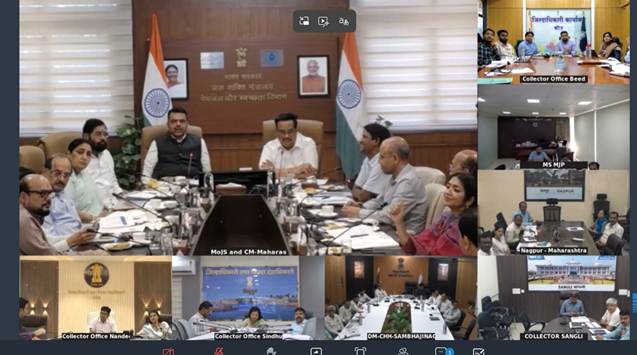
With regard to infrastructure development, Shri Ashok K.K Meena underlined the need for close coordination with committees for dam-related projects and stated that works would be taken up on an accelerated basis.
Shri Parag Jain-Nainutia, Principal Secretary, Water Supply and Sanitation Department, Maharashtra, highlighted key aspects related to water availability, monitoring systems, and project implementation. He informed that continuous efforts are being made to strengthen water availability planning, with a focus on improving technical assessments and on-ground validation to ensure efficient implementation of schemes.
Emphasising the adoption of technology, he shared that IoT (Internet of Things)-based monitoring systems are being introduced to enhance real-time tracking of motor operations and system performance. This initiative has received in-principal approval from the Government of India and implementation has already commenced, marking a significant step towards smart water management.
Shri Parag Jain further informed that Multi-Village Schemes (MVS) have been taken up on priority to expand drinking water coverage across a larger number of villages. He noted that while leveraging advanced technology, due consideration is being given to maintaining a balanced and cost-effective approach, ensuring that essential monitoring systems such as pressure monitoring are effectively integrated without adding unnecessary complexity.
On the implementation front, he stated that a substantial number of project processes have been successfully completed. Efforts are ongoing to ensure timely completion of all remaining works.
A virtual interaction was held with Municipal Commissioners, District Collectors, Zilla Panchayat CEOs and District Forest Officers of Maharashtra to review progress on the ground and address implementation challenges.
Smt. Archana Verma, Additional Secretary & Mission Director, National Water Mission, apprised the distinguished gathering about Jal Sanchay Jan Bhagidari (JSJB), an initiative for intensified community action for creation of artificial rain water structures for groundwater recharge. She emphasised that Maharashtra has already shown the way through schemes like the Jal Yukt Shivir. She also requested for upload of such structures on the JSJB portal.
After that, through a detailed presentation, Shri Sumant Narain, Joint Secretary, National Water Mission, mentioned that the core objective of JSJB is to upgrade over-exploited water districts to semi-critical status by deploying low-cost water conservation solutions. He highlighted that the strategy relies on the transformational “3Cs” framework: Community participation, low Cost, and Corporate Social Responsibility (CSR) and, after that, he shared the implementation strategy. The progress of JSJB in Maharashtra was also reviewed.
Shri Kamal Kishore Soan, AS&MD, National Jal Jeevan Mission, made detailed presentation on vision and objective of JJM 2.0 as well as the district wise progress on various parameters of Jal Jeevan Mission.
In the presentation Shri Kamal Kishore Soan, outlined a strategic roadmap transitioning from asset creation under JJM to long-term sustainable service delivery under JJM 2.0. This new paradigm focuses on crucial structural reforms to guarantee the permanent functionality of existing water schemes, with a core vision of transforming Gram Panchayats (GPs) and Village Water and Sanitation Committees (VWSCs) into independent micro-utilities.
The Mission Director flagged critical structural and digital governance lags requiring immediate corrective action by District Collectors and the State Water and Sanitation Mission (SWSM). In this regard, immediate prioritisation was demanded to secure 100% coverage of public institutions and tribal habitations, expand Third-Party Inspection Agency checks, and fast-track the formal commissioning and handover of village schemes.
To ensure focused implementation, target-driven mandates were outlined for various administrative heads across the state. District Magistrates, Collectors, and Zilla Parishad CEOs were mandated to aggressively mobilise local resources by converging VB-G RAM G and corporate CSR funds to build scientific, community-driven rainwater harvesting and water recharge structures across all government buildings.



Vaibhav Suryavanshi’s 97 Powers Rajasthan Royals to 47-Run Win Over SRH, Enter IPL 2026 Qualifier 2
Delhi, May 2026 : Rajasthan Royals (RR) delivered a commanding all-round performance to de…
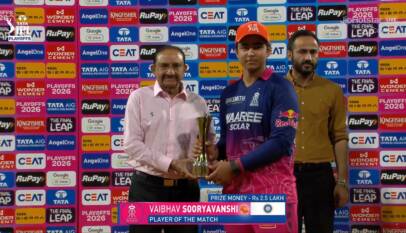
Vaibhav Suryavanshi’s 97 Powers Rajasthan Royals to 47-Run Win Over SRH, Enter IPL 2026 Qualifier 2
Delhi, May 2026 : Rajasthan Royals (RR) delivered a commanding all-round performance to defeat …