Ireland To Take Over EU Presidency From Tomorrow, As Tenure Of Cyprus Concludes Today.

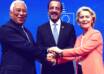
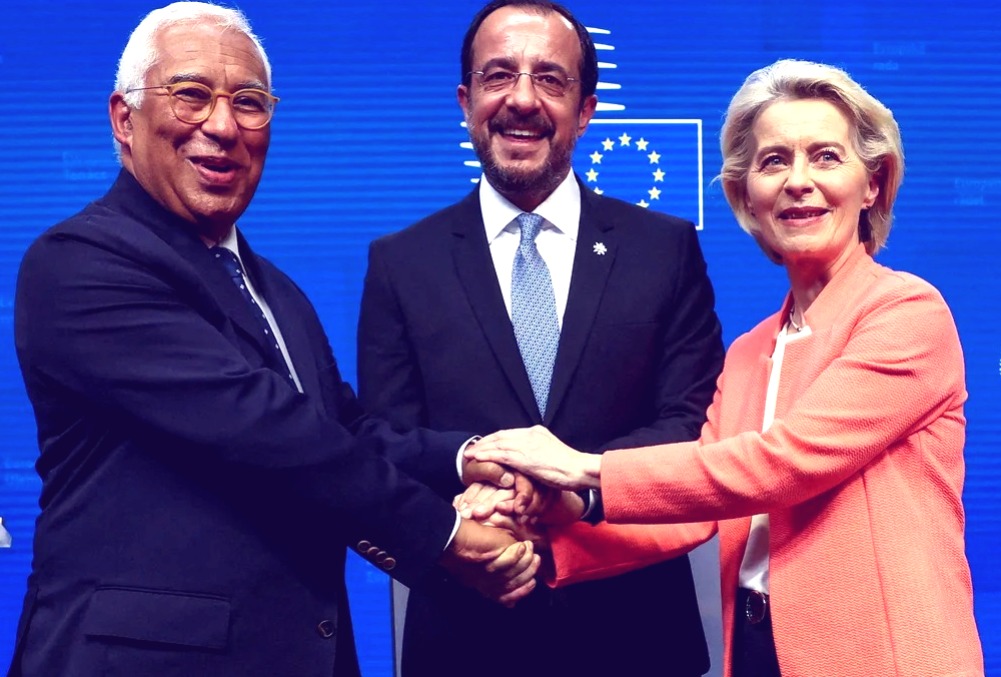
Brussels; June 2026: Cyprus presidency of the EU Council comes to an end today (Tuesday – 30th June 2026), and will be taken over by Ireland from tomorrow (Wednesday – 01st July). In the past six months from January 01st 2026, the Cyprus presidency has held 03 summits, 19 informal ministerial meetings and 52 formal ministerial meetings. The presidency went very smoothly, with President Nikos Christodoulides receiving congratulations and praise from the president of the European Council Antonio Costa and the president of the European Commission Ursula von der Leyen.
Costa praised the presidency for its achievements in the area of enlargement (such progress had not been seen in years, said von der Leyen) and for paving the way for budgetary negotiations. “You and your team can be very proud of what has been achieved”, said von der Leyen after giving a list of these achievements, which included agreements on a number of omnibuses, a common European system of returns, and air passenger rights. It was high praise indeed for the Cyprus presidency which got things done and showed that its public employees, when put under pressure, can work very efficiently.
When Cyprus took over the presidency, it had announced that it would work for “a more autonomous union”, a rather nebulous objective. “This is Europe’s moment to define and reshape its future through an assertive autonomy trajectory”, said the presidency, explaining that it had set five “overarching priorities” that would lead to greater autonomy, security and defence readiness, competitiveness, open to the world, a union of values that leaves no-one behind, a long-term budget.
These were excessively ambitious plans, which would take a single state years to achieve and a union of 27 states with different agendas much longer than six months. There had been a tendency by Christodoulides and his spokesmen to exaggerate the plans and achievements of the Cyprus presidency, many of which existed in the realm of theory. Cyprus did not bring the EU closer to the Middle East, nor had it given practical effect to the mutual assistance clause. And if we carried out a realistic assessment, we would realise that the EU is not more autonomous now than it was on December 31, 2025.
These grand ambitions that could never be realised and the excessive importance attached to Cyprus administrative role was totally unnecessary. Our presidency did not reshape the future of Europe but it was extremely successful in ensuring everything went smoothly and providing a very competent administration of the presidency. It also had practical achievements to show, such as real progress on enlargement, the pact on migration and asylum and the revision of the Air Passengers Rights regulation, which had been in negotiation for 13 years.
These were real achievements, proof that Cyprus technocrats and ministers did an excellent job these last six months for which they deserve our congratulations.
Ireland’s Presidency in practice –
Ireland’s Presidency will involve an extensive programme of EU activity. Most of the formal work will take place in Brussels and Luxembourg, where the Irish Presidency will chair around 180 Council preparatory bodies, such as working parties and committees.
Ireland will also host a significant programme of events, with full details due to be announced closer to the start of the Presidency. These are expected to include:
- 22 informal Council meetings of ministers.
- European Political Community summit with up to 47 Heads of State and Government attending what will be the largest gathering of international leaders ever held in Ireland.
- An informal meeting of the European Council.
- Around 250 conferences, political events and stakeholder engagements.
- Additional events organised by universities, cultural institutions, civil society and business groups.
“This Presidency is not just about meetings and negotiations; it is about reconnecting people with what Europe means in their lives”, said Helen McEntee TD, Minister for Foreign Affairs and Trade.
Many Presidency‑related events will take place in Dublin, with venues such as Dublin Castle, Farmleigh House and Government Buildings expected to play central roles. Cork and other towns across the country will also host key events.
Ireland will form a Presidency trio with Lithuania and Greece, following the current trio of Poland, Denmark and Cyprus. Trio partners cooperate for 18 months to develop a shared programme that sets the priorities and themes for the period.
Ireland’s broad thematic priorities for its presidency will align with the EU’s Strategic Agenda 2024-29 agreed by European leaders in late 2024, framed around three pillars: Values, Security, and Competitiveness.
Among the key issues likely to feature are:
- Enlargement: The EU’s possible expansion, particularly in light of Russia’s war in Ukraine. Ireland supports a merit-based process for countries such as Ukraine and Moldova, arguing that enlargement strengthens peace and prosperity across Europe.
- Competitiveness: Efforts to make the EU economy more innovative and better able to compete globally. A report by former European Central Bank President Mario Draghi in 2024 warned that the EU faces a widening innovation and productivity gap unless it acts decisively.
- Security and defence: Russia’s invasion of Ukraine has reshaped European security policy and there are serious concerns about the EU’s ability to defend itself. Ireland has increased defence spending while maintaining its policy of military neutrality, and supports EU cooperation in this area.
- Multiannual Financial Framework: Negotiations on the EU’s long-term budget for 2028–2034 are expected to be among the most demanding tasks of the Irish Presidency. The European Commission tabled its proposal in July 2025, and Ireland will aim to advance talks decisively during its six-month term.
While the Presidency’s focus is firmly on institutional and legislative work, it also provides an opportunity to highlight Irish culture and develop community links with Ireland’s European neighbours. A programme of engagement is being developed for the Irish Presidency that includes:
Irish counties are being matched with individual EU Member States, allowing communities to connect directly and build lasting links with European partners.
Ambassadors of Member States in Ireland and Irish Ambassadors based across the EU will visit schools, libraries, sports clubs and community groups to take part in local events and discussions.
A cultural programme to showcase Irish creativity through events, performances, and initiatives in Ireland and Europe.
Youth engagement activities like youth assemblies, school and university visits, and structured dialogue across the country, allowing young people to learn about the EU and share their views on important issues.
Team Maverick.
PM Modi Presents Handcrafted Indian Treasures to Seychelles Leadership, Showcasing India’s Rich Cultural Heritage
New Delhi, June 2026 : Prime Minister Narendra Modi presented a carefully curated collecti…
PM Modi Presents Handcrafted Indian Treasures to Seychelles Leadership, Showcasing India’s Rich Cultural Heritage
New Delhi, June 2026 : Prime Minister Narendra Modi presented a carefully curated collection …