BJP Set to Reach Record Strength in Rajya Sabha After Bengal Bypolls, NDA Tightens Grip Ahead of Monsoon Session

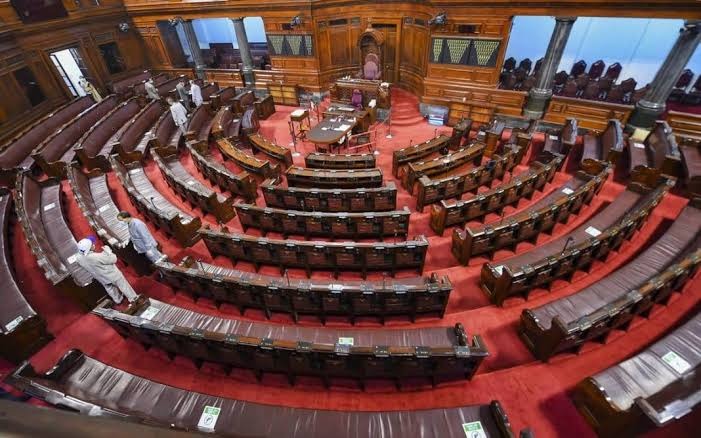
New Delhi, July 2026 : The Bharatiya Janata Party (BJP) is poised to significantly strengthen its position in the Rajya Sabha following the upcoming by-elections in West Bengal, bringing the party within touching distance of a simple majority in the Upper House ahead of the politically crucial Monsoon Session of Parliament.
The three Rajya Sabha by-elections, scheduled for July 24, are expected to boost the BJP’s numbers after three former Trinamool Congress (TMC) members resigned from the Upper House and later joined the saffron party. Political observers believe the BJP is well placed to secure all three seats, which would raise its tally in the Rajya Sabha to 117 members, the highest in the party’s history.
With the addition of these seats, the BJP would be just six members short of the simple majority mark of 123 in the current effective strength of the Rajya Sabha. The ruling National Democratic Alliance (NDA) is expected to see its combined strength rise to around 152 members, giving it a stronger position to push through key legislative business.
The bypolls have assumed added significance as the Centre prepares to introduce several major legislative proposals during the Monsoon Session. Among the expected agenda items are reforms related to delimitation of parliamentary constituencies, implementation of the Women’s Reservation Act, and the government’s proposed ‘One Nation, One Election’ framework.
The vacancies in West Bengal were created after former TMC Rajya Sabha MPs Sushmita Dev, Sukhendu Sekhar Roy and Prakash Chik Baraik resigned from the Upper House before joining the BJP. Following the political realignment in the state, the BJP is widely expected to win all three seats without facing a serious electoral challenge.
The anticipated gains would mark another milestone for the BJP, which has steadily expanded its presence in the Rajya Sabha over the past decade. The last time a single political party enjoyed an outright majority in the Upper House was in 1986, when the Congress, under then Prime Minister Rajiv Gandhi, commanded the required numbers.
While the NDA’s enhanced strength would make it easier to pass ordinary legislation, constitutional amendments remain a more complex challenge. Such bills require the support of two-thirds of the members present and voting in the House. If the full effective strength of the Rajya Sabha participates, approximately 166 votes would be required to secure passage of a constitutional amendment.
Even so, the projected increase in numbers is expected to provide the ruling alliance with greater legislative flexibility and reduce its dependence on support from non-NDA parties for routine lawmaking.
With the Monsoon Session expected to witness intense political debate over several key reforms, the BJP’s anticipated gains in the Rajya Sabha are likely to strengthen the government’s ability to advance its legislative agenda while consolidating its influence in Parliament.







Habuild at 6: ‘We Are Not Just Teaching Yoga, We Are Helping Millions Build Lifelong Healthy Habits’
As Habuild celebrates six years of transforming lives through wellness, its founder reflec…

Habuild at 6: ‘We Are Not Just Teaching Yoga, We Are Helping Millions Build Lifelong Healthy Habits’
As Habuild celebrates six years of transforming lives through wellness, its founder reflects on …