India Clears Five More S-400 Squadrons to Strengthen Air Defence Shield Under Mission Sudarshan Chakra

New Delhi, July 2026 : India has approved the acquisition of five additional S-400 Triumf air defence squadrons, doubling its fleet to ten and significantly enhancing the country’s integrated air and missile defence capability. The move, cleared by the Defence Acquisition Council (DAC) chaired by Defence Minister Rajnath Singh, forms part of a broader ₹2.38 lakh crore defence modernisation package aimed at strengthening the armed forces against emerging aerial threats.
The approval grants the Acceptance of Necessity (AoN) for the procurement of the additional S-400 systems, with the overall acquisition expected to cost between ₹50,000 crore and ₹1 lakh crore, depending on the final negotiations. The package includes the missile systems, associated infrastructure, training, spares and long-term maintenance support.
With this decision, India will become one of the largest operators of the Russian-made S-400 Triumf system outside Russia. The original contract, signed in October 2018 for ₹39,000 crore, covered five squadrons. Of these, three are already operational, the fourth has been delivered, and the fifth is expected to be inducted by the end of this year.
The expansion comes amid growing emphasis on strengthening India’s air defence network following evolving regional security challenges. Defence planners believe the S-400’s long-range surveillance and interception capabilities will play a pivotal role in countering advanced fighter aircraft, cruise missiles, ballistic missiles, drones and other aerial threats.
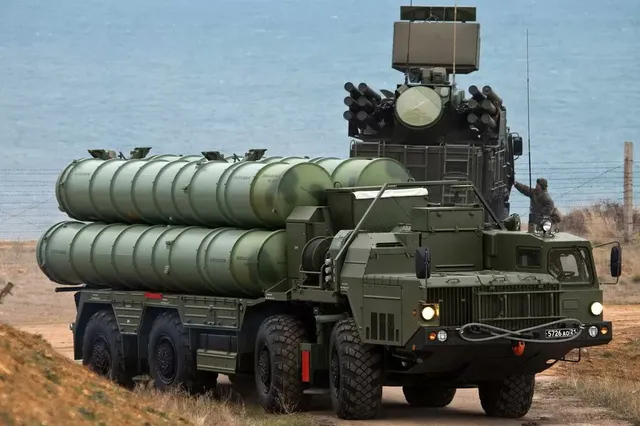
Each S-400 squadron comprises 16 specialised vehicles, including command-and-control units, sophisticated radar systems and missile launchers. Organised into two batteries with six launchers each, a squadron can deploy up to 128 missiles with engagement ranges extending from 120 kilometres to 400 kilometres, enabling layered defence against multiple airborne targets simultaneously.
The S-400’s strength lies in its ability to employ different categories of interceptor missiles for varying operational requirements. The 40N6E missile provides long-range interception of high-value airborne assets at distances of up to 400 kilometres, while the 48N6 missile is designed to engage fighter aircraft and ballistic missiles. The 9M96E2 interceptor targets stealth aircraft and cruise missiles, whereas the 9M96E missile is optimised for drones, helicopters and precision-guided weapons.
The additional procurement forms a crucial component of Mission Sudarshan Chakra, India’s long-term plan to establish a comprehensive national air defence shield by 2035. The mission seeks to integrate imported and indigenous air defence systems into a unified network capable of protecting strategic military installations, critical infrastructure and major population centres against a wide spectrum of aerial threats.
As part of this integrated architecture, the S-400 will operate alongside India’s Integrated Air Command and Control System (IACCS), enabling real-time coordination between surveillance assets, radars and interceptor missiles during large-scale or saturation attacks. Future integration with DRDO’s indigenous Project Kusha long-range air defence programme is also expected to enhance operational flexibility by introducing domestically developed interceptor missiles with ranges of up to 400 kilometres.
The broader ₹2.38 lakh crore defence package approved by the government also includes procurement of 60 medium transport aircraft to replace the ageing AN-32 fleet, acquisition of four squadrons of remotely piloted strike aircraft, induction of 300 Dhanush artillery guns, overhaul of Su-30MKI fighter aircraft engines, and deployment of advanced tracked air defence systems integrated with the indigenous AkashTeer command-and-control network.
Operationally, India has already deployed S-400 systems in strategically sensitive sectors, including the Siliguri Corridor, Pathankot, Rajasthan and Gujarat, providing enhanced protection along both the western and northern frontiers. The induction of additional squadrons is expected to expand coverage against simultaneous threats from Pakistan and China while strengthening India’s overall deterrence posture.
The expansion also aligns with the government’s objective of reducing dependence on overseas support through the establishment of a dedicated maintenance and sustainment ecosystem for the S-400 within India. Such localisation is expected to improve operational readiness while supporting the country’s broader Aatmanirbhar Bharat initiative in the defence sector.
Globally, the S-400 remains one of the world’s most advanced long-range surface-to-air missile systems. Besides Russia, countries such as China, Turkey and Belarus have inducted the platform, while India continues to expand its deployment as part of its evolving air defence architecture.
With the approval of five additional squadrons, India has taken another significant step towards building a robust, multi-layered air defence network capable of addressing future challenges, including drone swarms, hypersonic weapons, cruise missiles and other next-generation aerial threats, while reinforcing the country’s long-term strategic preparedness.
(The content of this article is sourced from a news agency and has not been edited by the Mavericknews30 team.)






Chief Minister Rekha Gupta inaugurates 45 new Ayushman Jan Arogya Mandirs from Shakurpur
Over 415 Ayushman Jan Arogya Mandirs are bringing quality healthcare closer to people’s ho…
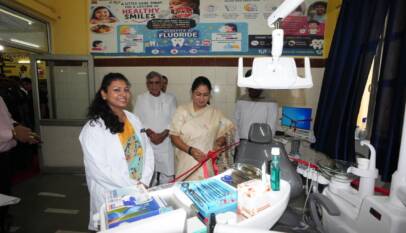
Chief Minister Rekha Gupta inaugurates 45 new Ayushman Jan Arogya Mandirs from Shakurpur
Over 415 Ayushman Jan Arogya Mandirs are bringing quality healthcare closer to people’s homes: …