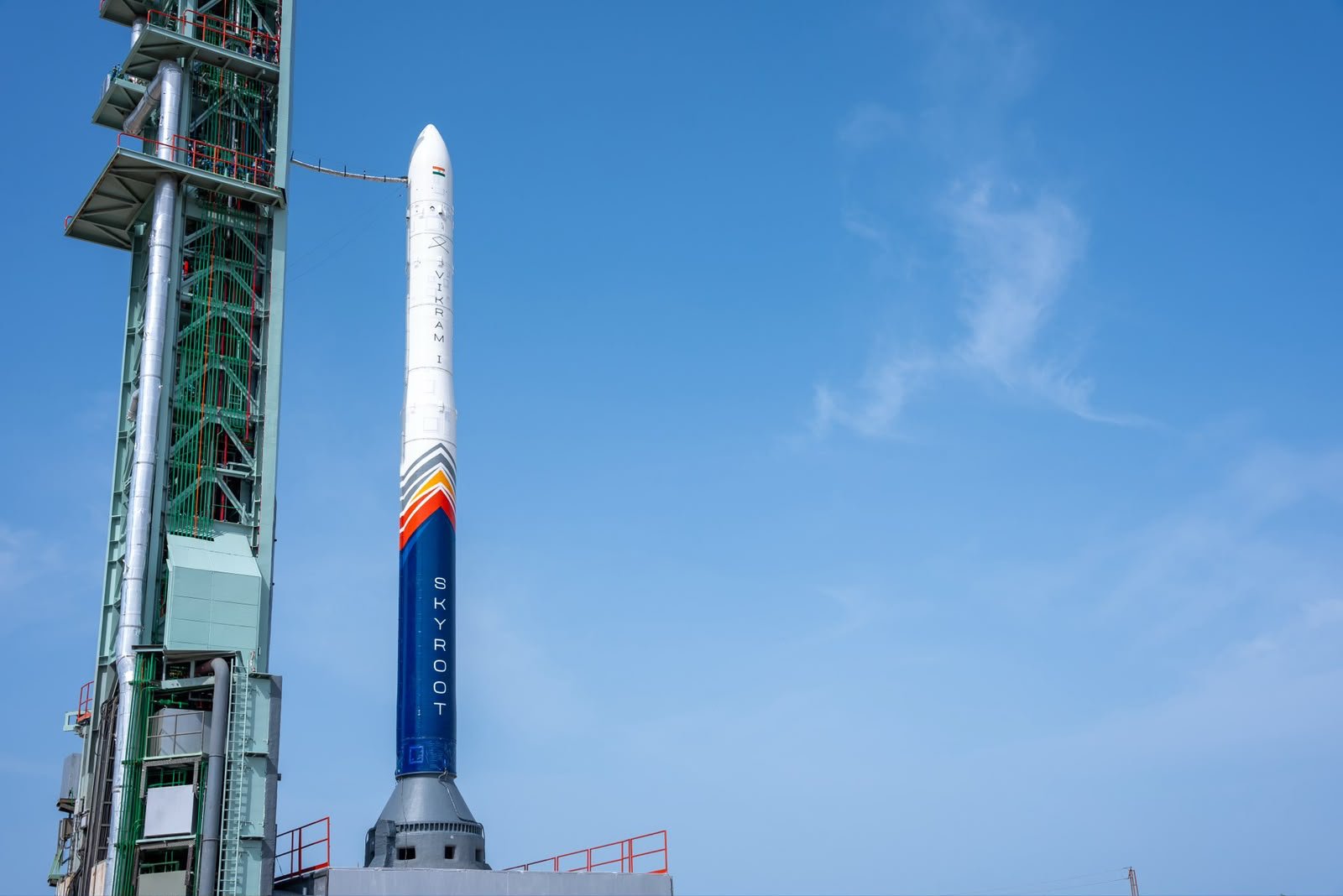
Skyroot’s Vikram-1 Set for Historic Launch, Marking India’s First Private Orbital Mission

New Delhi, July 2026 : Hyderabad-based space startup Skyroot Aerospace is poised to script a new chapter in India’s space journey with the launch of Vikram-1, the country’s first privately developed orbital launch vehicle. The mission, titled Mission Aagaman, is scheduled for liftoff at 11:30 a.m. on Saturday from the First Launch Pad at the Satish Dhawan Space Centre (SDSC-SHAR) in Sriharikota, Andhra Pradesh.
The mission is being hailed as a landmark moment for India’s rapidly growing private space sector, as Vikram-1 aims to become the first orbital rocket designed, built and launched by an Indian private company. A successful flight would place India among a select group of nations with private companies capable of independently launching satellites into orbit, significantly boosting the country’s commercial space ambitions.
Ahead of the launch, Skyroot Aerospace confirmed that all required airspace and maritime clearances have been obtained. Authorities have also declared restricted airspace and maritime zones along the rocket’s planned flight path and impact corridor to ensure public safety and the smooth execution of the mission.
Mission Aagaman follows the company’s successful debut with the Vikram-S suborbital rocket, which was launched on November 18, 2022, becoming India’s first privately built rocket to reach space. The upcoming mission represents the next major step in Skyroot’s efforts to establish itself as a key player in the global satellite launch market.
Adding a patriotic and symbolic element to the historic mission, Prime Minister Narendra Modi’s handwritten postcard carrying the words “Vande Mataram” will be among the special payloads travelling aboard Vikram-1. Skyroot Aerospace said the postcard reflects the spirit of India’s growing confidence and aspirations in space exploration.
The rocket will also carry handwritten messages from Skyroot employees, investors, policymakers and supporters from around the world. According to the company, these keepsakes symbolise the collective effort, encouragement and belief that have fuelled the growth of India’s private space ecosystem.
Describing the mission as “a celebration carried by many hands and shared by millions,” Skyroot said the symbolic payloads honour everyone who has contributed to India’s new era of innovation in space technology.
A successful launch of Vikram-1 is expected to significantly strengthen India’s position in the global commercial space industry. It would demonstrate the technological capabilities of Indian private enterprises and create new opportunities in the fast-growing satellite launch market, while reinforcing the government’s vision of expanding private participation in the country’s space programme.
The outcome of Mission Aagaman is being closely watched by the global space community, as it could pave the way for a new generation of privately led orbital missions from India.
Team Maverick.






From a Charity Photo to the World Cup Final: Messi and Yamal Set for Extraordinary Reunion
New York, July 2026 : Football has produced countless remarkable stories over the years, b…

From a Charity Photo to the World Cup Final: Messi and Yamal Set for Extraordinary Reunion
New York, July 2026 : Football has produced countless remarkable stories over the years, …