Iran Set to Acquire Chinese MANPADS Amid Rising Regional Tensions, Report Says

New Delhi, July 2026 : Iran is expected to receive its first shipment of Chinese-made shoulder-fired air defence missile systems within the next few weeks under a deal reportedly valued between US$60 million and US$70 million, according to a Reuters report citing sources familiar with the agreement. If completed, the acquisition would significantly strengthen Iran’s short-range air defence capabilities at a time of heightened tensions in the Middle East.
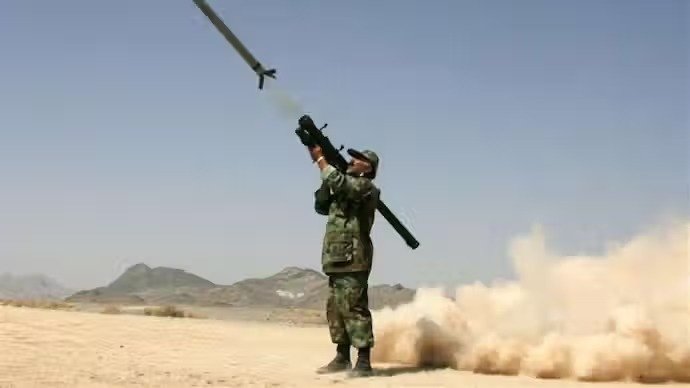
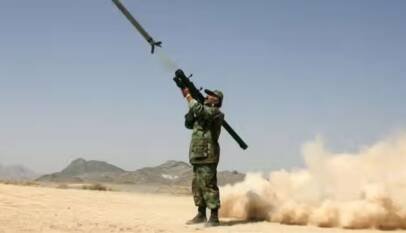
The agreement reportedly covers the procurement of 300 to 400 Man-Portable Air Defence Systems (MANPADS), including the Chinese-built QW-12 and FN-16 missile systems. These portable surface-to-air missiles are designed to engage low-flying aircraft, helicopters and unmanned aerial vehicles (UAVs), making them an important component of modern battlefield air defence.
According to Reuters, the contract was signed through Zhongqing Baoshang International Investment, a Hong Kong-based company allegedly acting as an intermediary between Tehran and the Chinese supplier. However, China’s Foreign Ministry has strongly denied the report.
“The relevant reports are completely groundless. China has consistently played a role in promoting peace and ending the conflict,” the ministry said in response to the claims.
The parent company, Zhong Qing Bao Shang Group, did not immediately comment on the reported transaction.
The development comes amid growing defence cooperation between Beijing and Tehran. Earlier this week, Iranian parliament’s National Security Committee member Ahmad Bakhshayesh Ardestani claimed that although Iran does not purchase weapons directly from China, it receives intelligence support through Chinese satellite systems.
“We do not buy weapons from China. Instead, we receive intelligence systems from them. Their satellites help us,” the Iranian lawmaker reportedly said.
The reported delivery route has also attracted attention. Sources cited by Reuters said the missile systems would initially be transported by air from Urumqi in western China before transiting through Pakistan en route to Iran. However, Pakistan’s military has categorically denied any involvement.
The Inter-Services Public Relations (ISPR), the media wing of Pakistan’s armed forces, dismissed the reports as “completely false and fabricated.”
“Speculations of Pakistan being involved in the supply of air defence weapons to Iran from China are absolutely concocted and false,” the ISPR said.
Defence analysts note that MANPADS have become increasingly important in modern warfare due to their mobility, ease of deployment and effectiveness against low-altitude aerial threats. Operated by a single soldier or a small team, these shoulder-launched systems can rapidly protect military bases, strategic infrastructure, energy facilities and frontline units from enemy aircraft, helicopters and drones.
The QW-12 and FN-16 are among China’s latest short-range air defence systems, employing advanced infrared guidance technology to track and destroy airborne targets. Their portability makes them an integral part of layered air defence networks that also include radar-guided medium- and long-range missile systems.
The reported missile deal comes against the backdrop of increasing international scrutiny of China’s defence cooperation with Iran. In May 2026, the United States imposed sanctions on three Chinese firms—Meentropy Technology Co. Ltd, The Earth Eye, and Chang Guang Satellite Technology Co. Ltd—for allegedly providing geospatial intelligence and satellite support to Iran.
Reuters had also reported earlier that Tehran was negotiating a separate agreement with China to procure anti-ship cruise missiles, although it remains unclear whether that deal has been finalised.
If the MANPADS acquisition proceeds as reported, it would represent another significant step in Iran’s efforts to modernise its air defence network while underscoring China’s expanding strategic influence in the region. The reported deal also highlights the growing role of portable air defence systems in contemporary military planning, particularly as nations seek flexible and rapidly deployable solutions to counter evolving aerial threats.
(The content of this article is sourced from a news agency and has not been edited by the Mavericknews30 team.)






Raksha Mantri virtually inaugurates Department of Military Medicine at Command Hospital (Central Command), Lucknow
The department, as R&D hub & Centre of Excellence, to equip the nation against eme…
Iran Set to Acquire Chinese MANPADS Amid Rising Regional Tensions, Report Says
New Delhi, July 2026 : Iran is expected to receive its first shipment of …