
Married Daughters Cannot Be Denied Compassionate Jobs, Says Supreme Court

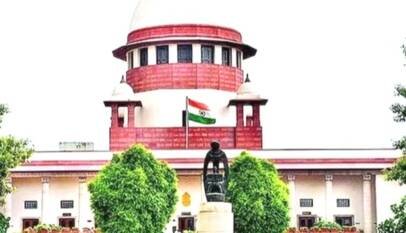
New Delhi, July 2026 : The Supreme Court has ruled that a married daughter cannot be denied consideration for compassionate appointment merely because a government policy limits eligibility to divorced or deserted daughters, holding that such a classification is unconstitutional and violates the guarantee of equality under Article 14 of the Constitution.
A Bench comprising Justices M.M. Sundresh and Prasanna B. Varale allowed an appeal filed by Sayara Khatoon and her daughter, challenging a Patna High Court order that had upheld the rejection of the daughter’s claim for compassionate appointment following the death of her father.
The case concerned a December 10, 2014 policy of the Bihar government, under which compassionate appointment could be considered for a daughter only if she was divorced or deserted.
The appellants challenged the restriction, arguing that it unfairly discriminated against married daughters and imposed an unreasonable condition on their eligibility for appointment following the death of a government employee.
The Bihar government had also rejected the daughter’s claim on another ground, stating that the deceased employee’s brother had objected to her appointment.
However, the Supreme Court noted that the brother had subsequently furnished a no-objection certificate, making the objection irrelevant. The Bench observed that the ground cited by the authorities for rejecting the claim therefore no longer survived.
The Court then examined the validity of the policy that distinguished between daughters based on their marital status.
The Bench observed that constitutional principles do not permit discrimination between sons and daughters in matters of compassionate appointment. It reiterated the Court’s earlier position that classifications that treat a daughter differently from a son cannot automatically be sustained under the Constitution.
The Supreme Court specifically held that the Bihar government’s restriction limiting eligibility to divorced or deserted daughters could not withstand constitutional scrutiny.
The Bench also rejected the assumption that marriage necessarily severs a daughter’s relationship with her parental family.
The Court observed that there can be no legal presumption that a woman, after marriage, completely cuts ties with her parents and begins living exclusively with her husband’s family.
In the present case, the appellant had submitted that although her divorce had not been formally recognised in law, she was living with her parental family and receiving support from her mother and brother.
The Court said that such circumstances could not be ignored merely because the appellant did not technically fall within the category of a divorced daughter under the government’s policy.
It further cautioned against adopting an excessively technical approach while considering claims for compassionate appointment, particularly when the circumstances demonstrate that the applicant continues to be dependent on or connected with the deceased employee’s family.
“Adopting a hyper-technical approach cannot be a ground to deny consideration of her claim for compassionate appointment,” the Bench observed.
Compassionate appointment is intended to provide relief to eligible dependants of government employees who die while in service, subject to applicable rules and the availability of such appointments. The Court’s ruling, however, makes clear that eligibility conditions cannot be framed in a manner that violates constitutional guarantees of equality.
Setting aside the Patna High Court’s order as well as the Bihar government’s rejection of the compassionate appointment claim, the Supreme Court directed the authorities to reconsider the appellant’s case on its merits.
The Court ordered the Bihar government to examine the claim and take an appropriate decision within eight weeks from the date of receiving a copy of the judgment.
The ruling is significant for reaffirming that marital status cannot, by itself, be used as a basis to deny a daughter consideration for compassionate appointment and that government policies must conform to constitutional principles of equality and non-discrimination.
(The content of this article is sourced from a news agency and has not been edited by the Mavericknews30 team.)





Telangana CM Pushes Skill Training, Research and Overseas Job Support
Hyderabad, July 2026 : Telangana Chief Minister A. Revanth Reddy on Friday proposed settin…

Telangana CM Pushes Skill Training, Research and Overseas Job Support
Hyderabad, July 2026 : Telangana Chief Minister A. Revanth Reddy on Friday proposed setting …