Supreme Court Upholds Acquittal of 20 in 2014 Maharashtra Holi Clash Murder Case

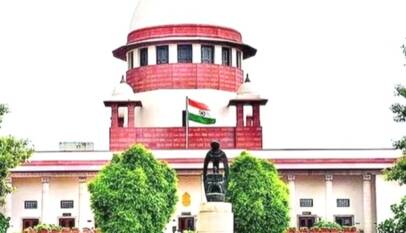
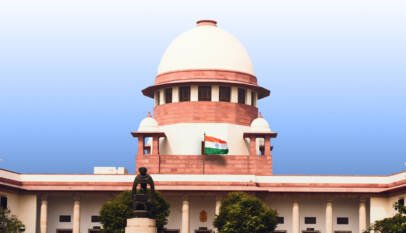
New Delhi, Aug 2026 : The Supreme Court on Monday declined to interfere with the acquittal of 20 accused in a 2014 murder case arising from a clash during Holi celebrations in Maharashtra’s Washim district, observing that the Bombay High Court had taken a “reasonable and possible view” of the evidence.
A Bench comprising Justices Sanjay Karol and A.G. Masih dismissed separate appeals filed by the victim’s mother and the Maharashtra government against the Bombay High Court’s 2022 judgment. The High Court had overturned the convictions of all 20 accused and acquitted them after finding that the prosecution had failed to establish the charges beyond reasonable doubt.
The case relates to the death of Avinash Chavhan on March 18, 2014, following an altercation during Holi celebrations over the playing of a DJ. Three other persons were also injured in the clash. The trial court had convicted all 20 accused and sentenced them to life imprisonment for murder and attempted murder.
The Bombay High Court, however, reassessed the evidence and found several shortcomings in the prosecution case. It concluded that the evidence did not meet the standard required to sustain the convictions and extended the benefit of doubt to the accused.
The Supreme Court, while examining the challenge to the acquittal, agreed that the High Court had legitimate reasons to question the prosecution’s version. The Bench particularly highlighted inconsistencies between eyewitness accounts and the medical evidence presented during the trial.
The apex court also took note of the fact that six prosecution witnesses had given strikingly similar and identical accounts. Such stereotyped testimony, it said, could raise doubts about whether the witnesses were recounting events they had actually seen or were repeating a version that had been influenced or tutored.
The Bench observed that the High Court was entitled to treat the similarity in the testimonies as a circumstance creating serious doubt about their reliability.
Medical evidence also played a significant role in the Supreme Court’s decision. The prosecution had alleged that four accused repeatedly attacked the deceased on the head with iron pipes. However, the medical evidence did not fully support that account.
The High Court had concluded that it was difficult to accept that four persons repeatedly striking the victim with different weapons would have caused all the injuries at the same location. The Supreme Court said this was not an unreasonable assumption but an inference drawn from the medical evidence available on record.
The apex court also pointed to several other factors considered by the High Court, including the absence of independent witnesses despite the incident occurring in a residential area, unexplained delays in recording statements of eyewitnesses and inconsistencies in the First Information Report.
Other investigative shortcomings included lapses in the handling of case property and the prosecution’s failure to adequately explain injuries suffered by some of the accused during the incident.
The Supreme Court reiterated that appellate courts should exercise considerable caution while interfering with an acquittal. It held that an acquittal can be reversed only when the findings of the lower court are perverse, unreasonable or based on a complete misreading of the evidence.
In the present case, the Bench said the High Court’s conclusion was at least a “reasonable and possible view” and therefore did not warrant interference under Article 136 of the Constitution.
The court acknowledged that certain aspects of the High Court’s reasoning were “not free from imperfection”. However, it said such shortcomings did not undermine the overall conclusion, which was based on concerns regarding the medical evidence and the reliability of the identification of a large group of accused.
The Supreme Court concluded that the acquittal was neither arbitrary nor based on a capricious assessment of the evidence. Instead, it represented a reasoned conclusion derived from the material placed before the court.
With the dismissal of both appeals, the Supreme Court declined to restore the convictions and life sentences imposed by the trial court.
The judgment effectively brings the prolonged legal battle arising from the 2014 Holi-day clash to an end, with the acquittal of all 20 accused remaining undisturbed.
(The content of this article is sourced from a news agency and has not been edited by the Mavericknews30 team.)


Shivakumar Says Congress United, Assures Women Will Get Cabinet Berth
Bengaluru, Aug 2026 : Karnataka Chief Minister D.K. Shivakumar on Monday sought to dismiss…
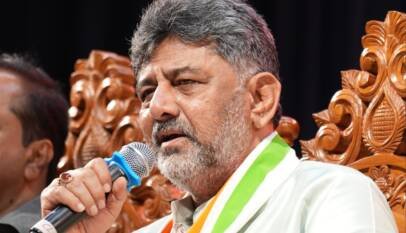
Shivakumar Says Congress United, Assures Women Will Get Cabinet Berth
Bengaluru, Aug 2026 : Karnataka Chief Minister D.K. Shivakumar on Monday sought to dismiss …