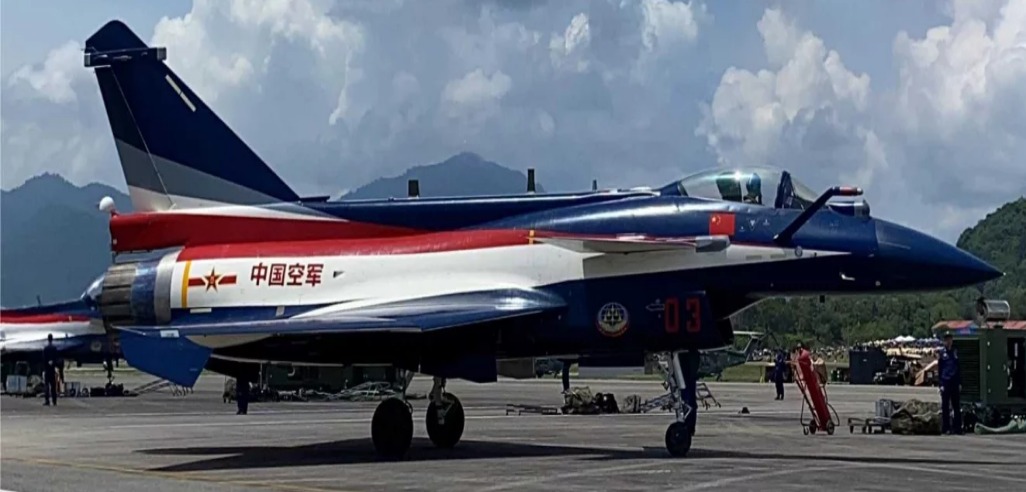
Iran Seeks to Acquire Chinese J-10C Fighter Jets to Counter Israeli F-35I Superiority

The Iranian Defence Minister recently visited China and initiated high-level discussions to procure Chengdu J-10C multirole fighter jets and advanced AWACS (Airborne Warning and Control System) equipment. These negotiations signal a strategic shift in Tehran’s defence procurement policy following prolonged delays in the delivery of Russian Su-35 fighters, which had been expected to bolster Iran’s airpower.
The Chengdu J-10C, a 4.5-generation combat aircraft, is one of China’s most advanced fighter platforms, featuring AESA radar, thrust-vectoring engines, and compatibility with PL-15 long-range air-to-air missiles. Its multirole capabilities allow it to perform air superiority missions, ground attack operations, and complex electronic warfare tasks. Recently the J-10C has demonstrated its high combat effectiveness within the Pakistan Air Force, notably in exercising its simulating engagements against Indian Rafale F3R jets, giving it a proven edge in high-threat environments.
Compared to the Israeli Air Force’s inventory, the J-10C represents a credible challenger but not an outright peer competitor. Israel currently operates a highly advanced fleet that includes the F-35I Adir stealth fighter, F-15I Ra’am strike aircraft, and upgraded F-16I Sufa multirole jets. The F-35I offers significant advantages in stealth, sensor fusion, and electronic warfare, giving Israel air superiority in most scenarios. However, the J-10C’s AESA radar and long-range PL-15 missile system could potentially threaten non-stealth platforms like the F-15I and F-16I in contested airspace, especially when supported by Chinese-origin AWACS, which would greatly enhance Iranian situational awareness and coordination.
The growing defence relationship between China and Iran has evolved steadily over the past two decades, driven by mutual geopolitical interests and opposition to Western sanctions. China has supplied a variety of military equipment to Iran, including the HQ-2 and HQ-7 surface-to-air missile systems, radar technology, unmanned aerial vehicles (UAVs), and naval systems such as fast attack boats and anti-ship missiles. In the drone domain, Chinese technology has notably influenced several Iranian UAV models, including the Shahed and Mohajer series. Furthermore, joint naval drills and exchanges have reinforced military ties, underscoring Beijing’s strategic interest in maintaining access to the Persian Gulf.
Iran’s decision in pivoting toward the J-10C is heavily influenced by the absence of the Russian Su-35s, for which Iran had already completed payments but received none. This delay raised concerns over Moscow’s reliability as a defence partner, prompting Tehran to seek alternatives to urgently modernise its aging fleet of legacy American fighters like the F-14, F-5, and F-4. The introduction of the J-10C into the Iranian Air Force would represent a significant leap in air combat capability and would provide Iran with a platform more closely aligned with the fifth-generation threshold.
In addition to the fighter jets, Iran’s request for Chinese AWACS systems could further strengthen its command-and-control capabilities, dramatically enhancing situational awareness, airborne battle management, and early warning functions. This combination would enable more integrated air defence and offensive operations, potentially shifting the balance of power in the Persian Gulf and Levant theatres, where Israel and U.S.-aligned Gulf states currently maintain qualitative superiority.
Upon accomplishment, this Iran-China arms deal will mark a significant reorientation in Tehran’s defence strategy and may deepen military cooperation between two nations increasingly aligned against Western influence in the region. The outcome of these talks could redefine Iran’s air combat doctrine and inject new volatility into an already tense Middle Eastern security environment.
Team Maverick





Shivakumar Says Congress United, Assures Women Will Get Cabinet Berth
Bengaluru, Aug 2026 : Karnataka Chief Minister D.K. Shivakumar on Monday sought to dismiss…
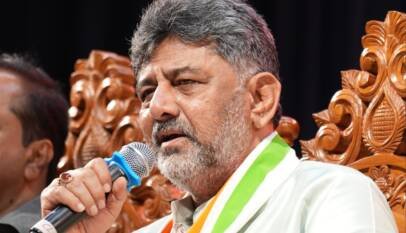
Shivakumar Says Congress United, Assures Women Will Get Cabinet Berth
Bengaluru, Aug 2026 : Karnataka Chief Minister D.K. Shivakumar on Monday sought to dismiss …