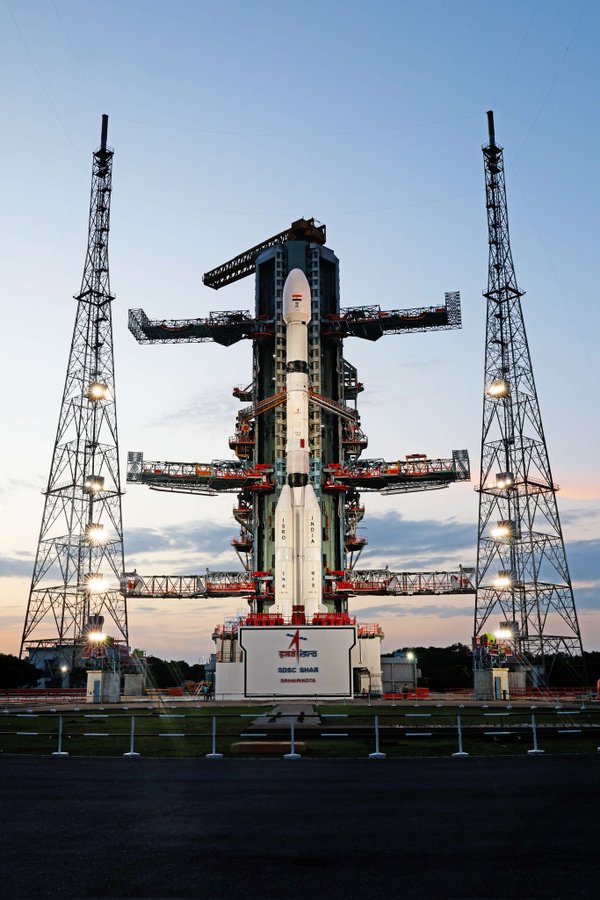
ISRO and NASA to Launch $1.5 Billion NISAR Earth Observation Mission on July 30

New Delhi: The Indian Space Research Organisation (ISRO) and NASA are set to launch their joint Earth observation satellite, NISAR, on Wednesday, July 30, at 5:40 p.m. IST from the Satish Dhawan Space Centre in Sriharikota.
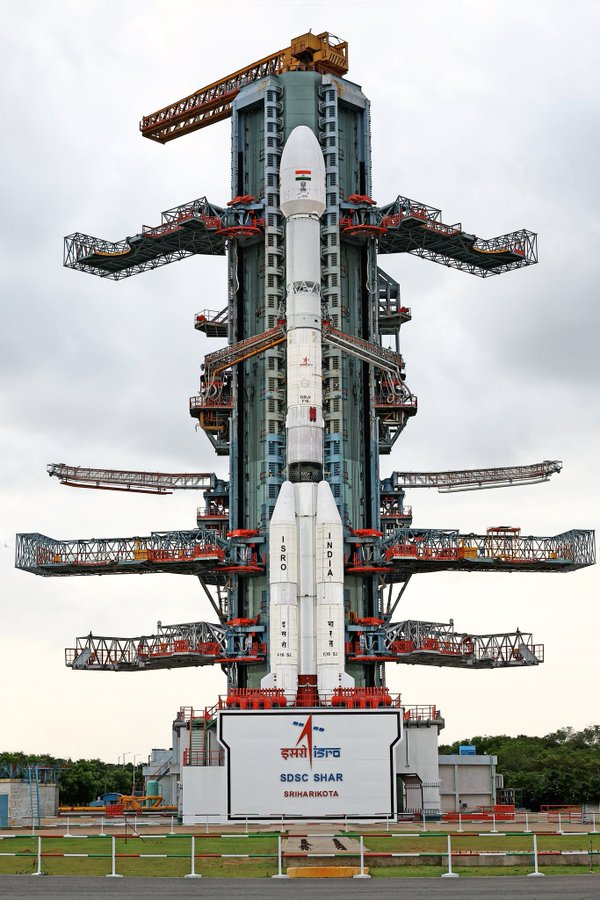
Valued at $1.5 billion, the NASA-ISRO Synthetic Aperture Radar (NISAR) mission is poised to transform how scientists monitor Earth’s surface, providing crucial data for tracking natural disasters, climate change, and environmental processes. It marks the first mission to observe Earth using dual-frequency Synthetic Aperture Radar, combining NASA’s L-band with ISRO’s S-band technology.
The satellite will operate with NASA’s 12-meter deployable mesh reflector antenna, mounted on ISRO’s customized I-3K satellite bus. Weighing 2,392 kilograms, the NISAR satellite will be launched aboard India’s GSLV-F16 rocket. Once deployed, it will enter a sun-synchronous orbit at an altitude of 740 km and scan the planet’s landmass and polar ice every 12 days. Using advanced SweepSAR technology, the satellite will deliver high-resolution images covering a 242-kilometer swath.
“The Earth observation satellite jointly developed by ISRO and NASA will be launched on July 30 by India’s GSLV-F16 rocket,” said ISRO Chairman V. Narayanan. Speaking to reporters at Chennai airport on Sunday night, he highlighted NISAR’s capability to capture continuous imagery, regardless of weather conditions or lighting. “The satellite will provide data 24×7, detect landslides, support disaster management efforts, and monitor climate change effectively,” Narayanan added.
The Department of Space noted in a press release that the NISAR mission “brings together the technological strengths of both agencies.” NASA’s contributions include the L-band SAR instrument, a high-rate telecommunications subsystem, GPS receivers, and the 12-meter unfurlable antenna. ISRO, meanwhile, has developed the S-band SAR payload, provided the satellite bus, and is responsible for the GSLV-F16 launch vehicle and associated services.
By delivering uninterrupted, high-resolution data across all weather conditions, the mission is expected to vastly improve early warning systems and enable precise tracking of Earth’s dynamic systems. It will also provide unprecedented insight into ecosystem disturbances, groundwater levels, and glacial changes, making it one of the most advanced Earth observation missions to date.
The successful launch of NISAR will mark a significant milestone in the long-standing partnership between ISRO and NASA, further strengthening India’s role in global space exploration and climate monitoring.
July 30, 2025
Live from: 17:10 Hours IST
Liftoff at : 17:40 Hours IST
Livestreaming Link: https://youtube.com/live/OgC1MxtCwq4
For more information: https://isro.gov.in/Mission_GSLVF16_NISAR_Home.html#NISAR#GSLVF16#ISRO#NASA
Team Maverick








Habuild at 6: ‘We Are Not Just Teaching Yoga, We Are Helping Millions Build Lifelong Healthy Habits’
As Habuild celebrates six years of transforming lives through wellness, its founder reflec…

Habuild at 6: ‘We Are Not Just Teaching Yoga, We Are Helping Millions Build Lifelong Healthy Habits’
As Habuild celebrates six years of transforming lives through wellness, its founder reflects on …