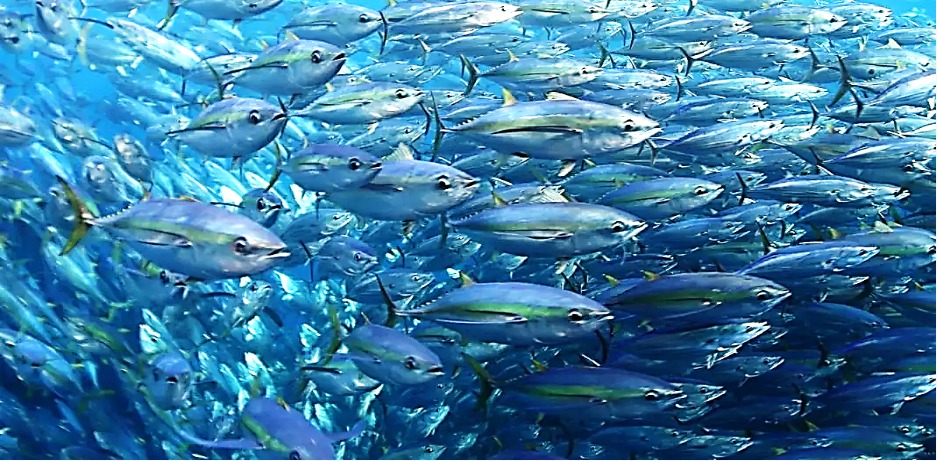
Global Tuna Stock

The International Seafood Sustainability Foundation (ISSF) recently published the latest edition of its comprehensive report on worldwide tuna stocks. The report, “An Evaluation of the Sustainability of Global Tuna Stocks Relative to Marine Stewardship Council Criteria”, assesses the 23 major commercial tuna stocks worldwide against the Marine Stewardship Council (MSC) Fisheries Standard, offering a view of global progress and remaining gaps in achieving tuna fisheries sustainability.
This edition applies v3.1 of the MSC Fisheries Standard, evaluating tuna stock health (MSC Principle 1) and the effectiveness of regional management frameworks (part of MSC Principle 3). The report’s insights are useful in informing seafood stakeholders and policymakers about where improvements are most needed to meet rigorous sustainability benchmarks. The report shows that 12 of 23 tuna stocks meet the critical MSC Principle 1 benchmark — demonstrating that they are not subject to overfishing and are maintaining target biomass levels.
Moreover, this finding represents a slight improvement over the 2024 report, which found 11 passing stocks. This year, South Pacific albacore earned a passing score.
The 12 passing stocks are:
Atlantic Ocean: Western skipjack, Northern albacore, Southern albacore, Eastern bluefin
Pacific Ocean: Western yellowfin, Western bigeye, Western skipjack, Eastern yellowfin, Eastern skipjack, South Pacific albacore
Indian Ocean: Skipjack
Southern Hemisphere: Southern bluefin
However, only 07 of the 23 stocks have fully implemented well-defined harvest control rules, according to the ISSF. The continued absence of pre-agreed harvest strategies to implement controls before rebuilding is required, or to rebuild depleted stocks, remains a major barrier to broader MSC adherence.
ISSF President Susan Jackson said:
“Although the report highlights important strides by tuna Regional Fisheries Management Organisations (RFMOs), it also underscores that the urgency remains for adopting effective harvest control rules to prevent stock decline and ensure long-term sustainability. Healthy fisheries require both sound science and robust governance”.
Southern Bluefin – An endangered species found only in the open waters of the Southern Hemisphere, is a member of the Scombridae family, which includes mackerels, bonitos, and other tuna species. They are highly prized in certain markets, particularly for sashimi, and have been the focus of international fishing efforts.
Key Characteristics:
- Size: Southern bluefin tuna can grow up to 2.5 meters in length and weigh over 260 kilograms, making them one of the largest bony fish.
- Appearance: They have a blue-black upper body, a silver underside, and yellow-tinged fins. Juveniles have yellow keels near the tail, while adults have black keels.
- Habitat: They are pelagic fish, meaning they live in the open ocean, typically on the seaward side of the continental shelf, and are highly migratory.
- Diet: They are regarded as opportunistic feeders, consuming a variety of fish, crustaceans, cephalopods, and other marine organisms.
- Spawning: Southern bluefin tuna spawn in the warm waters south of Java, Indonesia.
- Conservation Status: Southern bluefin tuna are considered a threatened species due to overfishing. International agreements and catch quotas have been established to manage the fishery and promote stock recovery. The species is the subject of ongoing scientific research to better understand its biology and population dynamics.
Team Maverick







Gujarat Titans Post Massive 229 Against CSK After Explosive Batting Display
Ahmedabad, May 2026 : Gujarat Titans delivered a dominant batting performance to post a ma…

Gujarat Titans Post Massive 229 Against CSK After Explosive Batting Display
Ahmedabad, May 2026 : Gujarat Titans delivered a dominant batting performance to post a …