Uttar Pradesh: Cabinet Approves Operation of E-Buses in Lucknow and Kanpur under NCC Model

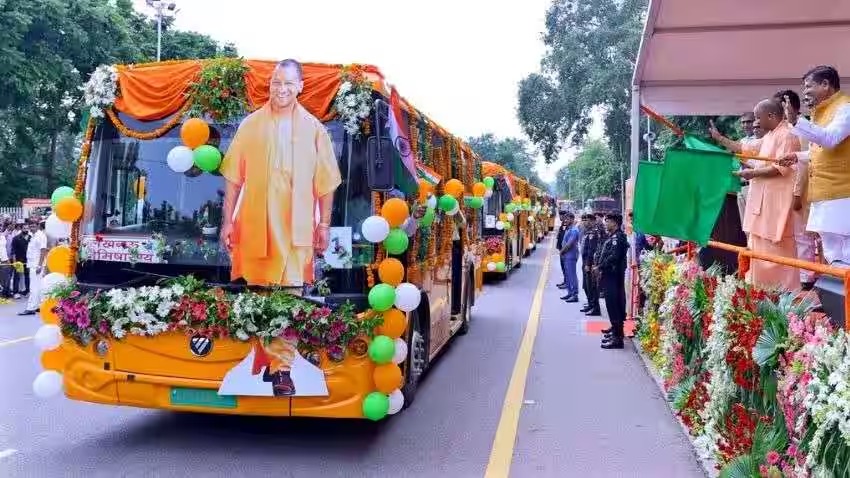
Lucknow, Sept 2025 : The Uttar Pradesh government, in a significant decision during its cabinet meeting, has approved the operation of electric buses (e-buses) under the Net Cost Contract (NCC) model in the districts of Lucknow and Kanpur Nagar, along with their nearby significant towns. This pilot project aims to make urban transport eco-friendly, organized, and consumer-centric while reducing the financial burden on the government and encouraging private investment. The initiative is considered a revolutionary step in the urban transport sector of Uttar Pradesh.
Principal Secretary of the Urban Development Department, Mr. Amrit Abhijat, highlighted the importance of this decision, stating, “The Net Cost Contract model will significantly improve the quality of transport services by ensuring ease of commuting for citizens while providing private operators with greater commercial freedom and incentives. This scheme will promote environmental conservation, technological innovation, and consumer satisfaction, making urban transport more accessible and sustainable.”
The Directorate of Urban Transport, established under the Urban Development Department to plan, implement, and monitor urban transport services, will execute this project. Currently, the directorate operates 743 electric buses across 15 municipal corporations in the state, of which 700 are operated under the Gross Cost Contract (GCC) model. As part of this pilot project, the decision has been made to operate e-buses under the NCC model in Lucknow and Kanpur Nagar districts and their nearby significant towns.
Under this pilot project, 9-meter air-conditioned (AC) electric buses will be operated on 10 routes each in Lucknow and Kanpur Nagar, totaling 20 routes. Each route will have a minimum of 10 buses, meaning a total of 200 e-buses will be deployed across both districts. The contract duration will be 12 years from the Commercial Operation Date. Additionally, no other private operator will be permitted to operate on the selected routes, ensuring commercial stability and a monopoly for the operators.
The estimated cost for operating 10 e-buses on each route is approximately ₹10.30 crore, with ₹9.50 crore allocated for bus procurement and ₹0.80 crore for chargers and other equipment. The financial arrangements will be managed by private operators through equity, commercial borrowing, or leasing.
Private operators will be required to provide a prototype e-bus within 90 days of the contract. Following a thorough review of the prototype by the government, operators must supply and commence operations of all buses within one year. The selected bus operators will be responsible for the design, financing, procurement, manufacturing, and supply of electric buses, as well as the establishment of maintenance facilities, charging stations, and other necessary infrastructure.
A key feature of this model is that private operators will collect 100% of the Fare Box Revenue and Non-Fare Box Revenue. The tariff and user charges will be determined by the government and may be revised periodically as per the agreement terms. This arrangement will encourage private operators to attract passengers and enhance service quality.
The government will support private operators by facilitating operations. Route licenses (stage carriage permits) will be obtained through the Transport Department and Regional Transport Authority (RTO/RTA), allowing operators to run buses on designated routes. Additionally, the government will provide behind-the-meter electrical infrastructure and opportunity charging facilities for e-buses to ensure seamless and energy-efficient operations.
Principal Secretary Amrit Abhijat emphasized the environmental and social benefits of the scheme, stating, “The operation of e-buses will not only reduce air pollution but also provide passengers with modern, comfortable, and time-bound transport services. Competition among private operators will lead to the adoption of the latest technologies and continuous service improvements, directly benefiting the public. Operators will need to focus on efficiency, punctuality, and consumer satisfaction, making transport services more reliable.”
Operator selection will be conducted through a transparent tender process to ensure competition and fairness. Private operators will bear the operational and commercial risks. The government will ensure compliance with set standards and passenger convenience through regular monitoring.
This pilot project will establish a new model for urban transport in Uttar Pradesh. If successful, it could be implemented in other cities across the state, making transport services more accessible while promoting environmental conservation and economic development.

Israel Rejects Gaza Disarmament Plan, Says IDF Will Stay Until Hamas Fully Disarmed
Jerusalem, July 2026 : Israel has reiterated its strong opposition to the US-backed plan f…

Israel Rejects Gaza Disarmament Plan, Says IDF Will Stay Until Hamas Fully Disarmed
Jerusalem, July 2026 : Israel has reiterated its strong opposition to the US-backed plan …