Pope Leo XIV Declares Carlo Acutis the First Millennial Saint: “God’s Influencer” Inspires a Digital-Age Faith

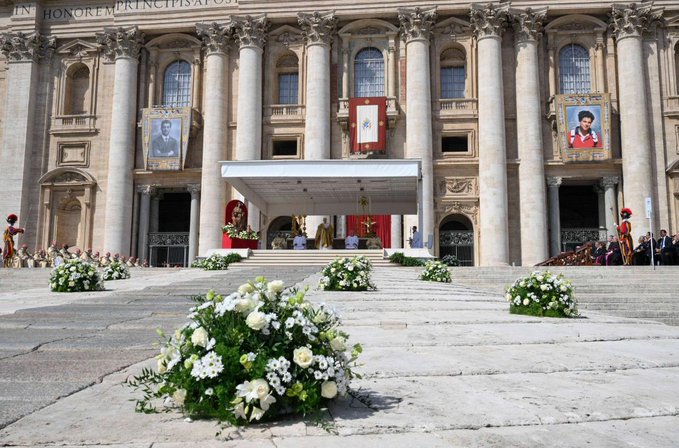
Vatican City, Sept 7 — Pope Leo XIV canonized Carlo Acutis, a 15-year-old computer prodigy known as “God’s Influencer,” as the Catholic Church’s first millennial saint during a historic mass in St. Peter’s Square on Sunday. The open-air ceremony drew nearly 80,000 worshippers, many of them young Catholics, families, and children, who came to witness the first saint-making mass of Leo’s papacy.
Alongside Acutis, the pope also canonized Pier Giorgio Frassati, a beloved Italian figure who, like Acutis, died young but left behind a powerful legacy of faith and service.
“Do Not Waste Your Life”
In his homily, Pope Leo XIV praised the two new saints for transforming ordinary lives into extraordinary testimonies of faith.
“The greatest risk in life is to waste it against God’s plan,” the pope said. “Carlo and Pier Giorgio remind us, especially young people, not to waste our lives but to direct them upward and make them masterpieces.”
The canonization underscored the Church’s commitment to offering younger generations role models who embrace both modern life and timeless spirituality.
From London to Milan: A Life of Faith and Technology
Born on May 3, 1991, in London, Carlo Acutis was the son of a wealthy but only nominally religious Catholic family. Soon after his birth, the family returned to Milan, where Carlo grew up in an otherwise typical childhood. Yet, from an early age, his devotion to prayer and the Eucharist set him apart.
Acutis developed a remarkable aptitude for computer science, mastering programming and web design well beyond his years. His most notable contribution was a multilingual website cataloging Eucharistic miracles recognized by the Church. This project, completed when such work was usually reserved for professionals, became his enduring digital legacy and earned him the nickname “God’s Influencer.”
Despite his love of technology, Acutis imposed strict limits on himself: just one hour of video games per week, prioritizing prayer, friendships, and family time. He was known to spend hours before the Eucharist, embodying the very practice of Eucharistic adoration that Church leaders have been working to revive, especially among young Catholics.
A Short Life, A Lasting Impact
In October 2006, at the age of 15, Acutis suddenly fell ill and was diagnosed with acute leukemia. Within days, he died, leaving behind a testament of faith and discipline that continues to inspire millions.
He was buried in Assisi, the city associated with St. Francis, another saint who captured the imagination of young believers across centuries. Pilgrims visiting his tomb are struck by his lifelike appearance: dressed in jeans, Nike sneakers, and a sweatshirt, Acutis appears to be merely sleeping. Parts of his heart have even traveled the world as relics, deepening devotion to the teenage saint.
A Modern Role Model
The Vatican actively promoted Acutis’ cause for sainthood, seeing in him a figure who could bridge faith and technology in a rapidly digitalizing world. His message — that technology should serve human relationships, not replace them — has resonated deeply with young Catholics navigating a tech-saturated culture.
“Carlo shows us that holiness is possible in our own time,” said one Vatican official. “He lived like any other teenager, but he also lived with God at the center.”
For students like Leo Kowalski, an 8th grader at a Chicago school named after Blessed Carlo Acutis, the canonization was deeply personal.
“It’s like I may not be as great as Carlo, but I can look at him and think, ‘What would Carlo do?’” Kowalski said. “It’s even more special that Pope Leo is the one declaring him a saint.”
Millions Drawn to “God’s Influencer”
Since his death, millions of young Catholics have flocked to Assisi to visit his tomb, often describing him as a “saintly neighbor” who feels close to their daily lives. The Church has emphasized this familiarity as a way of strengthening bonds with younger generations, who sometimes feel distant from traditional saints of past centuries.
Acutis’ story has been described as “an ordinary life made extraordinary” — not because of grand miracles in his lifetime, but because of his simple devotion, his disciplined embrace of technology, and his example of living faith authentically in the modern world.
As Pope Leo XIV declared Carlo Acutis a saint, applause erupted in St. Peter’s Square. For the Catholic Church, it was not only the recognition of a holy teenager but also a declaration that sanctity is within reach for every generation — even in the digital age.
Vatican City, Sept 2025 : Pope Leo XIV canonized Carlo Acutis, a 15-year-old computer prodigy known as “God’s Influencer,” as the Catholic Church’s first millennial saint during a historic mass in St. Peter’s Square on Sunday. The open-air ceremony drew nearly 80,000 worshippers, many of them young Catholics, families, and children, who came to witness the first saint-making mass of Leo’s papacy.
Alongside Acutis, the pope also canonized Pier Giorgio Frassati, a beloved Italian figure who, like Acutis, died young but left behind a powerful legacy of faith and service.
“Do Not Waste Your Life”
In his homily, Pope Leo XIV praised the two new saints for transforming ordinary lives into extraordinary testimonies of faith.
“The greatest risk in life is to waste it against God’s plan,” the pope said. “Carlo and Pier Giorgio remind us, especially young people, not to waste our lives but to direct them upward and make them masterpieces.”
The canonization underscored the Church’s commitment to offering younger generations role models who embrace both modern life and timeless spirituality.
From London to Milan: A Life of Faith and Technology
Born on May 3, 1991, in London, Carlo Acutis was the son of a wealthy but only nominally religious Catholic family. Soon after his birth, the family returned to Milan, where Carlo grew up in an otherwise typical childhood. Yet, from an early age, his devotion to prayer and the Eucharist set him apart.
Acutis developed a remarkable aptitude for computer science, mastering programming and web design well beyond his years. His most notable contribution was a multilingual website cataloging Eucharistic miracles recognized by the Church. This project, completed when such work was usually reserved for professionals, became his enduring digital legacy and earned him the nickname “God’s Influencer.”
Despite his love of technology, Acutis imposed strict limits on himself: just one hour of video games per week, prioritizing prayer, friendships, and family time. He was known to spend hours before the Eucharist, embodying the very practice of Eucharistic adoration that Church leaders have been working to revive, especially among young Catholics.
A Short Life, A Lasting Impact
In October 2006, at the age of 15, Acutis suddenly fell ill and was diagnosed with acute leukemia. Within days, he died, leaving behind a testament of faith and discipline that continues to inspire millions.
He was buried in Assisi, the city associated with St. Francis, another saint who captured the imagination of young believers across centuries. Pilgrims visiting his tomb are struck by his lifelike appearance: dressed in jeans, Nike sneakers, and a sweatshirt, Acutis appears to be merely sleeping. Parts of his heart have even traveled the world as relics, deepening devotion to the teenage saint.
A Modern Role Model
The Vatican actively promoted Acutis’ cause for sainthood, seeing in him a figure who could bridge faith and technology in a rapidly digitalizing world. His message — that technology should serve human relationships, not replace them — has resonated deeply with young Catholics navigating a tech-saturated culture.
“Carlo shows us that holiness is possible in our own time,” said one Vatican official. “He lived like any other teenager, but he also lived with God at the center.”
For students like Leo Kowalski, an 8th grader at a Chicago school named after Blessed Carlo Acutis, the canonization was deeply personal.
“It’s like I may not be as great as Carlo, but I can look at him and think, ‘What would Carlo do?’” Kowalski said. “It’s even more special that Pope Leo is the one declaring him a saint.”
Millions Drawn to “God’s Influencer”
Since his death, millions of young Catholics have flocked to Assisi to visit his tomb, often describing him as a “saintly neighbor” who feels close to their daily lives. The Church has emphasized this familiarity as a way of strengthening bonds with younger generations, who sometimes feel distant from traditional saints of past centuries.
Acutis’ story has been described as “an ordinary life made extraordinary” — not because of grand miracles in his lifetime, but because of his simple devotion, his disciplined embrace of technology, and his example of living faith authentically in the modern world.
As Pope Leo XIV declared Carlo Acutis a saint, applause erupted in St. Peter’s Square. For the Catholic Church, it was not only the recognition of a holy teenager but also a declaration that sanctity is within reach for every generation — even in the digital age.






Gujarat Titans Post Massive 229 Against CSK After Explosive Batting Display
Ahmedabad, May 2026 : Gujarat Titans delivered a dominant batting performance to post a ma…
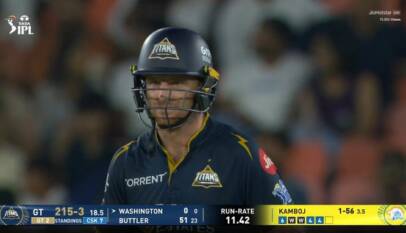
Gujarat Titans Post Massive 229 Against CSK After Explosive Batting Display
Ahmedabad, May 2026 : Gujarat Titans delivered a dominant batting performance to post a …