Agricultural Revolution in Bastar: Crop Area Doubles, Seed Distribution Up Tenfold in 25 Years

Agricultural Revolution in Bastar: Crop Area Doubles, Seed Distribution Up Tenfold in 25 Years
Fair Price for Paddy Boosts Farmers’ Prosperity; Bastar Emerging as ‘Rice Bowl’
Raipur, Nov 2025 : Fair pricing for paddy has significantly increased farmers’ prosperity, and Bastar is fast emerging as the ‘Rice Bowl’.
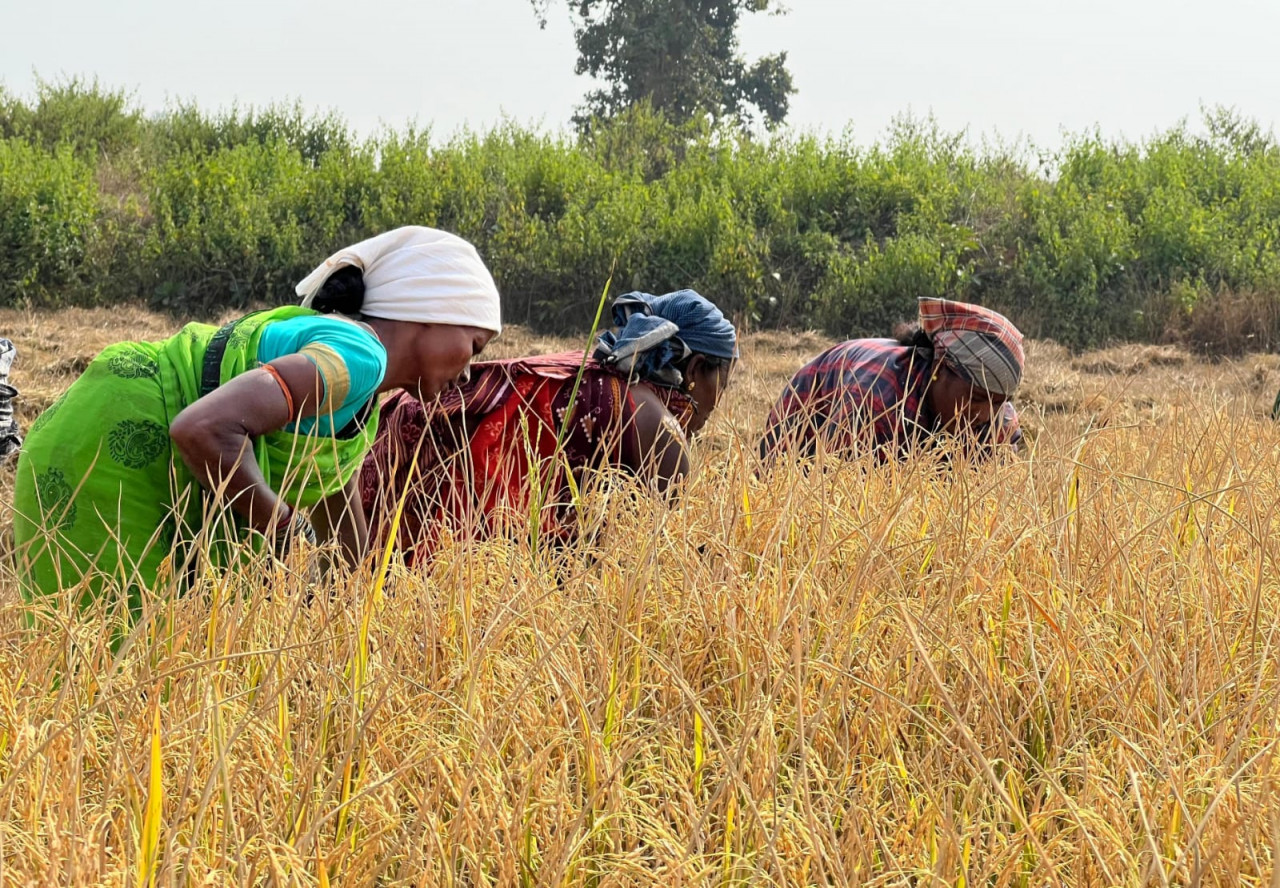
Nestled amid forests and hills, Bastar has witnessed an agricultural revolution over the last 25 years—one that has transformed the district’s economic and social landscape. Where farming once faced numerous challenges, today the fields bloom with abundance, and farmers’ faces reflect newfound happiness. This transformation is the result of the relentless hard work of Bastar’s farmers, farmer-centric government policies, and the continuous efforts of the Agriculture Department.

Remarkable Growth in Cultivation Area
In the year 2000, the total cultivated crop area in the district was 1.58 lakh hectares. By 2025, this area has expanded to over 2 lakh hectares—an impressive increase of nearly 26%. This expansion has reached even the remote areas of Bastar, where uneven land and hilly terrains once made farming difficult. Government schemes, water conservation works, and timely technical support have played a major role in this transformation.
Tenfold Increase in Seed Distribution
In 2000, only 3,109 quintals of seeds were distributed to farmers. Today, this number has increased to 32,253 quintals—over ten times more. The availability of high-quality, disease-resistant seeds has significantly boosted farmers’ productivity.
Nakul Bharti, a farmer from Gunpur village in Lohandiguda block, shared that earlier they had to travel to cities for good seeds, but now high-quality seeds are easily available in their own village. New technology and better seeds have transformed their farming practices.
Sevenfold Increase in Irrigated Area
In 2000, irrigation facilities were limited to just 3,669 hectares. Today, irrigated land has expanded to 24,280 hectares. Renovation of ponds, expansion of canals, and the introduction of modern irrigation techniques such as drip and sprinkler systems have turned once drought-prone areas green and fertile.
Deputy Director of Agriculture, Rajiv Shrivastava, said that the department continuously trains and motivates farmers to adopt advanced technologies.
Empowerment Through Better MSP
Policy reforms by the state government to ensure farmers receive fair prices for paddy have brought real change to their lives. In 2000, the MSP (Minimum Support Price) for paddy was only ₹510 per quintal, which has now increased to ₹3,100. Similarly, the price of Grade-A paddy has risen from ₹540 to ₹3,100 per quintal.
This more-than-sixfold increase has empowered farmers economically.
Jayanti Baghel, a woman farmer from Kalcha village, shared with a smile that earlier farming only helped them make ends meet, but now they can afford children’s education and fulfill household needs comfortably.
Progress Towards Modern Technology and New-Age Farming
Schemes like the Pradhan Mantri Kisan Samman Nidhi have given farmers fresh momentum. The Agriculture Department is now promoting millets, pulses, oilseeds, and organic farming.
The transformation of Bastar over the past 25 years is not just about agricultural growth—it is the story of a revived rural economy. Under the leadership of Chief Minister Vishnudev Sai, the state government has prioritized farmer welfare above all.
Through the coordinated efforts of the Agriculture, Water Resources, and Cooperative Departments, Bastar is becoming self-reliant, prosperous, and greener than ever before.


Djokovic Outlasts Auger-Aliassime in Record Wimbledon Thriller, Storms into 15th Semi-final
Score: Novak Djokovic bt Felix Auger-Aliassime 7-6(10), 3-6, 6-3, 6-7(4), 7-6(10-4) London…

Djokovic Outlasts Auger-Aliassime in Record Wimbledon Thriller, Storms into 15th Semi-final
Score: Novak Djokovic bt Felix Auger-Aliassime 7-6(10), 3-6, 6-3, 6-7(4), 7-6(10-4) London, July 2026 …