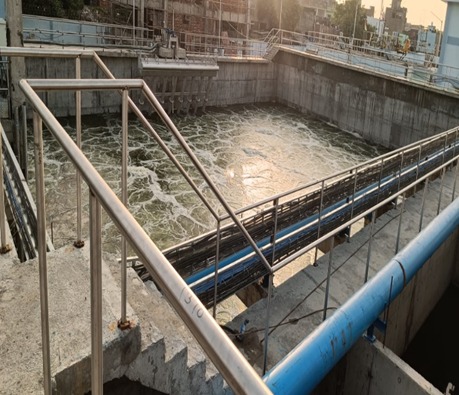
A New 25 MLD Sewage Treatment Plant (STP) has been commissioned in Moradabad, Uttar Pradesh under the Namami Gange Mission

A Cleaner Flow for the Ganga: Expansion of Sewage Treatment Infrastructure in Several States Including Uttar Pradesh
Nov 2025: The financial year 2025–26 further reinforces Namami Gange Mission’s clear message—clean rivers, hygienic cities, and a future-ready, robust sewage management system. With every passing quarter, new sewage treatment capacity is being added across various cities in the Ganga basin, transforming policy commitments into visible, on-ground change.
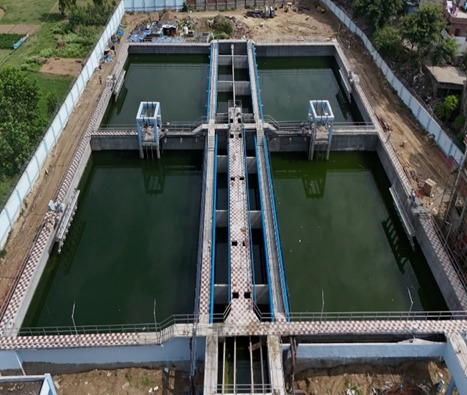
Built with advanced technology and improved operational efficiency, these modern STPs not only safeguard the ecological health of the Ganga and its natural balance, but also enhance the overall quality of life in cities situated along the river. This reflects the mission’s strong vision and commitment to leaving behind a clean and secure environment for future generations.
Under the Namami Gange Mission, a new 25 MLD Sewage Treatment Plant (STP) has been commissioned in Moradabad, Uttar Pradesh. Built at a cost of approximately ₹149.23 crore under Namami Gange Phase-II, the plant will not only help keep the river clean but also significantly strengthen the city’s sanitation and sewage management system. The STP is equipped with advanced SBR technology and has been designed to comply strictly with National Green Tribunal (NGT) discharge standards, ensuring that treated water exiting the plant is fully clean and within regulatory limits.
This project has been executed under the Hybrid Annuity Model (HAM) through a government–private sector partnership (PPP model), showcasing a successful collaboration approach. With this addition, the total sewage treatment capacity created under Namami Gange has now reached 3,805 MLD through 168 STPs, marking a major milestone in the effort to clean the Ganga and its tributaries.
This year, four major STP projects have begun operations in Uttar Pradesh, Uttarakhand, and West Bengal. These newly commissioned plants have significantly strengthened sewage treatment capacity under the Namami Gange Mission. As a result, the modern sewage treatment network has expanded, and the discharge of untreated wastewater into the Ganga and its tributaries has considerably reduced.
Meanwhile, a crucial sewage management project in Udham Singh Nagar, Uttarakhand, has also become operational. The STP and interception-diversion work, approved at a cost of ₹223.43 crore, has now achieved full commissioning of the remaining 10.30 MLD capacity across seven STPs. This takes the district’s total sewage treatment capacity to 30.3 MLD. Built using advanced technologies such as JOHKASOU and SBR, these plants adhere strictly to NGT standards. Implemented under the DBOT model, the project will benefit nearly 100,000 residents.
Additionally, the Maheshtala STP project in South 24 Parganas district, West Bengal, has provided new strength to river conservation efforts. Built under the Hybrid Annuity Model at a cost of ₹286.97 crore, the new 35 MLD SBR-based STP is significantly increasing the city’s sewage treatment capacity. Continuing the Ganga-rejuvenation effort, the Jangipur and Raghunathganj STP projects in Murshidabad district have also been launched at a cost of ₹68.47 crore. Under this DBOT-based initiative, two modern SBR STPs with a combined capacity of 13 MLD have been constructed along with an 11.38 km sewerage network.
For the Namami Gange Mission, the year has truly been one of strong progress, advanced technology, and improved infrastructure. As more cities adopt modern sewage treatment systems and enhanced pollution-control mechanisms, the mission moves closer to its goal of a clean, healthy, and ecologically revived Ganga. These achievements are not only improving the river’s condition today but also laying a sustainable and reliable foundation for future wastewater management for generations to come.







Archer, Atkinson Trigger India’s Stunning Collapse After Kohli, Iyer Fifties; England Set 234 to Win Second ODI
Archer, Atkinson Trigger India’s Stunning Collapse After Kohli, Iyer Fifties; England Set …

Archer, Atkinson Trigger India’s Stunning Collapse After Kohli, Iyer Fifties; England Set 234 to Win Second ODI
Archer, Atkinson Trigger India’s Stunning Collapse After Kohli, Iyer Fifties; England Set 234 to …