Every Road, Every Bridge, Every Project, A Commitment to Safer and Simpler Lives: CM Dr. Yadav

Chief Minister Dr. Mohan Yadav has stated that roads are not merely a means of transportation, but also a foundation for development, employment generation, improved healthcare access and socio-cultural progress. He said that the objective of the department is to view every construction project not just as a technical task, but as a means to enhance the people’s quality of life. Chief Minister Dr. Yadav emphasised that maintaining quality, transparency and innovation, while ensuring the time-bound completion of every project, is the government’s topmost priority. These efforts, he added, embody the spirit of ‘Public Welfare through Public Works’.
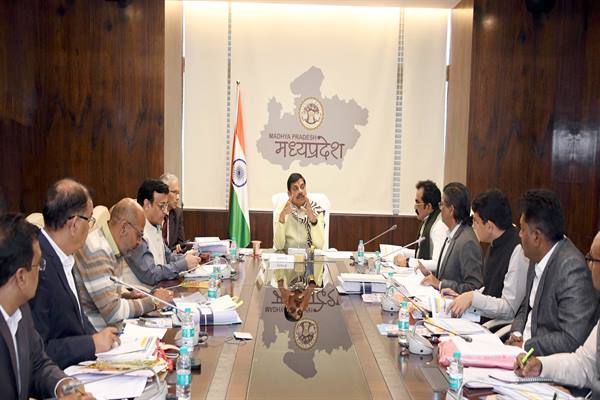
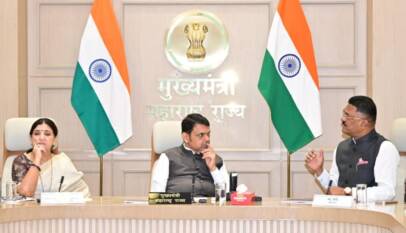
Chief Minister Dr. Yadav issued these directions while reviewing the Public Works Department (PWD) during a meeting held at the Mantralaya. He said Appreciating the department’s initiatives to implement the spirit of ‘Public Welfare through Public Works’, that the state’s infrastructure is the foundation of public welfare, and the department has done remarkable work in this direction. Every road, bridge and project is an integral part of the government’s vision to make citizens’ lives easier and safer.
 Chief Minister Dr. Yadav directed that highway density in metropolitan and adjoining areas should be increased, ensuring inclusive and integrated development across the entire state. He announced that Jabalpur and Gwalior will soon be declared metropolitan areas. He further instructed that highway development proposals should be prepared according to a vision document aligned with national standards and should incorporate local needs and suggestions. The Additional Chief Secretary was directed to prepare development plans based on comprehensive regional growth.
Chief Minister Dr. Yadav also directed that the Public Works Department be included in the formulation of an integrated urban development policy. He said, “Special attention should be given to environmental integration in infrastructure projects. Following the ‘Green Building’ concept, construction should ensure energy and water conservation, similar to Surat’s Diamond Park model.
Chief Minister Dr. Yadav emphasised that Vastu principles must be followed in building design to maximise natural light, ventilation and energy efficiency. He remarked that expressways are the need of the modern era, and rural facilities must also be considered in such infrastructure developments. Necessary components like flyovers, underpasses and service lanes should form part of the proposals. Priority works for ‘Simhastha 2028’ have been administratively approved and will commence by the end of December.
Chief Minister Dr. Yadav instructed that these works must be completed by June 2027. Through the ‘Lokpath App’, 12,166 have been resolved out of 12,212 complaints received, achieving a 99.6% resolution rate. He appreciated the effective use of the ‘Lokpath App’ and instructed that real-time road condition updates and public awareness about the app be ensured so more citizens can benefit from it. The Chief Minister directed that continuous maintenance of national and state highways be ensured, with proper lighting, greenery, and safety markers.
PWD Minister Shri Rakesh Singh stated that future updates will include inter-site distances, alternate routes, tourist spots, medical facilities, black spots, toll rates, and more, making it useful for both residents and visitors.
Chief Minister Dr. Yadav chaired meetings of the boards of directors of Madhya Pradesh Road Development Corporation (MPRDC) and Madhya Pradesh Building Development Corporation (BDC). MPRDC Managing Director Shri Bharat Yadav presented ongoing works and future plans, while BDC Managing Director Shri C.V. Chakravarty detailed the corporation’s activities and upcoming projects.
Principal Secretary of PWD, Shri Sukhveer Singh, informed that the department has implemented innovations such as road planning via the PM Gati Shakti Portal and time-bound project monitoring through BISAG-N. Environmental integration, tree plantation and relocation, Lok Sarovar initiatives, and solar energy use have also been incorporated into development works. The department has been lauded nationally for its effective use of the Gati Shakti platform.
PWD Minister Shri Rakesh Singh, Chief Secretary Shri Anurag Jain, Additional Chief Secretaries Shri Neeraj Mandloi and Shri Manish Rastogi, Principal Secretary Shri Sukhveer Singh, MPRDC MD Shri Bharat Yadav, and BDC MD Shri M.C.B. Chakravarty were present at the meeting.
Achievements of the Past Two Years
- Construction, upgradation, and strengthening of 12,000 km of roads—raising Madhya Pradesh’s total road network to 77,268 km, among the largest in India.
- Achieved 99% of financial targets in FY 2024–25, exemplifying efficient resource management and time-bound execution.
- Resolved 12,166 out of 12,212 complaints via the ‘Lokpath App’, attaining a 99.6% resolution rate, strengthening transparency and public participation.
- Major urban corridors completed include the 6.9 km Damoh Naka–Madan Mahal–Medical Road Elevated Corridor in Jabalpur, the 2.73 km Dr. Ambedkar Flyover in Bhopal, and the 15.1 km Shyama Prasad Mukherjee Nagar Road.
- Three new medical colleges were constructed to strengthen the healthcare infrastructure.
- 136 school buildings have been completed to improve education facilities.
- New District and Sessions Court buildings were constructed in Gwalior and Rewa.
- Of the 421 centrally aided roads, 378 have been completed, and 18 bridges are under construction, thereby enhancing both rural and urban connectivity.
- 506 “Lok Kalyan Sarovars” built across the state, integrating water conservation with road development.
- To ensure quality, a surprise inspection system was implemented—52 contractors were issued notices and 15 blacklisted, reflecting a zero-tolerance policy on substandard work.
Key Innovations
- Adoption of PM Gati Shakti-based GIS Master Plan for scientific, data-driven, and transparent road planning.
- Launch of Lok Project Management System (LPMS) integrating all project stages—from surveys to payments—on a single digital platform.
- Use of the Lok Nirman Survey App for complete geo-mapping of roads, bridges, and buildings, creating a 100% digital asset inventory.
- Implementation of aerial distance-based road planning for cost-effective and precise connectivity corridor selection.
- Adoption of modern techniques like FDR, Jet Patcher, and Infrared Repair for durable and low-cost road maintenance.
- Use of GPS-locked bitumen tankers and centralised quality labs to maintain material standards.
- Installation of solar plants (269 kW capacity across 10 buildings, with 6.5 MW more planned across 689 sites).
- Plantation of 2.57 lakh saplings along roadsides and successful transplantation of 1,271 trees with an 85% survival rate.
- Introduction of a software-driven surprise inspection system ensuring transparency and real-time certification.
Three-Year Action Plan
- Development of state-financed expressways and high-speed corridors such as Ujjain–Indore, Indore–Ujjain, and Bhopal Eastern Bypass.
- ₹12,000 crore investments for 52 major projects in ‘Ujjain–Simhastha 2028’ to boost religious tourism and connectivity.
- Expansion of 6-lane and 4-lane greenfield corridors to link industrial areas, agricultural markets, logistic zones, and key cities.
- Collaboration with NHAI on highway expansion, Satna–Chitrakoot, Rewa, Sidhi, Betul–Khandwa, Indore, and Jabalpur–Jhalawar.
- Construction of 600 new Lok Kalyan Sarovars for integrated soil utilisation and water conservation.
- Target to achieve 100% solar energy adoption in departmental buildings.
- Strengthened focus on road safety through improved roadside amenities, black spot correction, and emergency response systems.
- Full implementation of the GIS-based Road Master Plan for scientifically analysing future project selection.
- Enhanced quality control systems, including mobile labs, rapid testing, AI-based reporting, and digital monitoring.
- Development of ROBs, flyovers, bypasses, and smart corridors in cities to ease traffic congestion and reduce travel time.
- Full digital transformation of departmental asset inventory into a geo-referenced, auto-updating system for effective planning and field monitoring.
Adani One Rewards Crosses 5 Million Members in Under a Year, Plans Premium Tier Benefits
Mumbai, July 2026 : Adani Airport Holdings Limited (AAHL) has announced that its digital c…

Adani One Rewards Crosses 5 Million Members in Under a Year, Plans Premium Tier Benefits
Mumbai, July 2026 : Adani Airport Holdings Limited (AAHL) has announced that its digital …