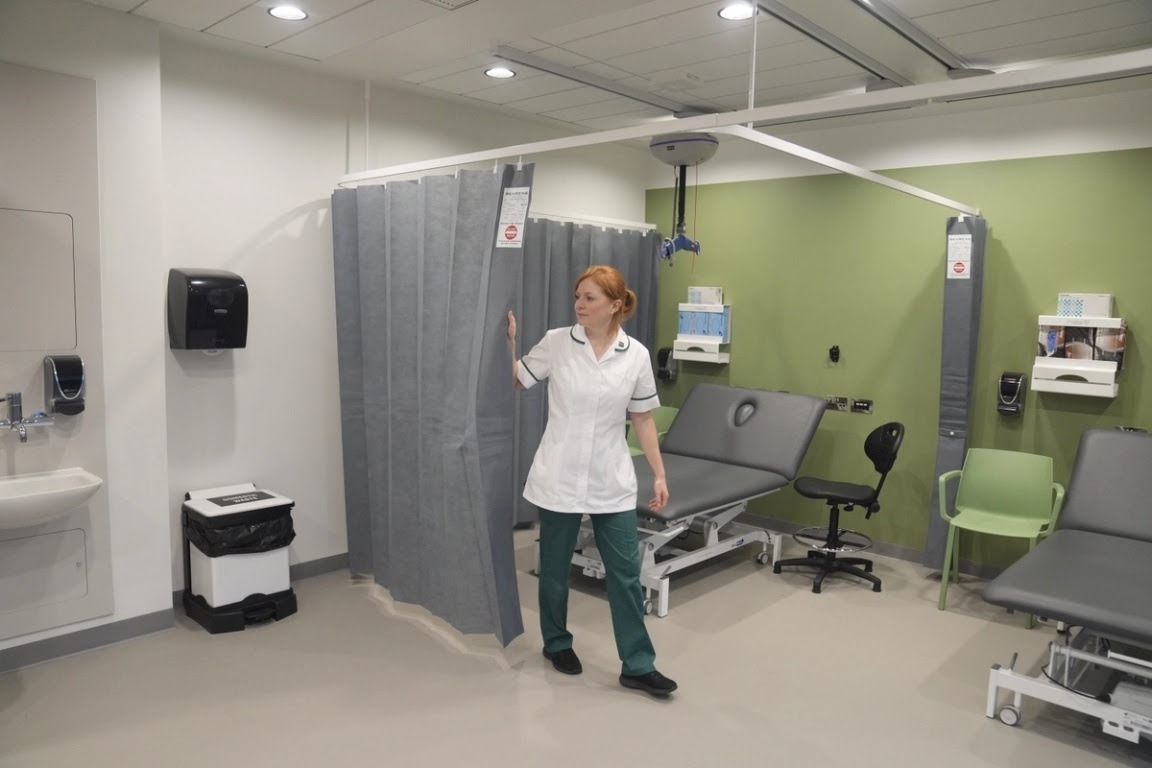
A UK Hospital Is Removing Sinks and Banning Hand Washing, In Order To Mitigate Infection.

London; December 2025: Wexham Park Hospital expects to remove 80% of all sinks, except those in toilets, because drains and sinks harbour bacteria, and most people don’t wash hands for the recommended full 20 seconds. Instead, staff are required to use hand sanitiser after every patient interaction.
This “Water Safe” approach follows similar initiatives in the Netherlands and Germany after studies found that by removing sinks from patient rooms and using water-free patient care reduced the presence of antibiotic-resistant “superbugs” in wards and decreased the rate of hospital-acquired infections. German health guidelines now recommend that no washbasins be placed in patient rooms in intensive care units.
- Patient rooms with sink drains have a higher load of bacterial pathogens, study results have shown.
- Sinks can be a reservoir for gram-negative bacteria (GNB) and facilitate colonization and infection of patients, especially in the intensive care unit (ICU).
- Patients in the ICU are at high risk for health care–acquired infections (HAIs) because of “the high prevalence of invasive procedures and devices and their induced immunosuppression, comorbidities, frailty, and increased age”.
- Implementing a water-free environment in the ICU can be an innovative way for hospitals to remove threatening microbial exposure from splashes, aerosols, and contaminated water.
Joost Hopman, MD, PhD, DTMH, the medical director and consulting microbiologist at Radboud University Medical Center in Nijmegen, Netherlands, have conducted a 02 years pre and post quasi experimental study to evaluate the effect of removing sinks and introducing water-free patient care in the ICU of a large tertiary care medical centre in the Netherlands.
The ICU in the study had 34 operational single-patient rooms. Staff members sought to eradicate multidrug-resistant gram-negative bacteria in the immediate patient environment after ICU sinks tested positive for Enterobacter cloacae extended-spectrum β-lactamase- producing organisms.
Hopman said, it was the most sustainable way of dealing with it, after years of trying cleaning and disinfection, putting disinfectants in the drain, everything, but nothing worked. Now years later, with an experimental settings that proved biofilms grows very fast. Studies have demonstrated that it doesn’t matter how much disinfectant one puts into it; they will always grow back. Bacteria are much more resistant and resilient than whatever the solutions are pressed in. To him, the only sustainable solution is to remove this source. And when such a methodology was adopted, the results were radical. Nobody had believed this could be the way forward because there was always a need of water and soap.
How can sinks be implicated as a reservoir for gram-negative bacteria?
First, because the water coming into the sink is not sterile, it can contain gram-negative bacteria such as Pseudomonas aeruginosa and Legionella. Using of tap water in medical care can be a potential risk for exposure. Tap water can be used as a diluent for solutions, as a water source for medical instruments and equipment, and for performing hand washing by health care workers. Contaminated water can also invade the patient’s zone through the backsplash and aerosols created by the water’s pressure or dripping. Surfaces near sinks can be unknowingly contaminated, and staff may use these areas to prepare medicine or patient equipment. Although unintentional, this contaminated water can cause infections in patients who are immunocompromised or susceptible.
Second, sinks can create a suitable environment for bacteria to proliferate and create biofilms. In sinks, biofilms prefer to grow in areas such as the U-shaped bend in pipes. Removing these biofilms is extremely difficult and can involve taking apart structures in the sink and plumbing and replacing components.
Third, Infection control and prevention is “always a multimodal intervention”. Needs to be immaculately aligned in order to ensure patients are comorbid free. The ICU is no such exception; if there persists a continuous source of multidrug resistance next to the admitted patient, it always remains a risk.
Fourth, Contaminated water can also invade the patient’s zone through the backsplash and aerosols created by the water’s pressure or dripping. Surfaces near sinks can be unknowingly contaminated, and staff may use these areas to prepare medicine or patient equipment.
Between May and August 2014, Hopman and his team removed all the sinks in all ICU patient rooms. A water-free method was introduced, meaning that all patient care-related activities normally involving tap water were adapted to a water-free alternative. Adapted activities included medication preparation, cannula care, hair washing, shaving, and dental care. Participants included all patients 18 years and older admitted to the ICU for at least 48 hours during the study period.
The study results concluded that removing sinks from patient rooms and introducing water-free patient care was associated with a significant reduction of patient colonisation with gram-negative bacteria. This reduction in colonisation was more pronounced in patients with a longer ICU length of stay. The results showed from a ‘1.22 fold’ reduction during a greater than or equal to 2 days’ stay to a ‘3.6 fold’ for greater than or equal to 14 days in the ICU.
This study demonstrated an avant-garde approach to the increasing threat of gram-negative bacteria in health care settings, primarily from water sources. There has been a move toward water-free patient care in various hospital practices. Waterless hand rubs have become the agents of choice for hand hygiene and are universally used throughout health care facilities in the United States.
Waterless bathing and oral care are also preferred in specific patient populations, such as ICU patients. Many products are available for use, such as bathing wipes, dry shampoo, rinse-free shower caps, oral swabs, and more. Hospital water supply can be a source of nosocomial infections, and facilities should have an established water management program and policy to manage the risks associated with the water system. Water-free care is an upcoming movement for ICUs with evident benefits for patients and staff.
In total, 552 ICUs (NSG N=80, SG N=472) provided data about sinks, total HAIs and HAI-PA. The incidence density per 1000 patient days of total HAIs was higher in ICUs in the SG (3.97 vs 3.2).
The incidence density of HAI-PA was also higher in the SG (0.43 vs 0.34). The risk of HAIs associated with all pathogens [incidence rate ratio (IRR)=1.24, 95% confidence interval (CI) 1.03-1.50] and the risk of lower respiratory tract infections associated with P. aeruginosa (IRR=1.44, 95% CI 1.10-1.90) were higher in ICUs with sinks in patient rooms.
After adjusting for confounders, sinks were found to be an independent risk factor for HAI (adjusted IRR 1.21, 95% CI 1.01-1.45).
HAI – Hospital Acquired Infection;
NSG – No Sink Group;
SG – Sink Group;
IRR – Incidence Rate Ratio.
Team Maverick.







Turkey Plans To Sell Russian S 400 Air Defence System To Gulf Nations To Revive US F-35 Programme.
Ankara; July 2026: Turkey could be moving to remove one of the biggest obstacles to restor…

Turkey Plans To Sell Russian S 400 Air Defence System To Gulf Nations To Revive US F-35 Programme.
Ankara; July 2026: Turkey could be moving to remove one of the biggest obstacles …