Scientists Discover 09 New Species Of Butterflies Overlooked in Natural History Museum Drawers.

London; December 2025: Christophe Faynel an expert in hairstreak butterflies, along with his team have conducted a study describing the finds hailing from Brazil, Colombia, French Guiana and Peru, in which they have established the fact that 09 new butterfly species have been discovered hiding in ‘plain sight’ amongst some 80,000 drawers that make up the “Lepidoptera” collection of the Natural History Museum, London.
In an official press note the team of researchers have asserted that the genetic revolution and the collaboration of researchers and museums in various countries led by London’s Natural History Museum, century-old butterflies are now speaking the truth. By comparing modern DNA with ancient DNA from historical specimens, they have managed to resolve long-confused and unnoticed species and uncover greater biodiversity than previously known.
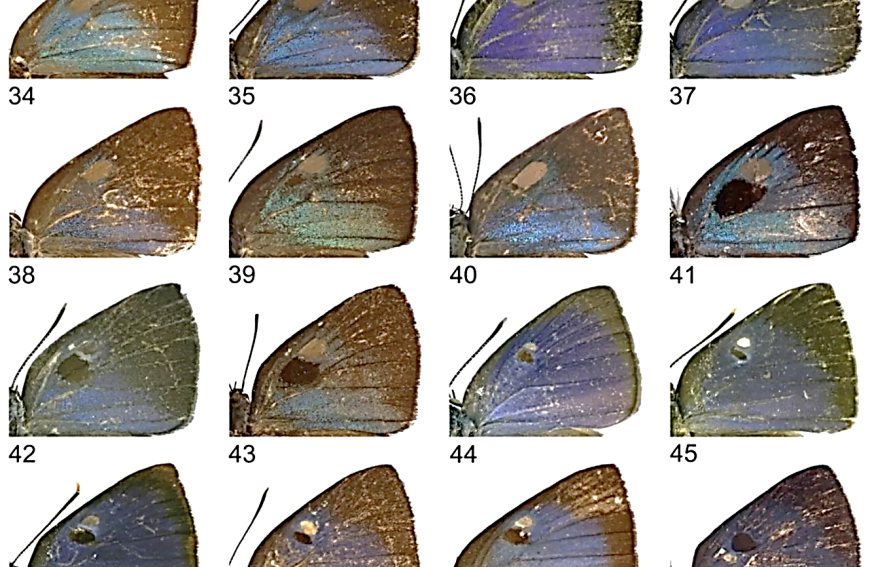
The international team had combined geographical, morphological and molecular analysis to determine whether the specimens had yet to be properly assessed for identification.
The task was tough because of the fact that the fact that these butterflies can be extremely hard to tell apart, despite these insects generally being thought of as having unique and bright coloured wings that could be simple to differentiate. As the scientists explained, butterfly species often copy each other’s appearance. But through advanced DNA sequencing the team were able to extract genetic material from century-old butterfly legs and look into how they differ from other butterfly species which shared a similar appearance.
From there, the scientists were able to spot differences between the various types of butterflies, some of whom were previously believed to be the same species, and record 09 new varieties.
“The species were identified in the Museum’s lepidoptera collection for butterflies and months”, Aisling Lewis, communications manager at the Natural History Museum, told Reporters, “The lepidoptera collection is one of the oldest, largest and certainly the most type rich. The collection contains 12.5 million pinned specimens, and one million papered specimens housed in 80,000 drawers. There are 125,000 type specimens“.
Blanca Huertas, principal curator of butterflies at the Natural History Museum, told the Reporters:
“The new species were found in different places. We found 03 new species from Peru, 02 from Brazil, 03 from French Guiana and 01 from Colombia“.
The museum had sought to learn more about the butterflies in the Thereus species group, which all share a similar blue hue. Once grouped together, the group was thought to contain only five species and four synonyms.
Some of the recently identified and named species, such as:
- “T. cacao” from French Guiana, were named after the regions where the specimens examined were originally found.
- Another newly discovered species, such as “T. ramirezi” from Peru, was named after a scientist who devoted their life to these insects.
- In a more amusing move, the scientists decided to name one species from “Brazil T. confusus”, to reflect the “taxonomic puzzle” the team faced in differentiating between all these butterflies that look very similar.
In total, the team examined more than 1,000 samples taken from the Natural History Museum’s abundant insect collections. Blanca Heurtas said in an interview,
“The Museum cares of for five million butterfly specimens which makes up about 6 percent of the entire collection. With some of these specimens dating back to the 1600s, the Museum’s collections are an irreplaceable archive of life of our planet, allowing scientists and researchers to study species that may no longer exist, or are known to be at risk. Some newly identified species were collected a century ago in habitats that might no longer exist, putting at risk the existence of these species and highlighting the urgency of this work“.
The team hopes that naming new species will help conservationists understand the different types of butterflies out there and take better action toward protecting those that may be endangered.
Team Maverick.








Governor pays obeisance at Baba Lal Ji Dhianpur Dham
On the eve of Guru Purnima, Governor Kavinder Gupta along with Lady Governor Bindu Gupta t…

Governor pays obeisance at Baba Lal Ji Dhianpur Dham
On the eve of Guru Purnima, Governor Kavinder Gupta along with Lady Governor Bindu …