Sweden To Procure French FDI Frigate For $5 Billion For Lulea Class Program To Counter Russia.

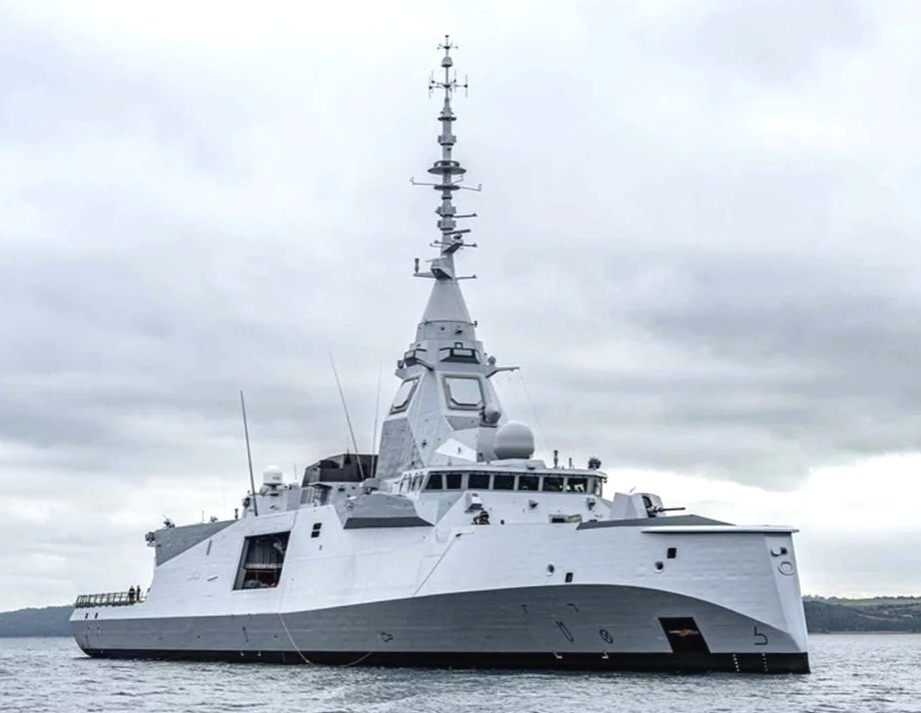
Stockholm; May 2026: Sweden has confirmed the procurement of the French-built FDI frigate for its new Luleå-class program, a $5 billion strategic acquisition designed to re-establish high-end naval combat power in the Baltic region. Announcing the decision today (May 19, 2026), aboard HMS Härnösand in Stockholm, Prime Minister Ulf Kristersson and senior military leadership marked the agreement as Sweden’s most significant surface warfare investment since the Cold War.
The 04 ship acquisition shifts the Royal Swedish Navy from localised coastal defence operations toward comprehensive NATO-integrated missile defence, convoy escort, and long-range maritime deterrence across the Baltic Sea and North Atlantic corridors.
The FDI frigate introduces a dedicated naval area air-defence capability to the Swedish fleet, utilising Aster 30 interceptors, Thales Sea Fire AESA radars, and a 32-cell vertical launch system configured to counter Russian cruise and ballistic missile proliferation. By integrating the operationally validated French hull with sovereign Swedish weapons, sensors, and combat-management systems, Stockholm secures an accelerated deployment timeline for a NATO-interoperable warship. These surface combatants are engineered to protect allied naval task groups, maritime reinforcement corridors, and joint operations within Europe’s heavily contested northern theater.
Deliveries are scheduled from 2030 onward at a rate of one ship annually. The procurement constitutes Sweden’s first acquisition of large surface combatants since the retirement of Halland-class and Östergötland-class destroyers during the late Cold War period. Stockholm directly linked the decision to Russian missile proliferation, NATO maritime integration requirements following Sweden’s accession on March 07, 2024, and the operational need for larger ships capable of sustained deployments outside confined Baltic littoral environments. The Luleå-class requirement emerged from the cancellation of the Visby Gen 2 program initiated in January 2021 under Saab Kockums and FMV management.
That earlier effort focused on enlarged stealth corvettes derived from the existing 72 metre Visby-class configuration and remained aligned with Sweden’s post-Cold War naval doctrine centered on dispersed coastal warfare, low-signature operations, and defensive missions inside the Baltic Sea. Russia’s February 2022 invasion of Ukraine and Sweden’s NATO accession process altered Swedish planning assumptions regarding fleet endurance, escort capability, anti-submarine warfare reach, and integrated air defence requirements. Between 2023 and 2025, the requirement shifted from 05 corvette-sized vessels toward four frigates exceeding 120 metres in length and displacing between 3,000 and 4,500 tons.
Swedish naval leadership concluded that operational timelines could not support the development of a new indigenous hull because NATO reinforcement planning required deployable escort ships by the early 2030s. FMV therefore prioritised mature foreign frigate designs already existing in operational or near-operational form to minimise integration risk and avoid the delays affecting several recent European and U.S. naval programs. Swedish authorities also accepted reduced domestic hull construction participation in exchange for accelerated delivery schedules and lower developmental uncertainty.
Defence Minister Pål Jonson identified three decisive selection criteria: delivery speed, technical maturity, and integrated air defence capability. Naval Group’s FDI entered the evaluation process with a major advantage because it was already operational within the French and Greek Navy’s when Sweden finalised its assessment. The lead ship, Amiral Ronarc’h, began sea trials in October 2024 and formally entered French Navy service in October 2025 after construction at Lorient. For its part, Greece received its first Belharra-class frigate, named HS Kimon, on January 15, 2026.
Swedish authorities viewed this operational status as critical because the combat system architecture, radar integration, and missile qualification process had already been completed before Swedish procurement negotiations began. The Sea Fire AESA radar was fully integrated, Aster missile testing had already occurred, and Naval Group’s production infrastructure at Lorient was active and producing additional units for France and Greece. Stockholm also considered the French and Greek procurement programs important because they reduced uncertainty regarding software maintenance, spare part supply chains, modernisation funding, and long-term sustainment continuity.
France reinforced its industrial position by deploying the Amiral Ronarc’h to Gothenburg between February 02nd and February 05th, 2026, during the final evaluation period, giving Swedish military leadership direct access to an operational frigate rather than a conceptual or developmental proposal. The standard FDI frigate displaces 4,460 tons at full load, measures 122 metres in length, and has a beam of 17.7 metres. Propulsion uses a combined diesel and diesel configuration generating roughly 32 MW, enabling speeds near 27 knots and a range of 5,000 nautical miles at 15 knots. Operational endurance reaches approximately 45 days, depending on mission profile.
Crew size ranges between 110 and 125 personnel, significantly lower than earlier frigate classes of comparable displacement, due to extensive automation for propulsion management, combat systems, and ship control functions. The ship incorporates a helicopter hangar and flight deck capable of supporting NH90-class helicopters alongside unmanned aerial systems for reconnaissance and anti-submarine warfare support. According to available information, Swedish integration plans include Saab RBS-15 anti-ship missiles, Torped 47 lightweight torpedoes, Swedish radar and fire-control subsystems, Saab combat management elements, and Bofors 57 mm and 40 mm naval guns.
Stockholm therefore selected a foreign hull and primary sensor architecture while preserving sovereign control over combat management functions, anti-ship weapons integration, and selected naval subsystems. Relative to current Visby-class corvettes, the FDI also introduces substantially greater endurance, command-and-control reach, aviation support capacity, and missile inventory depth. Air and missile defence capability represented the central operational driver behind the Swedish decision because the current Swedish surface fleet lacks meaningful area-defence capacity against Russian cruise missiles, aircraft, and ballistic threats.
The Swedish FDI configuration is expected to integrate Aster 30 long-range interceptors, CAMM-ER missiles, Thales Sea Fire AESA radar, and Sylver vertical launch systems. Swedish naval planning currently points toward a 32-cell vertical launch configuration, corresponding to the same expansion planned for future French FDI variants, while CAMM-ER quad-packing arrangements could significantly increase total missile inventory. Swedish military leadership specifically emphasized ballistic missile interception capability during the May 19 announcement and directly linked the procurement to increased Russian ballistic missile production observed during 2024 and 2025.
Officials compared the intended operational effect to ‘Patriot at sea’, indicating that the ships are intended to provide area-defence coverage for naval task groups, reinforcement corridors, ports, and NATO maritime operations rather than localised self-protection alone. Compared with Visby-class corvettes, the FDI introduces significantly greater radar range, interceptor inventory, simultaneous engagement capacity, and NATO interoperability through integrated sensor and missile defence networking. Swedish naval leadership also views the frigates as maritime nodes supporting a broader NATO integrated air and missile defence architecture across the Baltic region and northern flank.
The competing proposals reflected different balances between industrial participation, technical maturity, and procurement risk. Saab and Babcock proposed an Arrowhead 120 derivative associated with the British Type 31 architecture, while Navantia proposed the Alfa 4000, a 120-metre frigate displacing roughly 4,300 tons with a 16-cell vertical launch system and integrated anti-submarine warfare suites. Swedish evaluations concluded that both alternatives carried higher developmental uncertainty because neither configuration existed in a completed operational Swedish form during the final assessment process.
The Arrowhead 120 lacked an operational reference ship corresponding to Swedish requirements, while the Alfa 4000 remained an export-oriented design without a completed in-service example. Navantia nevertheless proposed delivery of all 04 ships between 2030 and 2031 and offered integration of Swedish combat-management systems, RBS-15 missiles, national torpedo systems, and Swedish sensors. France differentiated itself by presenting a frigate already delivered to the French Navy and operating during the evaluation period.
Naval Group also signed industrial cooperation agreements with Swedish partners before the final selection and expanded bilateral defence engagement between Paris and Stockholm throughout 2025 and early 2026. Sweden ultimately prioritised operational maturity, validated combat-system integration, and production credibility over lower baseline procurement cost or expanded domestic hull construction participation. The Luleå-class acquisition substantially changes Swedish naval doctrine and force structure by shifting the fleet away from the post-1990 focus on coastal defence and toward sustained NATO maritime operations.
Since the Cold War, Swedish naval planning has relied primarily on stealth corvettes optimized for confined Baltic operations and short-range territorial defence. The future FDI frigates introduce capabilities associated with larger alliance navies, including task-group escort, integrated anti-submarine warfare, convoy protection, and long-endurance deployments across the North Atlantic and Baltic reinforcement corridors. Swedish military leadership explicitly linked the procurement to NATO maritime planning and alliance deterrence operations along the northern flank.
NATO planners increasingly treat the Baltic Sea as a contested missile environment requiring layered naval and land-based interceptor coverage against cruise and ballistic threats, particularly after the Russian expansion of long-range missile production following the invasion of Ukraine. Sweden’s selection also expands the operational footprint of Aster missile systems, Sea Fire radar architecture, and French naval combat systems within Northern Europe while Norway proceeds with Type 26 frigates, Denmark evaluates future surface combatants, and Finland introduces Pohjanmaa-class corvettes. Industrially, the program reflects a broader European procurement trend in which hull construction becomes increasingly internationalized while combat-management systems, weapons integration, and operational sovereignty remain under national control.
Team Maverick.








Taiwan Reaffirms South China Sea Claims After Philippines Submits Scarborough Shoal Chart to UN
Taipei, Aug 2026 : Taiwan on Sunday reaffirmed its sovereignty claims over islands in the …
Taiwan Reaffirms South China Sea Claims After Philippines Submits Scarborough Shoal Chart to UN
Taipei, Aug 2026 : Taiwan on Sunday reaffirmed its sovereignty claims over islands in …