Andhra Pradesh in 2025: A Year of Correction, Confidence, and Accelerated Growth Under the NDA Government

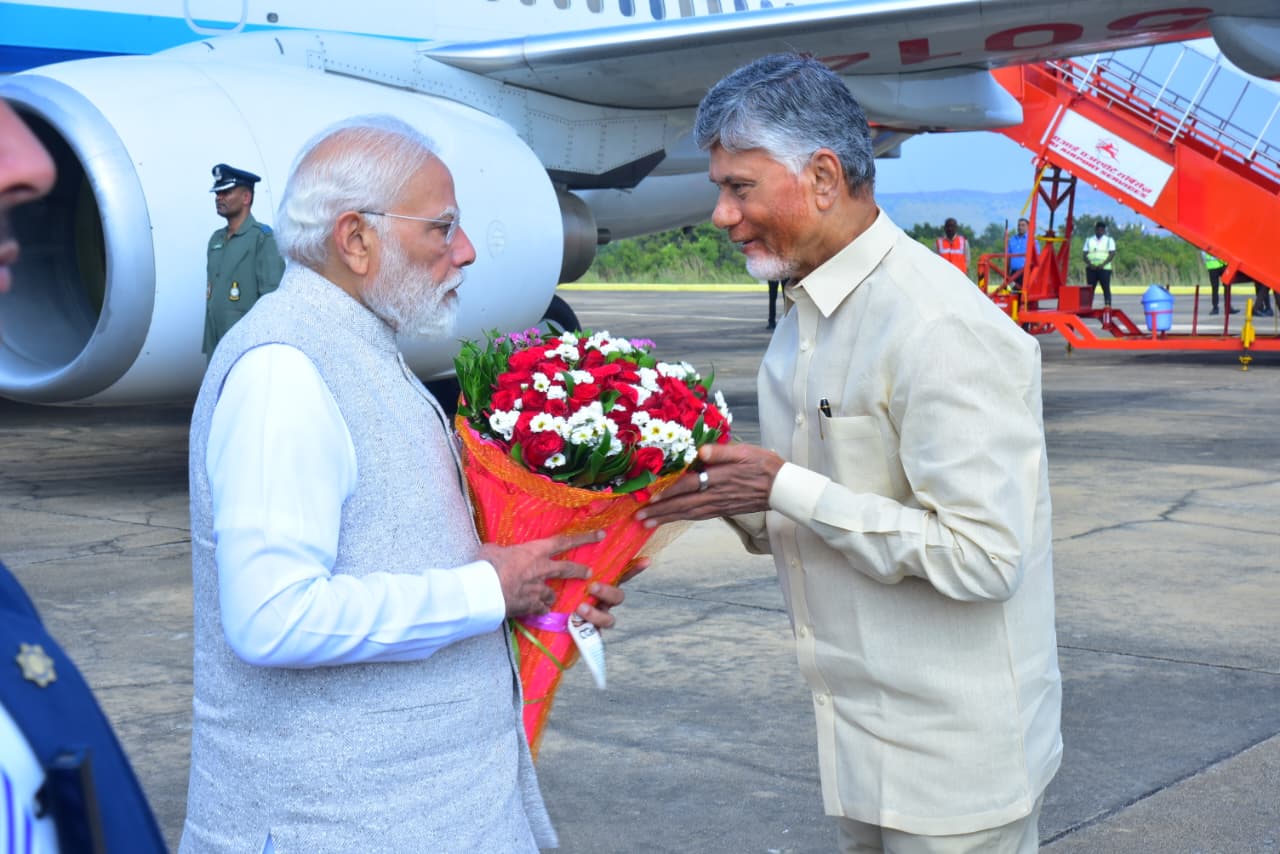
Dec 2025 : As the curtain falls on 2025, Andhra Pradesh stands at a defining crossroads, reflecting on a year that blended recovery with renewed ambition. Following a historic mandate in the 2024 Assembly elections, the National Democratic Alliance (NDA) government led by Chief Minister N. Chandrababu Naidu inherited a state grappling with fiscal stress, institutional uncertainty, and stalled development. Over the past twelve months, the administration has pursued a carefully calibrated strategy—repairing economic damage while laying the foundation for long-term, sustainable growth.
The year 2025 is increasingly being viewed as a period of both correction and acceleration. With an impressive economic growth rate of 11.28 percent, Andhra Pradesh emerged as one of the fastest-growing states in the country. The government’s approach balanced welfare delivery with capital investment, aiming to restore public confidence while repositioning the state as a competitive destination for investment, innovation, and inclusive development.
Welfare as Stability: The ‘Super Six’ Guarantees
Central to the NDA government’s governance philosophy in 2025 was the fulfillment of its electoral commitments, particularly the much-discussed ‘Super Six’ welfare guarantees. Unlike conventional populist rollouts, the government emphasized targeted delivery, digital tracking, and fiscal discipline to minimize leakages and ensure benefits reached intended beneficiaries.
Record Social Security Expansion
One of the most significant achievements of the year was the revamp of the state’s pension system. In 2025 alone, the government disbursed ₹50,000 crore in pensions, extending social security coverage across 31 categories, including senior citizens, widows, differently-abled individuals, and other vulnerable sections. This large-scale infusion of funds provided not only financial security but also stimulated consumption in rural and semi-urban areas, acting as a grassroots economic multiplier.
Education Support Through ‘Talliki Vandanam’
Recognizing education as the cornerstone of long-term development, the government launched the ‘Talliki Vandanam’ scheme to reduce school dropout rates and ease the financial burden on families. Under the initiative, ₹10,090 crore was directly transferred to the bank accounts of 67.27 lakh mothers, ensuring uninterrupted schooling for their children. The scheme stood out for its inclusivity, as benefits were extended to all eligible children in a household, irrespective of family size.
Mahila Shakti: Mobility and Empowerment
On August 15, 2025, the government unveiled the ‘Mahila Shakti’ scheme, allowing free travel for women in APSRTC buses. Since its launch, women have availed over 3.25 crore free trips, significantly improving access to education, employment, healthcare, and markets. Though the scheme incurred a fiscal cost of ₹1,144 crore, its social impact—enhanced mobility and empowerment—was widely acknowledged. The benefit was also extended to differently-abled citizens, broadening the welfare net.
Supporting Farmers and Household Energy Security
Farmers remained a key focus of the NDA government’s welfare agenda. Through the ‘Annadata Sukhibhava’ scheme, ₹6,310 crore was transferred to the accounts of 46 lakh farmers, supplementing central assistance and cushioning them against rising input costs.
To address domestic energy inflation, the government implemented ‘Deepam-2’, providing three free LPG cylinders annually to eligible households. With an expenditure of ₹2,684 crore, nearly 2 crore cylinders were distributed, offering substantial relief to low-income families.
Targeted Assistance Across Sectors
Beyond flagship schemes, the government introduced a range of targeted interventions. The ‘Matsyakara Bharosa’ scheme provided ₹250 crore to 1.25 lakh fishermen during the lean season. Auto-rickshaw drivers received ₹436 crore in financial assistance. Honorariums were increased for pastors, imams, priests, and Nayee Brahmins, while junior lawyers were granted a ₹10,000 monthly stipend to support them during their early years of practice.
Urban food security also received attention with the revival of 204 Anna Canteens, which collectively served over 4 crore meals during the year, ensuring affordable nutrition for the urban poor.
Employment and Youth-Centric Governance
Unemployment, particularly among youth, was addressed as a priority area in 2025. The government operationalized the job calendar soon after taking office, signaling a commitment to transparency and timely recruitment.
Mega DSC and Police Recruitment
The long-pending Mega DSC recruitment drive culminated in the appointment of 15,491 teachers, easing chronic shortages in government schools. Parallelly, the state finalized police recruitment, issuing appointment letters to 5,757 constables. To boost morale, trainee constable stipends were increased from ₹4,500 to ₹12,500 per month.
In a landmark move, gratuity benefits were extended to Anganwadi and ASHA workers, offering post-retirement security for the first time.
Skill Census and Innovation Ecosystem
Looking beyond government employment, the administration conducted a comprehensive Skill Census, mapping the capabilities of 3.5 crore citizens. This database aims to align workforce skills with industry demand. The establishment of the Ratan Tata Innovation Hub in Amaravati, along with regional centers in five cities, underscored the state’s push toward startups, research, and entrepreneurship.
Industrial Resurgence and Global Outreach
Economic analysts widely described 2025 as a “Golden Year” for Andhra Pradesh’s industrial sector. Under IT and Electronics Minister Nara Lokesh, the state adopted an aggressive investment strategy, targeting $1 trillion in investments by 2029.
Major Global Commitments
The year witnessed landmark announcements, including Google’s $15 billion data center investment and ArcelorMittal’s $17 billion steel plant proposal. These projects sent strong signals to global investors about Andhra Pradesh’s readiness for large-scale industrial development. International media, including Reuters, highlighted the state’s renewed investment pitch.
CII Summit and Policy Innovations
The CII Partnership Summit in Visakhapatnam proved to be a turning point, resulting in 610 MoUs with projected investments of ₹13.25 lakh crore and employment potential of 16.13 lakh jobs. The State Investment Promotion Board (SIPB) approved ₹8.55 lakh crore worth of investments across 13 meetings.
To boost investor confidence, the government introduced 23 new industrial policies, including Escrow Accounts for industrial incentives, a first-of-its-kind reform in India ensuring timely disbursement of promised subsidies.
Decentralized Industrial Development
Breaking away from capital-centric growth, the government launched the ‘One Constituency–One Industrial Park’ initiative. 140 constituencies identified 100-acre land parcels, supported by a ₹500 crore credit guarantee fund for MSMEs. Rayalaseema was positioned as a future technology hub with the launch of a Drone City over 300 acres in Orvakal, Kurnool, expected to generate 40,000 jobs.
These reforms earned Chief Minister Chandrababu Naidu the ‘Business Reformer of the Year 2025’ award from The Economic Times.
Infrastructure Revival: Amaravati and Beyond
One of the most visible transformations of 2025 was the revival of Amaravati, where long-stalled construction resumed at scale. Work restarted on the Legislative Assembly, Secretariat, High Court, and official residential complexes. The government also announced ‘Quantum Valley’, positioning Amaravati as a future hub for quantum computing and semiconductor research.
Simultaneously, a three-region development strategy was pursued: Visakhapatnam as the executive and IT hub, Amaravati as the legislative and knowledge capital, and Tirupati as an electronics and tourism center. Construction of the Visakhapatnam Railway Zone headquarters also commenced, fulfilling a long-standing promise.
Rural and Tribal Infrastructure Push
Under Deputy Chief Minister Pawan Kalyan, rural development received renewed momentum. The ‘Palle Panduga’ initiative enabled the construction of 4,000 km of cement roads, while 13,326 Gram Sabhas were held in a single day to approve development works.
The ‘Adavi Talli Bata’ program focused on road connectivity and 4G access in tribal and border villages. The ‘Amarajeevi Jaladhara’ project, with an outlay of ₹3,050 crore, aimed to provide tap water to every household.
At the macro level, the ‘Swarnandhra–Swachhandhra’ initiative allocated ₹1,000 crore for road repairs and ₹3,000 crore for new roads, significantly improving connectivity.
Governance 2.0: Technology-Driven Administration
In January 2025, Andhra Pradesh reasserted its leadership in digital governance with the launch of ‘Mana Mitra’ (WhatsApp Governance). Citizens gained access to 700+ government services through smartphones, from bill payments to educational services. The initiative received national recognition at the 28th National e-Governance Conference, with plans for replication across other states.
Complementing this was the ‘P4’ (Public–Private–People Partnership) initiative, encouraging affluent citizens and corporates to mentor and support underprivileged families. Several corporates joined the effort, with the Chief Minister personally adopting 250 families in Kuppam.
Sectoral Advances: Water, Energy, and Law & Order
Progress accelerated on the Polavaram Project, with technical hurdles resolved and R&R funding mobilized. In Rayalaseema, the Handri-Neeva canal widening was completed in just 100 days, highlighting administrative efficiency.
The state also positioned itself as a Green Energy Hub, attracting investments from NTPC Green, Tata Power, and ReNew Power. Power tariffs were rationalized through a “True Down” mechanism, reducing costs from ₹5.19 to ₹4.80 per unit. Free rooftop solar installations were announced for 20 lakh SC/ST families.
For farmers, paddy procurement was streamlined, with ₹8,120 crore paid within 24 hours for 34.23 lakh metric tonnes. The repeal of the Land Titling Act and issuance of new Rajamudra passbooks restored confidence among landowners.
Law and order reforms included the formation of the Eagle Task Force, leading to a measurable reduction in drug-related crimes.
Challenges and the Road Ahead
Despite notable gains, challenges remain. The opposition raised concerns about fiscal sustainability and regional imbalance, while economists cautioned against rising recurrent expenditure. However, the government maintains that wealth creation and industrial growth will offset welfare costs.
As Andhra Pradesh steps into 2026, priorities include converting MoUs into operational projects, resolving land disputes, and expanding the tax base. With a stable administration and strong growth momentum, the state closes 2025 not merely in recovery, but in resurgence—poised for a decisive leap forward.
Team Maverick.



PM Modi Shares Video of Japan PM Sanae Takaichi Playing Santoor, Highlights Growing India-Japan Partnership
New Delhi, July 2026 : Prime Minister Narendra Modi on Thursday shared a heartwarming vide…

PM Modi Shares Video of Japan PM Sanae Takaichi Playing Santoor, Highlights Growing India-Japan Partnership
New Delhi, July 2026 : Prime Minister Narendra Modi on Thursday shared a heartwarming …