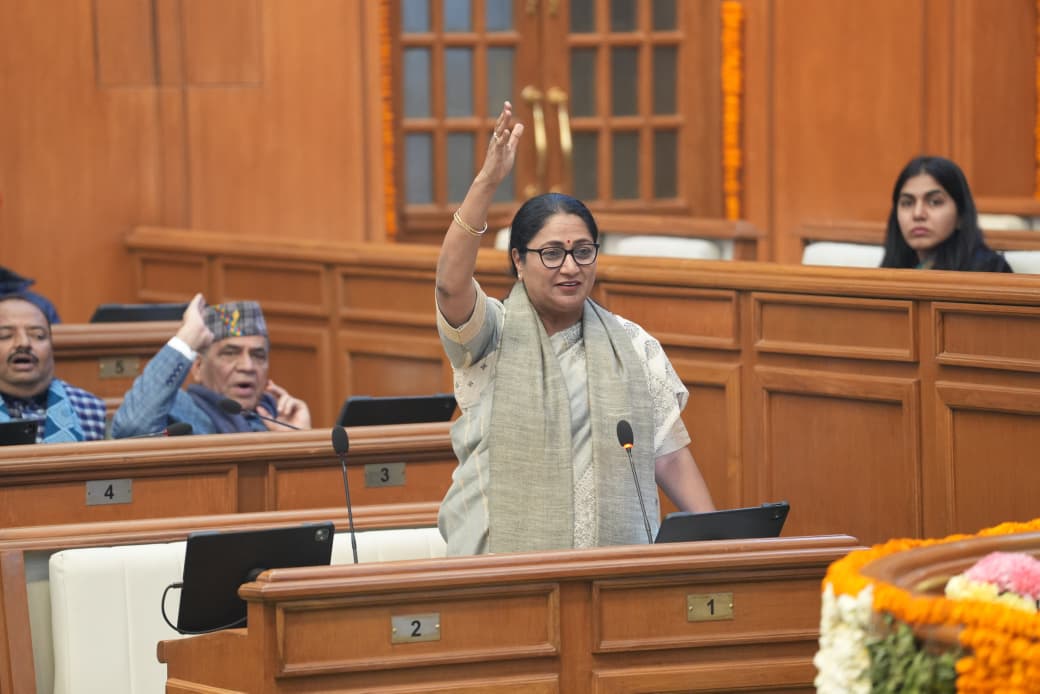
Statement by Rekha Gupta in the Delhi Legislative Assembly on Pollution in the National Capital

Environment is a shared responsibility; accountability and action, not blame, guide our policy: Chief Minister Smt. Rekha Gupta
Comprehensive environmental action underway through electric mobility, waste management, greening and traffic reforms: CM Smt. Rekha Gupta
Traffic congestion, dust and emissions drive pollution; phased action underway at all bottlenecks: Chief Minister Smt. Rekha Gupta
Biogas, waste-to-CBG and e-waste plants strengthening pollution control and clean energy: Chief Minister Smt. Rekha Gupta
Garbage mountains stem from decades of neglect; enhanced bio-mining to deliver a permanent solution: Chief Minister Smt. Rekha Gupta
New Delhi, January 2026 : The Chief Minister of Delhi, Smt. Rekha Gupta, today addressed the Delhi Legislative Assembly on issues related to environment and pollution, reiterating the Government’s firm commitment to improving environmental quality in the national capital. She stated that the environment is not a political subject but a shared responsibility that directly impacts every citizen and family, and therefore requires accountability and concrete action rather than blame.
The Chief Minister said that her government does not believe in evading responsibility by blaming opposition parties or neighbouring states. She alleged that previous administrations adopted superficial and temporary measures to address pollution and relied on symbolic actions, which failed to bring lasting improvement. She emphasised that ensuring clean air for Delhi is a core commitment of the present government and that environmental challenges must be addressed through a holistic and long-term approach.
Referring to pollution-related data from 2016 to 2025, the Chief Minister noted that the persistence of poor air quality days demonstrates the need for sustained, ground-level interventions. She observed that pollution in Delhi is influenced by multiple factors including weather conditions, vehicular growth, dust particles and winds from the NCR, and is linked to the city’s geographical and structural realities rather than to any single government or political party.
The Chief Minister underlined that pollution control is not limited to air alone and requires simultaneous action on air, water and land. She informed the House that the government initiated long-term, medium-term and short-term measures from the very first day in office. Identifying dust and smoke as the two primary contributors to pollution, she stated that the government is aggressively promoting electric mobility. As part of this effort, 3,500 electric buses are already operational, with a target of deploying 7,500 electric buses by the end of 2026. The government has further resolved to fully electrify Delhi’s public transport system by 2029.
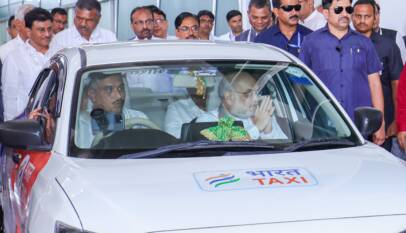
She stated that the government aims to transition all government and private vehicles towards zero emissions through a comprehensive Electric Vehicle Policy, which will cover charging infrastructure and battery management. Mobile applications are also being developed to promote e-autos, e-taxis, shared taxi services and car pooling.
Highlighting steps taken to strengthen vehicle fitness and pollution checks, the Chief Minister said that two new automated testing stations are being established at Nand Nagri and Tehkhand, while the fitness centre at Burari has been upgraded. These facilities will enable automated testing of approximately 2.5 lakh commercial vehicles.
She reiterated that vehicles without valid pollution certificates will not be supplied with fuel. To promote clean last-mile connectivity, cycling services have been introduced at 17 metro stations and e-bike services at more than 50 metro stations. She also informed that three new metro corridors have been approved, with the objective of expanding the metro network from 394 kilometres to 500 kilometres.
Referring to the Regional Rapid Transit System (RRTS), the Chief Minister said that the Delhi–Meerut, Delhi–Panipat–Karnal and Delhi–Alwar corridors will significantly reduce traffic pressure on the capital. She emphasised the need to cultivate a strong public transport culture, encouraging citizens to prefer buses and metro services over private vehicles.
The Chief Minister stated that pollution control cannot be achieved through temporary measures. She said that traffic congestion directly contributes to pollution, and therefore work has commenced at all major congestion points across the city. Bottlenecks, potholes, dividers and U-turn-related issues are being addressed in a phased manner through traffic management studies. For dust control, the Delhi Municipal Corporation has been provided with 70 Mechanical Road Sweeping (MRS) machines and 1,000 litter pickers. The government has also extended financial assistance of ₹2,300 crore to the MCD, along with continued support for sanitation and waste management. Additional machinery such as MRS machines, water sprinklers and anti-smog guns is being arranged for PWD roads.
She further informed that wall-to-wall carpeting of roads has commenced to ensure dust-free and pothole-free surfaces. For the first time in Delhi’s history, the Ridge Area has been formally notified, and 4,200 hectares of land have been declared as a forest area. Work is progressing on Miyawaki forests, vertical plantations, and greening under metro pillars and flyovers. The Chief Minister added that horticulture tender conditions have been revised to ensure year-round maintenance of plants.
Addressing industrial pollution, the Chief Minister said that strict action is being taken against polluting units. She informed that the government has begun focused work on developing industrial areas to provide industries with alternative locations equipped with better facilities. To manage cattle dung generated daily in the city, a 200 TPD biogas plant has been established at Nangli Sakrawati, and a 100 TPD waste-to-CBG plant has been commissioned at Ghogha Dairy. These projects will contribute to pollution control and clean fuel generation.
The Chief Minister noted that Delhi generates approximately 11,000 metric tonnes of waste daily and that garbage dumps are the result of years of inadequate disposal capacity. The present government is enhancing the capacity and efficiency of bio-mining to achieve permanent solutions. She added that construction and demolition waste is a major contributor to dust pollution, and C&D plants are being revived and upgraded. She also informed that a modern e-waste processing plant is being established at Okhla to address the challenge of open burning of e-waste in the Delhi-NCR region.
Emphasising the interconnected nature of environmental challenges, the Chief Minister said that cleaning the Yamuna, managing waste, preventing waterlogging, easing traffic congestion and controlling pollution require a holistic and integrated approach. Environmental improvement, she said, is a continuous process.
On waterlogging, she informed that timely interventions at sensitive locations such as Minto Bridge and Sunehri Bagh drain prevented waterlogging despite heavy rainfall this year. Around 15,000 metric tonnes of silt were removed from the Sunehri Bagh drain, providing relief to surrounding areas. She added that the government is promoting solar energy by installing rooftop solar systems on government buildings, increasing subsidies and implementing schemes for solar plants on agricultural land.
Responding to criticism from the opposition, the Chief Minister said that attempts are being made to attribute long-standing issues to an 11-month-old government, even though several processes were initiated during previous administrations.
The Chief Minister concluded by stating that the government is working round the clock to improve Delhi’s environment, infrastructure and quality of life, and expressed confidence that collective efforts of the government and citizens will transform Delhi into a clean, green and pollution-free capital.


BJP Workers Are Full-Time Politicians, Rahul Gandhi Is Part-Time: Nitin Nabin in Telangana
Hyderabad, June 2026 : Bharatiya Janata Party (BJP) national president Nitin Nabin on Mond…
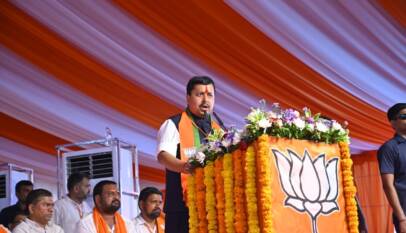
BJP Workers Are Full-Time Politicians, Rahul Gandhi Is Part-Time: Nitin Nabin in Telangana
Hyderabad, June 2026 : Bharatiya Janata Party (BJP) national president Nitin Nabin on Monday …