Russia Plans To Deploy Thousand Of Captured Ukrainian Children To Summer Camps In 2026.

Kremlin; January 2026: On 20th January 2026, Donetsk People’s Republic (DNR) Head Denis Pushilin claimed that his administration plans to “organise recreation” for 58,000 children at summer camps in occupied Donetsk Oblast and in Russia in Summer 2026. Pushilin claimed that his administration sent 56,000 children to such camps in 2025, including over 24,000 children who attended summer programs outside of occupied Donetsk Oblast.
The Kherson Oblast occupation administration claimed on January 20 that it sent 6,310 children from occupied Kherson Oblast to such summer recreation programs in 2025. Pushilin specifically named the Orlyonok; Alyye Parusa; Artek camps as camps that children will attend in 2026. Orlyonok is located in Krasnodar Krai, and Alyye Parusa and Artek are both located in occupied Crimea.
Humanitarian watchdogs has previously assessed that all three of these camps are part of the extensive Russian ecosystem for indoctrinating Ukrainian children by exposing them to academic instruction, military training, and military-patriotic education. The Yale Humanitarian Research Lab (YHRL) identified 210 locations in Russia and occupied Ukraine, including Orlyonok, Alyye Parusa, and Artek, to which Russian officials have taken and either temporarily or indefinitely held Ukrainian children since 2022.
Occupied Kherson Oblast-based media reported on January 15th that 24 children aged 14 to 17 from occupied Kherson Oblast attended the “Pride of the Nation. The Way of Development” program at the “Avangard” military sports camp in Volgograd Oblast. One teenager gave an interview to Russian media, claiming that the program revealed to him how “interesting” service in the Russian military could be. The teenager also reported that he practiced drone operation using virtual reality technologies. “Pride of the Nation” brands itself as a program geared at children from occupied Ukraine whose parents are deceased Russian veterans, and claims to teach children about military professions, drone operation, small arms fire, and other military-patriotic pursuits.
Ukrainian sources have disputed the fact that the program is intended for children of Russian veterans, and have reported that Russian officials used overt threats and coercion tactics to force parents into enrolling their children in the program. Human Rights Watch Dogs have reported on previous instances of Russian officials sending Ukrainian children to Avangard for military-patriotic training, and YHRL identified Avangard as one of the 210 locations at which Russian officials have temporarily or indefinitely held Ukrainian children since 2022.
The Kherson Oblast occupation administration announced on January 19 that local occupation authorities will receive powers of guardianship and trusteeship for children under a new law that came into force on 01st January 2026. The purpose of this new law is ostensibly to “strengthen the prevention of child disadvantage and social orphanhood” and to streamline the work of regional children’s rights officials. This new law, however, appears to grant extensive powers to local authorities to make decisions on behalf of children by giving municipal leaders guardianship powers. This new law may allow local occupation administrators to remove children from their homes or legal guardians under a wide range of circumstances and may also grant occupation officials the ability to place children up for adoption.
Meanwhile, Yunarmia occupied Donetsk Oblast branch Chief of Staff Viktor Pudak reported on January 20 that Yunarmia members have begun taking classes on tactical combat drone operation as part of an agreement between Yunarmia and the Vladimir Zhoga Republican Center for Unmanned Systems. Pudak noted that Yunarmia cadets completed classes on drone operation theory and drone simulators and are now training on real combat drones at the Vladimir Zhoga Center in occupied Donetsk Oblast. The Vladimir Zhoga Center is directly involved in the development of Russian combat drones and provides drones and drone operator training to Russian and Belarusian armed forces. Yunarmia’s stated mission is to prepare youth for future service in the Russian military and has been active in occupied Ukraine as a tool of militarization and indoctrination. Russia has been trying more broadly to integrate Ukrainian children into its drone development, production, and operation ecosystem, as Human Rights Watch Dogs have previously assessed.
On the other side, Kremlin newswire RIA Novosti reported on January 21st, that it has reviewed Russian government documents that show that schoolchildren will begin learning how to assemble and operate drones as part of compulsory OBZR classes. RIA Novosti stated that the OBZR curriculum requires the equipment of school classrooms with certain teaching materials, including educational and methodological materials on drone operations, a drone operation software complex, and a drone designer kit, as well as a basic set of simple drone models. T
he OBZR curriculum is in place throughout Russia and in occupied Ukraine. Deputy Chairperson of the Donetsk People’s Republic (DNR) occupation government Larisa Tolstykina reported on January 20, for example, that the “Youth and Children” national project delivered a set of OBZR education materials and technologies to a high school in occupied Donetsk City. Russia’s imposition of the OBZR curriculum in schools in occupied Ukraine normalises the rapid militarisation of the school system in occupied areas and prepares Ukrainian youth for future service in the Russian military. OBZR also supports Russian efforts to leverage Ukrainian youth in its drone development, production, and operation infrastructure.
The Russian Ministry of Internal Affairs (MVD) Migration Service announced that as of January 20, children are only able to leave Russian territory with a foreign passport. Russian law requires foreign passports, as opposed to internal passports, to travel outside of the country. The new requirements now extend foreign passport requirements to children under age 14, which is the legally mandated passport age in Russia. Russia has begun imposing its passport and documentation laws on occupied Ukraine, as Human Rights Watch Dogs have analysed at length. The new requirements will essentially make it impossible for children under the age of 14 to leave occupied territories unless they receive Russian documentation.
The threat of further restricted movement may also have the additional effect of coercing families into receiving Russian passports for children under age 14 to avoid scrutiny by Russian occupation and law enforcement officials. Ukrainian children in occupied areas have already begun receiving Russian documentation en masse upon their 14th birthdays, and infants are presented with Russian passports from birth, so the new requirements are intended to effectively ensure that the entire youth population of occupied Ukraine grows up as Russian citizens.
Team Maverick.
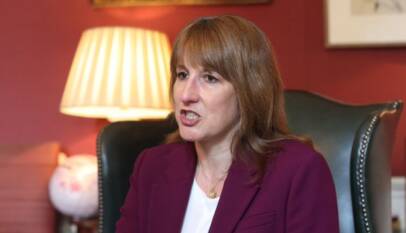


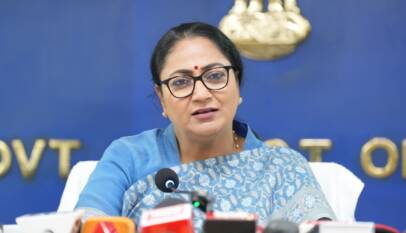
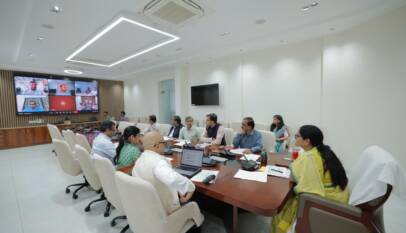

Rainwater Harvesting Systems to Be Installed in 75 Schools Before Monsoon, Saving 50 Crore Litres of Water: CM Rekha Gupta
Delhi Government Aims to Strengthen Rainwater Conservation, Improve Groundwater Levels and…

Rainwater Harvesting Systems to Be Installed in 75 Schools Before Monsoon, Saving 50 Crore Litres of Water: CM Rekha Gupta
Delhi Government Aims to Strengthen Rainwater Conservation, Improve Groundwater Levels and Promote Water-Saving Awareness …