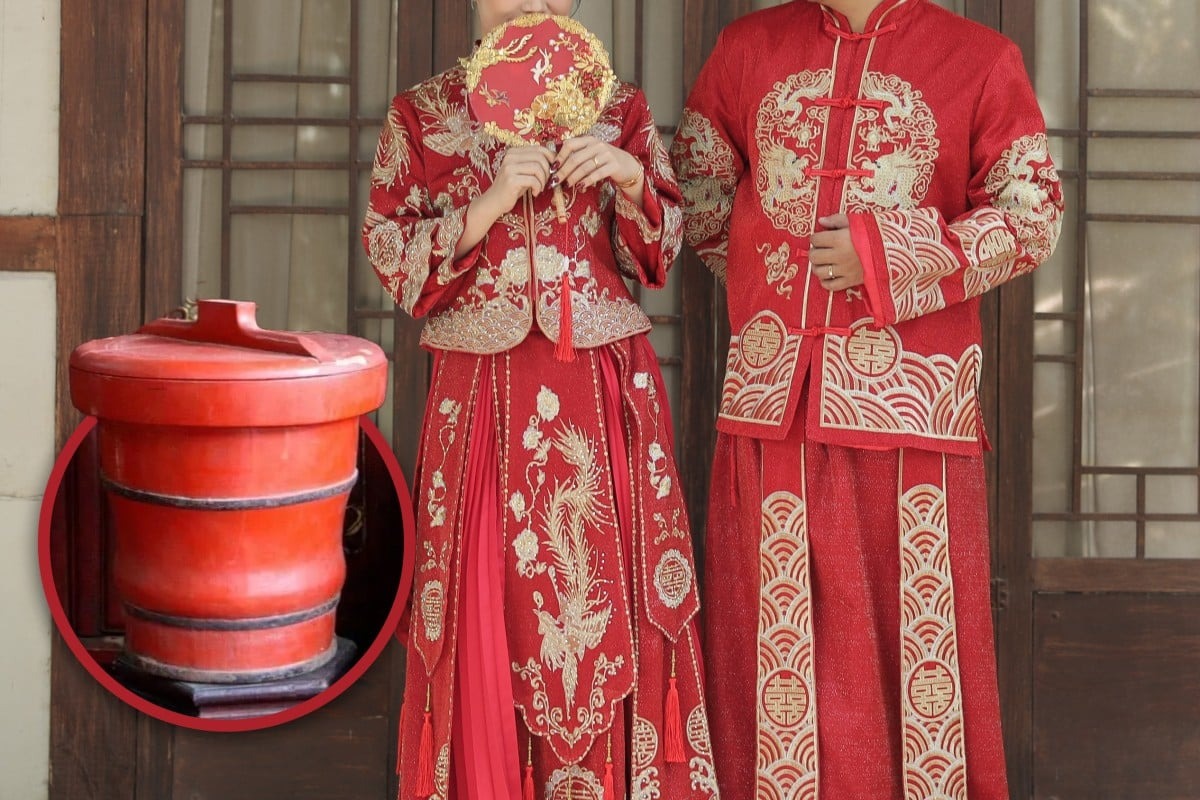
In Rural Wuhan Of China Brides Bring Chamber Pot For Wedding Ceremony.

Wuhan, China; January 2026: In the Jiangsu and Zhejiang provinces, during a traditional Han Chinese wedding ceremony, a trusted servant or female relative of the bride precedes the bridal sedan, balancing a chamber pot on a shoulder pole.
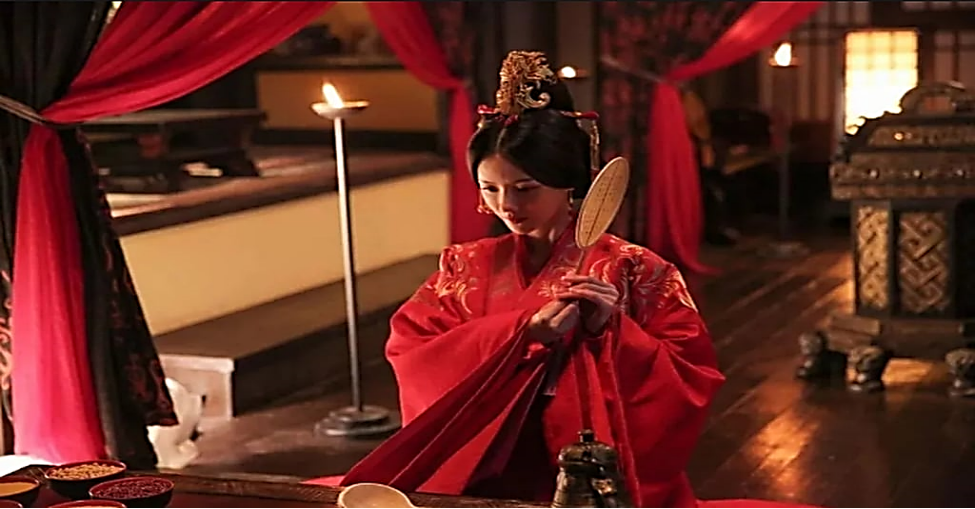
In suburban villages around Shanghai, practical household items such as foot basins, chamber pots, and tall bathing tubs were once essential parts of a bride’s dowry. The tall bathing tubs, for instance, were known as “child-rearing tubs” as they were used for bathing newborns, typically delivered at home.
Meanwhile, the chamber pot, used as a toilet and often referred to as a “descendant bucket,” was filled with red eggs, red dates, peanuts, and other auspicious items upon arrival at the groom’s house. Each of these items embodied blessings for fertility, offspring, and a prosperous family lineage.
Traditionally linked to filth and unpleasant odours, the chamber pot may seem an unlikely addition to a bride’s dowry. Nevertheless, in many regions of China, particularly rural areas, it was once deemed a standard and essential item for a bride to carry to her new home. Beyond its practical function as a portable nighttime toilet before modern sanitation, human and animal excrement in rural communities served as organic fertiliser, thus regarded as a symbol of regeneration, vitality, and new life.
In Yangzhou, Jiangsu province, southeastern China, a traditional bridal item called the “purple copper chamber pot” is part of wedding customs. Despite its name, the pot is not wholly constructed of copper; it is typically merely rimmed with the metal, but it must be exquisitely crafted.
On the auspicious wedding day, the chamber pot is adorned with a red ribbon. Inside, it holds a smaller chamber pot containing 13 red-dyed eggs, two bundles of toilet paper, two sets of chopsticks, along with dyed red peanuts, walnuts, jujubes, and lotus seeds. All these items are later spread across the wedding bed to convey the blessing of “five sons achieving scholarly success”, a traditional Chinese aspiration for male offspring to thrive academically.
As a local saying goes, “The bride’s chamber pot is new for three days”. This signifies that after the ceremony, the chamber pot returns to its role as a standard household item. In some folk customs, before the chamber pot’s use, young boys are invited to urinate into it, symbolising that the bride is destined to bear a son.
In rural areas of Wuhan, central China, a pair of chopsticks is placed inside the pot, signifying a swift birth of a son, as the Chinese phrase for chopsticks sounds similar to “fast son”. However, by the 1980s, as modern flush toilets became increasingly common in rural China, the practice of including a chamber pot in a bride’s dowry began to decline.
Team Maverick.







Trump Pushes Iran Deal, Calls for Expansion of Abraham Accords
New Delhi, May 2026 : US President Donald Trump on Sunday said negotiations with Iran are …

Trump Pushes Iran Deal, Calls for Expansion of Abraham Accords
New Delhi, May 2026 : US President Donald Trump on Sunday said negotiations with …