Effective action to prevent industrial diversion of subsidised fertilisers; transparent distribution to be ensured through the FFS portal
Companies failing to meet supply targets to have allocations transferred to other capable suppliers
Farmers to be encouraged to use alternative fertilisers such as Nano Urea, SSP and NPK: Chief Secretary
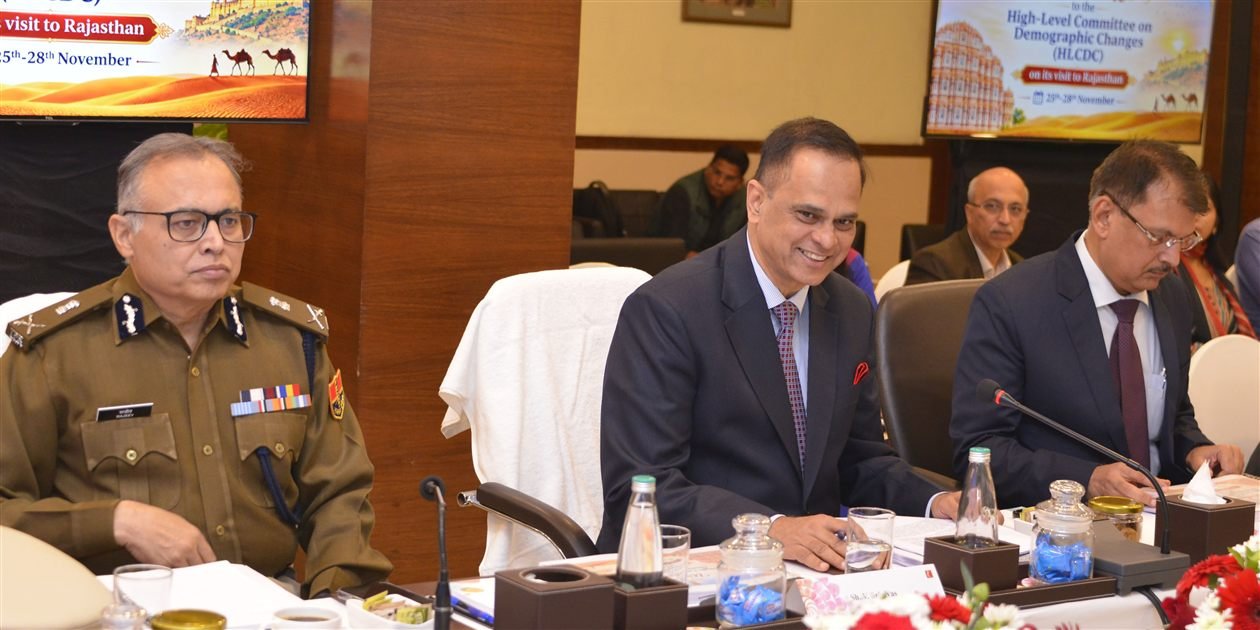
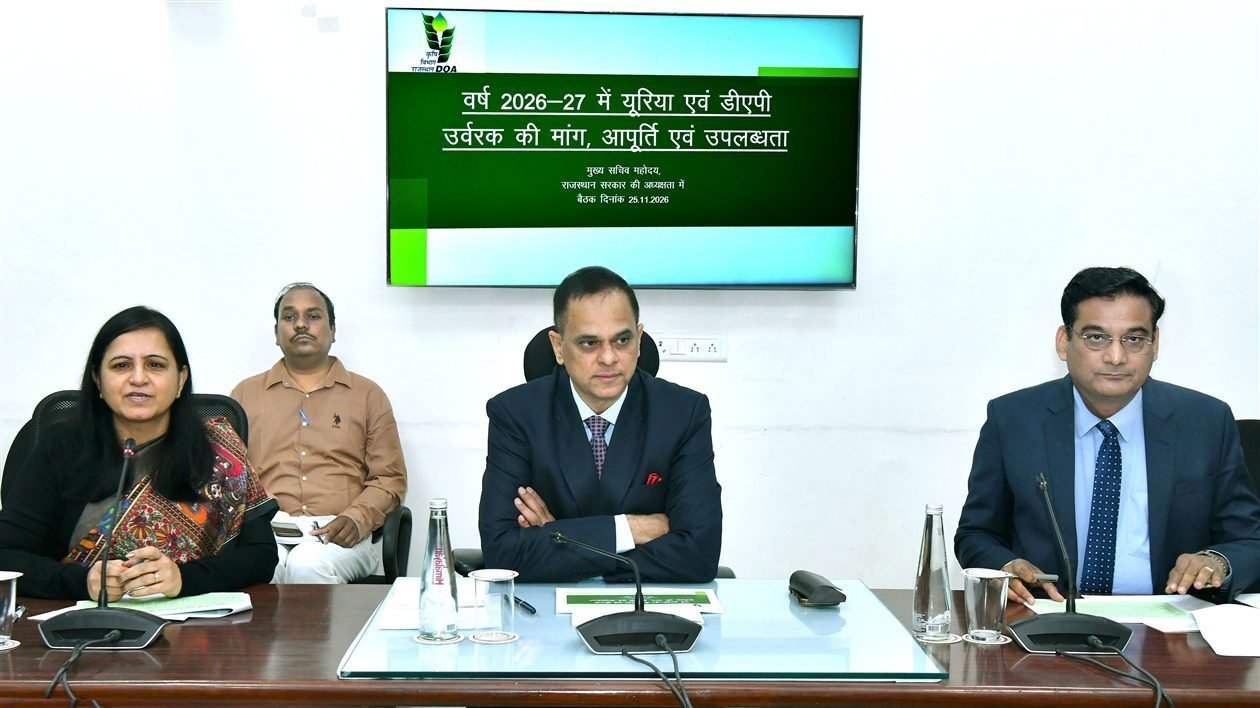
Jaipur, November 2026: A review meeting was held at the Government Secretariat on Wednesday under the chairmanship of Chief Secretary V. Srinivas to ensure the smooth, timely and adequate availability of urea and DAP to farmers during the sowing of Rabi crops and to strengthen the state's fertiliser supply and distribution system.
The meeting reviewed in detail the demand, supply and district-wise availability of chemical fertilisers in Rajasthan during 2026-27. Necessary directions were issued to the departments concerned and fertiliser manufacturing companies.
The Chief Secretary said that adequate quantities of urea and DAP were available in the state. He emphasised that farmers should not face any difficulty in obtaining fertilisers during the sowing season. All concerned departments and fertiliser manufacturers must therefore work in coordination to strengthen the supply system.
He directed the Agriculture Department to coordinate and correspond with the Central Government to reduce the allocations of companies that fail to supply fertilisers to the state in accordance with the monthly allocations fixed by the Centre. Such allocations should be transferred to capable companies with a better record of supply.
At the beginning of the meeting, Principal Secretary of the Agriculture Department Manju Rajpal presented a progress report on the demand, supply and availability of chemical fertilisers during the Rabi and Kharif seasons of 2026-27.
She said that the supply and availability of urea in the state were satisfactory. During the Kharif season, supply had reached 112 per cent of the allocated quantity. With the opening stock and continuous replenishment, the state currently had a strong availability of 9.64 lakh metric tonnes.
Regarding DAP, she said that the supply system had remained operational despite international circumstances, and advance buffer stocks sufficient for eight to ten days had been ensured in most districts.
She also briefed the meeting on compliance with the directions issued at the previous meeting on October 6, correspondence with the Central Government over companies supplying less than their allocated quantities, statewide implementation of the FFS portal, and joint enforcement operations conducted by the police and revenue machinery to prevent the diversion of urea.
Effective Action Against Industrial Diversion and Black Marketing of Subsidised Fertilisers
Agriculture Commissioner Naresh Goyal briefed the meeting on the progress of the statewide campaign to prevent the illegal diversion, storage and black marketing of fertilisers.
He said that under real-time online monitoring of fertiliser dealers, 12,141 dealers had undergone detailed inspections so far. During the campaign, 193 samples were collected, show-cause notices were issued to 1,282 firms, sales were suspended at 64 establishments, and the licences of 93 firms were suspended.
In addition, 31 FIRs were registered at various police stations and 12,375 fertiliser bags were seized. The seizures also included the illegal DEF urea plant recently detected at Balahera in Dausa district.
The Agriculture Commissioner explained that the substantial difference between the prices of agricultural-grade urea and industrial technical-grade urea creates the possibility of subsidised urea being diverted to industries such as plywood, resin and animal feed manufacturing.
In response, Chief Secretary V. Srinivas directed officials of the Commercial Taxes Department to regularly provide the Agriculture Department with verified data on the technical-grade urea purchased by the concerned industrial units, their production capacities and their inward supply chains.
Promotion of Balanced Fertiliser Use and Alternative Nutrients
To reduce excessive dependence on urea and DAP and maintain soil health, the Chief Secretary directed the agricultural extension machinery to become more active at the grassroots level.
He said farmers should be made aware of the use of Nano Urea, Nano DAP, Single Super Phosphate (SSP), NPK and biofertilisers.
Promoting balanced nutrient management would help maintain soil fertility and reduce farmers' production costs, he said.
FFS Portal to Ensure Transparent Distribution to Genuine Farmers
The meeting also reviewed the implementation of the AgriStack-based Framework for Fertilizer Sales (FFS) system to ensure that fertilisers reach genuine cultivators.
Following successful pilot projects in Sirohi and Rajsamand, the system has been reintroduced in 18 districts of the state. It is scheduled to be implemented across all districts by November 30.
Srinivas directed officials to ensure the effective implementation of the digital system. He said that booking based on Farmer IDs would improve transparency in fertiliser distribution, reduce unnecessary queues for farmers and help curb irregularities such as black marketing and forced tagging of fertiliser products.
Priority to Cooperative Network for Timely Fertiliser Supply
The Chief Secretary directed officials to give priority to the cooperative network as the most accessible and reliable distribution channel for farmers. He instructed the departments concerned to ensure adequate supplies of fertilisers to Village Service Cooperative Societies and KVSS according to demand.
He said that as soon as fertiliser consignments arrived at railway rake points, local nodal officers and RAJFED should assess the requirements of cooperative societies and the funds available in their accounts in advance. Allocations should then be made on a priority basis so that farmers, including those in remote areas, could conveniently obtain urea and DAP at the village level.
The Chief Secretary also directed officials to resolve technical problems relating to Point of Sale (POS) machines and ID activation at cooperative societies under the Cooperation Department at the earliest. The Agriculture Department and fertiliser companies should coordinate to make these systems operational and ensure transparent, uninterrupted distribution through the societies.
Secretary of the Cooperation Department Samit Sharma, representatives of the Commercial Taxes Department and representatives of major fertiliser manufacturers, including IFFCO, KRIBHCO, IPL, CFCL and NFL, attended the meeting.