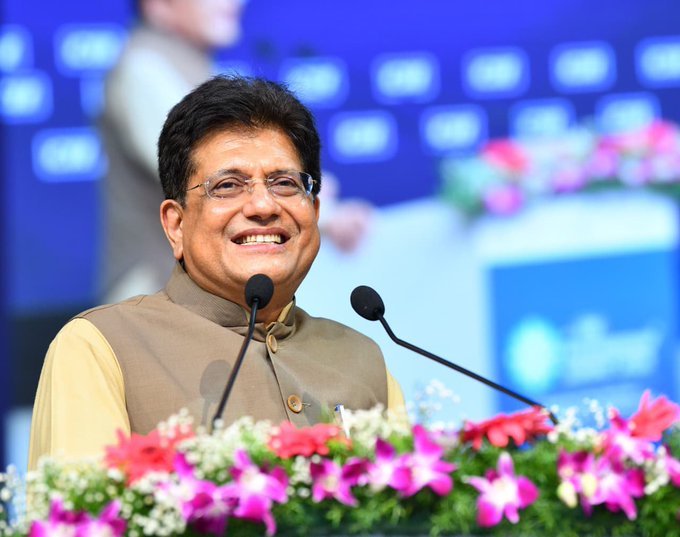
Visakhapatnam, November 2026 : The Andhra Pradesh government will introduce a dedicated Investors Protection Act to safeguard investments and strengthen investor confidence, Minister Nara Lokesh announced on Thursday at the 31st CII Partnership Summit 2026 in Visakhapatnam.
Addressing the inaugural session, Lokesh, who handles Human Resources Development, Information Technology, Electronics and Real Time Governance, said the state was working proactively on the proposed legislation to provide greater legal assurance to industrialists and investors.
He said Andhra Pradesh, after pioneering the use of escrow accounts for investors, was preparing to become the first state in India to introduce a dedicated legal framework for investment protection.
"Such legislation will provide greater confidence and assurance to industrialists and encourage them to invest," Lokesh said.
He also requested Union Commerce and Industry Minister Piyush Goyal to facilitate policy clearance and support the implementation of the proposed framework at the national level.
Inviting global investors to explore opportunities in the state, Lokesh urged industrialists not merely to visit Andhra Pradesh but to invest, innovate and grow there. He encouraged companies to make the state their corporate home rather than limiting their presence to manufacturing facilities.
The minister assured investors of the state government's full cooperation and support.
Ports, Logistics and Manufacturing Strength
Highlighting Andhra Pradesh's infrastructure and geographical advantages, Lokesh said the state had a coastline stretching more than 1,000 kilometres. Visakhapatnam and other ports currently handle approximately 100 million tonnes of cargo annually.
Four new greenfield ports are under construction at Ramayapatnam, Mulapeta, Machilipatnam and Kakinada. Their addition is expected to double the state's cargo-handling capacity, he said.
Lokesh also highlighted Andhra Pradesh's contribution to India's seafood exports, stating that nearly one-third of the country's seafood exports by volume originated from its coastline. Around 80 per cent of India's shrimp exports come from farms in the state.
He further said that nearly 60 per cent of India's air conditioners were manufactured at a single location in Sri City, highlighting Andhra Pradesh's growing importance as a manufacturing destination.
Agriculture and Food Processing Opportunities
Emphasising the state's agricultural strength, Lokesh said Andhra Pradesh produced more than 40 per cent of India's cocoa, while the Guntur region accounted for over 40 per cent of the country's dry chilli production.
Describing Andhra Pradesh as India's "Fruit Bowl", he said it was the country's largest fruit-producing state, contributing approximately 16 per cent of national production. The state also ranked first in fish and egg production, while more than half of India's Flue-Cured Virginia (FCV) tobacco production came from Andhra Pradesh.
These strengths, he said, offered opportunities for investment in food processing, agriculture, aquaculture, exports and allied industries.
Rs 22.6 Lakh Crore Investment Commitments Since June 2024
Lokesh said Andhra Pradesh had received investment commitments worth Rs 22.6 lakh crore since June 2024. Of these, 73 per cent had been converted into approved projects valued at Rs 17.2 lakh crore, with the potential to generate employment for 12.7 lakh people.
He added that 51 per cent of the approved investments had reached the ground-level implementation stage. Projects worth Rs 5.9 lakh crore, expected to create 7.4 lakh jobs, had already commenced construction.
Citing the automobile sector as an example of the state's industrial growth, Lokesh said that since Kia began production at its Anantapur facility in 2019, nearly 1.9 million cars had rolled out of the plant, with exports reaching more than 90 countries.
The proposed Investors Protection Act, infrastructure expansion and investment pipeline form part of Andhra Pradesh's efforts to position itself as a competitive destination for domestic and international businesses. The government is seeking to combine legal safeguards, industrial infrastructure and sector-specific opportunities to attract fresh investments and generate employment.