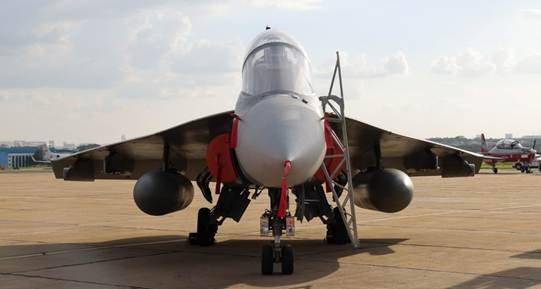
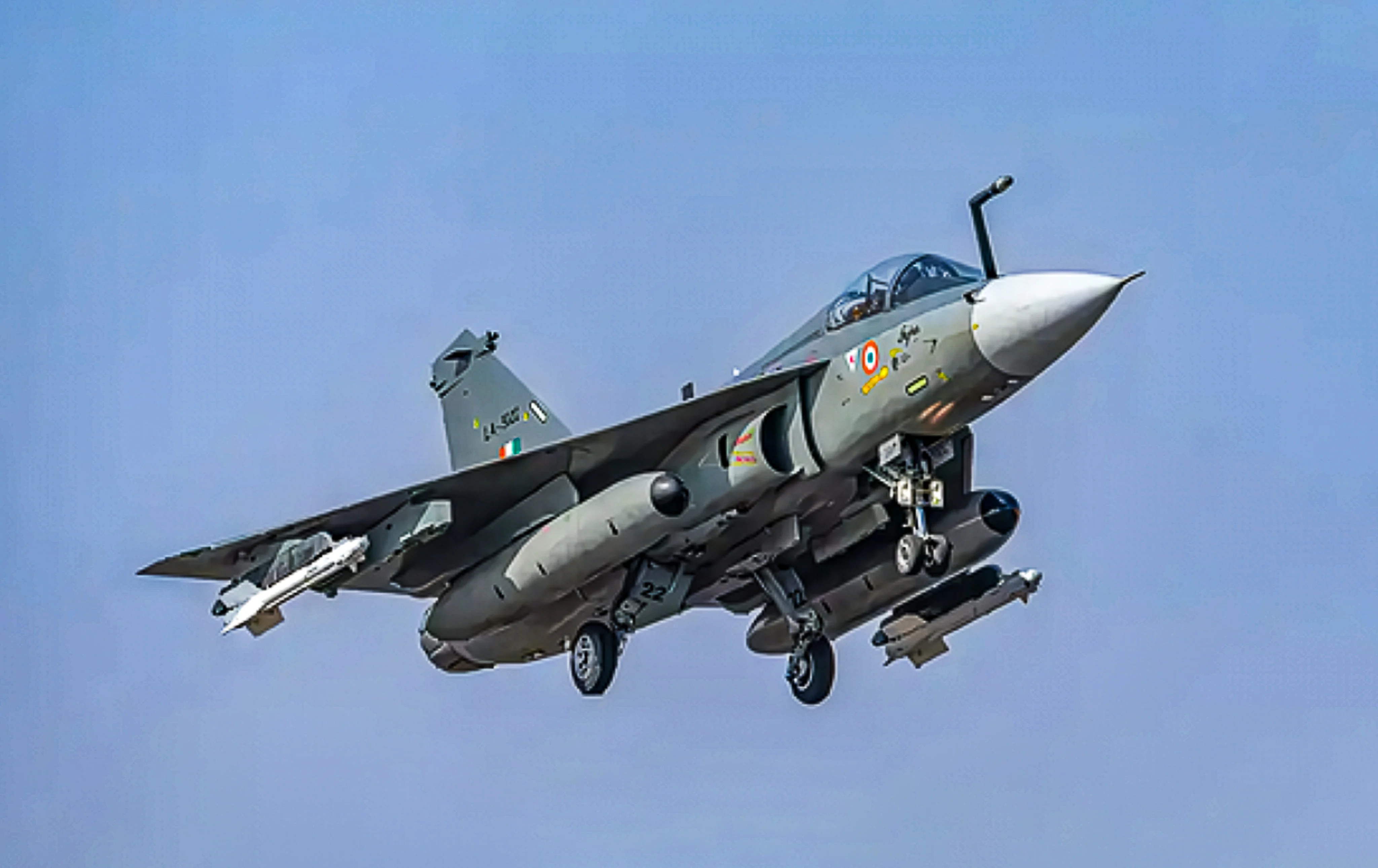
Goa, Sept 2026 : The completion of the Indian Air Force’s initial order for 40 Tejas aircraft is more than the closing of a long-pending contract. It is an appropriate moment to look at how India’s combat-aircraft ecosystem has evolved—and, more importantly, at how the lessons of Tejas are shaping the Advanced Medium Combat Aircraft (AMCA) programme.
The first orders for the Light Combat Aircraft were placed in two tranches, beginning in 2006 and followed by another order in 2010. The journey from those early contracts to operational squadrons has been considerably longer than originally envisaged. Yet measuring Tejas only by elapsed time risks overlooking what the programme actually created.
India was attempting something extraordinarily difficult: rebuilding the national capability to design, develop, test, certify and manufacture a modern combat aircraft. Tejas required the country to develop expertise across flight-control systems, composites, avionics, mission computers, electronic warfare, weapons integration, aerodynamics and systems engineering. It also required the creation of an ecosystem linking the Aeronautical Development Agency (ADA), Hindustan Aeronautics Limited (HAL), DRDO laboratories, the Indian Air Force, certification agencies, academia and a growing network of private suppliers.
The delays therefore matter—but so do the lessons.
One of the most important lessons concerns industrial structure. For decades, Indian military aviation has been dominated by HAL. There were sound historical reasons for this. India needed a national aerospace company capable of licence production, overhaul, upgrades and aircraft manufacture at a scale that the private sector of the time could not provide.
But the aerospace environment has changed.
Indian private industry today possesses significantly greater capability in precision manufacturing, composites, electronics, software and aerospace structures. Companies already participate in global aviation supply chains. The question is therefore no longer whether HAL should have a role—it unquestionably will—but whether future combat-aircraft programmes should depend predominantly upon a single production organisation.
Here, AMCA represents an important evolution.
Rather than simply reproducing the institutional model under which Tejas developed, the government has signalled a wider industrial approach for AMCA, including competitive participation by Indian industry in the development and production ecosystem. That distinction is significant. It suggests that the objective is gradually shifting from building an indigenous aircraft to building an indigenous aerospace industry.
This also changes the debate surrounding ADA.
ADA’s core strength lies in aircraft design, systems integration and programme-level engineering. It need not become a large-scale manufacturing organisation, nor should every element of aircraft development remain permanently concentrated within government establishments. As Indian industry matures, carefully structured partnerships can allow design knowledge, manufacturing expertise and intellectual property to be shared where necessary while retaining appropriate protection for strategically sensitive technologies.
Technology transfer, therefore, should not be seen as an all-or-nothing proposition. Modern aerospace programmes routinely divide intellectual property, design authority and manufacturing responsibility among multiple organisations. India can develop similar mechanisms suited to its security requirements.
There are already indications of this broader approach within the Tejas programme itself. Private companies manufacture major assemblies, structures, systems and components, while HAL remains the principal integrator. The challenge is to deepen that ecosystem so that industry progressively assumes greater responsibility rather than functioning primarily as a build-to-print supplier.
This is particularly important because India’s future requirement extends far beyond one aircraft.
Tejas Mk1A, Tejas Mk2, AMCA, unmanned combat aircraft and future aviation programmes will require design teams, production capacity and supply chains capable of operating simultaneously. No single organisation—public or private—can realistically carry the entire national requirement indefinitely.
The answer, therefore, is not to replace HAL with private industry. It is to enlarge the ecosystem around HAL, ADA and the wider aerospace establishment.
That requires a gradual change in the way indigenous aircraft programmes are conceived. Private companies need to enter programmes sufficiently early to develop engineering competence rather than merely manufacturing components against drawings supplied by another organisation. At the same time, government design agencies and public-sector manufacturers retain invaluable experience accumulated over decades. The objective should be to combine these strengths rather than create an artificial contest between the public and private sectors.
Seen from this perspective, Tejas should neither be portrayed simply as a story of delay nor romanticised as an unqualified success. Its greater significance may be that India now possesses something it did not have when the programme began: a functioning foundation upon which successive generations of indigenous combat aircraft can be built.
AMCA will test whether India has absorbed those lessons.
Its success will depend not merely upon producing a fifth-generation fighter, but upon creating an industrial structure capable of designing, manufacturing, upgrading and supporting increasingly sophisticated aircraft for decades.
Tejas built much of the foundation. The next step is to widen it.
If AMCA succeeds in combining the design strengths of ADA, the manufacturing experience of HAL and the growing capabilities of Indian private industry, the most important legacy of Tejas may ultimately not be the aircraft itself.
It may be the aerospace ecosystem that India builds upon it.
Capt. Anshuman Chatterjee, (Retd), former Airborne Tactician