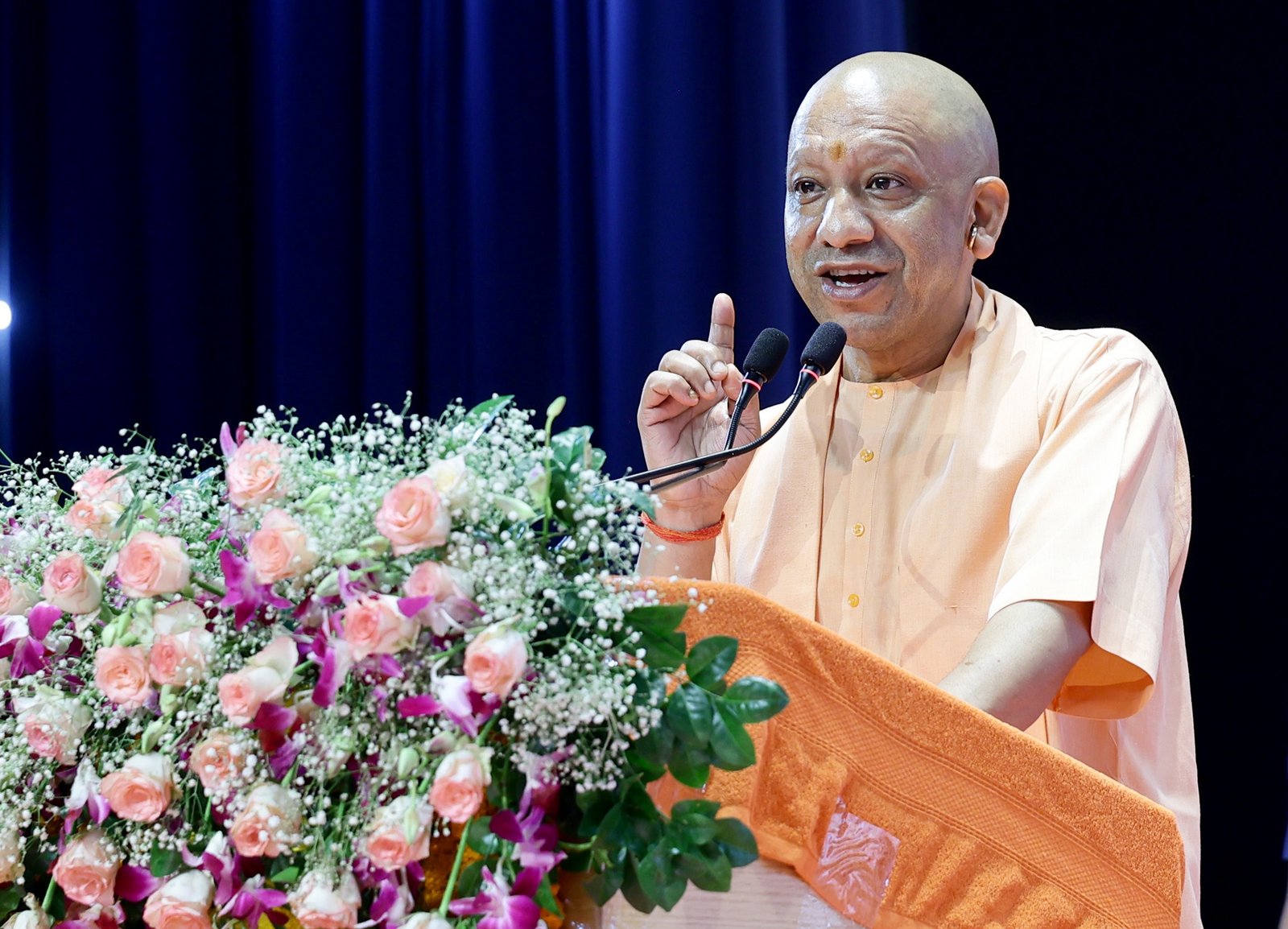
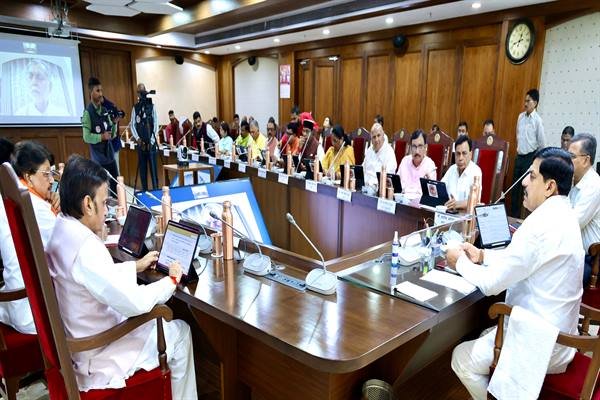
Chief Minister Dr. Mohan Yadav, Chaired the Cabinet meeting held at the Mantralaya on Tuesday. The Cabinet approved important financial proposals and public welfare decisions worth more than ₹41,000 crore, aimed at ensuring the overall development of Madhya Pradesh and strengthening its infrastructure. To accelerate rural development in the state, the Cabinet ratified a financial proposal of ₹29,619 crore for implementation of the Viksit Bharat: VB-G RAM G Scheme. In addition, administrative approvals were granted for ₹3,774 crore for construction of the four-lane West Bhopal Bypass and ₹3,272 crore for the Mehluwa-Bina-Khimlasa-Malthone road. These projects will provide a major boost to industrial activity and all forms of transportation in the state.
As a historic step towards achieving regional balance and expanding quality higher and technical education, the Cabinet approved the reorganisation of Rajiv Gandhi Proudyogiki Vishwavidyalaya (RGPV) and establishment of three separate technology universities in Bhopal, Ujjain and Jabalpur. The Cabinet also approved a ₹2,973 crore Dairy Development Scheme, in collaboration with the National Dairy Development Board (NDDB), to economically empower milk producers and upgrade the Sanchi brand.
With the objective of improving healthcare services in the state, more than ₹1,400 crore was approved for maintenance of medical equipment and departmental assets. Giving priority to farmers' welfare, the Cabinet ratified the decision to increase the procurement limit for summer moong from registered farmers from 25% to 60% of their produce.
Approval was also granted for creation of new posts in the Social Justice and Empowerment of Persons with Disabilities and AYUSH departments to streamline administrative arrangements in the newly formed districts of Maihar, Mauganj, Pandhurna and Niwari.
Ratified ₹29,619 Crore for Implementation of VB-G RAM G Scheme
The Cabinet ratified the implementation of the “Viksit Bharat (Rural): VB-G RAM G Viksit Bharat G RAM G Scheme, Madhya Pradesh”, with effect from July 1, 2026. The Cabinet ratified the financial proposal with an estimated expenditure of ₹3,183 crore for FY 2026-27 and a total estimated expenditure of ₹26,436 crore for continuation of the scheme from FY 2026-27 to FY 2030-31. The Centre and State will share the expenditure in a 60:40 ratio, with the state's share amounting to ₹10,574 crore. An expenditure of ₹946 crore will be incurred on administrative expenses over these five years, which will be borne by the State Government. Under the new scheme, willing adult members of families residing in rural areas will now be provided a statutory guarantee of 125 days of wage employment in every financial year, instead of the existing 100 days. The increase in guaranteed employment days will strengthen the rural economy and expand livelihood opportunities at the local level.
The scheme is primarily aimed at developing rural infrastructure in accordance with the national vision of Viksit Bharat @2047. Under the scheme, every Gram Panchayat will prepare a Viksit Gram Panchayat Plan using GIS-based technology, PM Gati Shakti layers and Digital Public Infrastructure. These plans will be integrated through a digital portal into the Viksit Bharat National Rural Infrastructure Stack. A dedicated State-level Project Management Unit will be established under the Madhya Pradesh State Rural Employment Guarantee Council for effective implementation of technical works related to water security, climate-resilient engineering, data science and advanced livelihood models. In accordance with Government of India guidelines, Gram Panchayats will be classified into A, B and C categories based on development parameters to ensure that financial allocations received by the state are transparent and need-based. To ensure complete transparency under the scheme, biometric attendance, digital muster rolls and social audits every six months have been made mandatory. In addition, an Ombudsperson (Lokpal) will be appointed in every district for speedy grievance redressal through a digital platform. As an interim arrangement, the Cabinet has authorised the existing Madhya Pradesh State Employment Guarantee Council to discharge all responsibilities under the new scheme until the new council is fully constituted and registered.
Approved ₹2,973 Crore for Cooperative Dairy System and Upgradation of Sanchi Brand
The Cabinet approved ₹2,973 crore for strengthening the cooperative system in the interest of milk producers and upgrading the Sanchi brand. Under the Dairy Development Scheme, the number of cooperative milk societies will be increased from 7,331 villages to 26,000 villages over the next five years. Milk collection will be increased from 12 lakh kg per day to 52 lakh kg per day, while milk processing capacity will rise from 17.8 lakh litres to 63.3 lakh litres per day. The sale of milk packets will be increased from 7 lakh litres per day to 35 lakh litres per day, while artificial insemination coverage will be expanded from 15% to 50%.
A Collaboration Agreement was executed on April 13, 2025, between the Government of Madhya Pradesh, MP State Cooperative Dairy Federation Limited and its affiliated milk unions, and the National Dairy Development Board (NDDB) for the operation and management of the federation and affiliated milk unions. Under the agreement, in-principle approval has been given to the ₹2,973 crore Dairy Development Scheme proposed by NDDB. The State Government has approved a ₹500 crore grant for infrastructure, along with an estimated state share of ₹241 crore under Government of India schemes, subject to approvals, as well as implementation of various components of the scheme.
Revised Administrative Approval of ₹3,774 Crore for Four-Lane West Bhopal Bypass with Paved Shoulders
The Cabinet granted revised approval for construction of the 35.61-km four-lane West Bhopal Bypass with paved shoulders under the Hybrid Annuity Model (HAM), with a total project financial cost of ₹3,225.51 crore. Approval was also granted for payment of ₹548.29 crore towards pre-construction activities through the State Budget. The bypass will enable vehicles travelling between Jabalpur and Narmadapuram and Indore to bypass Bhopal, reducing the travel distance by 21 km. It may be noted that administrative approval of ₹2,981.65 crore had earlier been granted on September 4, 2023, for the 40.90-km four-lane West Bhopal Bypass with paved shoulders under the Hybrid Annuity Model (40:60). The earlier alignment was proposed to start at Itayakalan near Mandideep on the Bhopal-Jabalpur road and terminate near Fanda village on the Bhopal-Dewas road.
The alignment was subsequently modified due to the declaration of the Ratapani Tiger Reserve, incorporation of the impact of the Environment Department's notification covering the catchment area of Upper Lake, the presence of the ancient Shiv Temple at Samsgarh under the State Archaeology Department on the proposed alignment, and the decision to connect the bypass with the Eastern Bypass to create a complete ring road. The change in alignment resulted in an 8.18% increase in project cost over the previously approved cost, necessitating revised administrative approval from the Cabinet. Under the decision, 40% of the project construction cost, amounting to ₹599.44 crore, will be paid in 10 instalments upon achievement of milestones specified in the concession agreement. Payment of the Net Positive COS amount will also be made during the construction period as per the provisions of the agreement through the State Highway Fund.
The remaining 60% of the project construction cost, amounting to ₹1,910.42 crore, will be paid through the State Budget during the 15-year operation period in half-yearly annuities, including annuity, O&M and interest components.
Approval to Reorganise RGPV and Establish Three New Technology and Skill Universities
The Cabinet approved the establishment of three separate technology universities in the state in place of the existing Rajiv Gandhi Proudyogiki Vishwavidyalaya (RGPV), Bhopal, keeping in view the promotion of technical education, regional balance and availability of infrastructure.The three universities will be established in Bhopal, Ujjain and Jabalpur.
Under the new arrangement, the existing university in Bhopal will be established as Madhya Bharat Technology and Skill University; the autonomous engineering college in Ujjain will become Malwa Technology and Skill University; and the autonomous engineering college in Jabalpur will become Mahakaushal Technology and Skill University. At present, RGPV offers 13 programmes through 585 institutions, with more than 3.83 lakh students enrolled. Under the approved arrangement, all technical colleges in the state will be divided region-wise and placed under the jurisdiction of the three newly established universities.
The Madhya Bharat Technology and Skill University in Bhopal will have jurisdiction over the Bhopal, Narmadapuram, Chambal and Gwalior divisions. The Malwa Technology and Skill University in Ujjain will cover the Ujjain and Indore divisions. Similarly, technical institutions in the Jabalpur, Rewa, Sagar and Shahdol divisions will come under the jurisdiction of the Mahakaushal Technology and Skill University in Jabalpur. Separate Acts will be enacted for the functioning of the three universities.
For the initial administrative functioning of the two newly established universities in Ujjain and Jabalpur, approval has been granted for the posts of Vice-Chancellor, Registrar, Controller of Examinations, Deputy Registrar and Finance Officer.
Other supporting and technical positions will be filled through outsourcing as per rules. Initially, salaries for these posts will be drawn from the available funds of the respective universities, which will function on a self-financing basis. The Cabinet also approved the formation of a high-level Madhya Pradesh Technology Universities Empowered Committee, headed by the Chief Secretary, to expedite the establishment of the three universities and subsequent action.
The committee will include the Secretaries of the Technical Education, Skill Development and Employment, Finance, Higher Education and General Administration Departments, the Vice-Chancellor of Madhya Bharat Technology University, and the Commissioner, Technical Education, as Member Secretary.
₹3,272 Crore Administrative Approval for Construction of Mehluwa-Bina-Khimlasa-Malthone Road
The Cabinet granted administrative approval for construction of the 67.116-km Mehluwa-Bina-Khimlasa-Malthone road, a four-lane road with paved shoulders, under the Hybrid Annuity Model (HAM), at a total project financial cost of ₹2,776.83 crore. Approval was also granted for payment of ₹428.94 crore towards pre-construction activities, including land acquisition and other works, and ₹65.77 crore towards supervision charges through the State Budget. The construction cost of the Mehluwa-Bina-Khimlasa-Malthone project is ₹1,151 crore. Of the total project construction cost, 40%, amounting to ₹543.27 crore including GST, will be paid during the construction period through loans raised by the Madhya Pradesh Road Development Corporation. The remaining 60%, amounting to ₹1,738.85 crore including GST, will be paid through half-yearly annuities over a 15-year operation period through the State Budget.
The proposed road will start from Mehluwa Chauraha on NH-346 (Vidisha-Chanderi), cross NH-934 (Hirapur-Bina) at Bina and connect with NH-44, the North-South Corridor, at Malthone. The road is highly important for regional, inter-state and industrial traffic. Bina's urban area houses the BPCL refinery, thermal power plant, railway yard and major industries, resulting in significant heavy-vehicle traffic. The route has high potential to develop into a strong economic and logistics corridor in the future.
₹488 Crore Approved for Maintenance of Machinery and Equipment in Health Institutions
The Cabinet approved ₹488.41 crore for continuation of the scheme related to maintenance of machinery and equipment in health institutions from April 1, 2026, to March 31, 2031. Under the scheme, maintenance, repair and related works for machinery and equipment provided to medical institutions across the state will be undertaken. ₹916 Crore Approved for Maintenance of Departmental Assets in Medical Institutions. The Cabinet approved ₹915.77 crore for continuation of the scheme related to maintenance of departmental assets from April 1, 2026, to March 31, 2031. Under the scheme, repair and maintenance works of modular kitchens, modular operation theatres (OTs) and other departmental assets in medical institutions across the state will be undertaken.
21 Posts Approved for District Offices of Social Justice and Empowerment of Persons with Disabilities Department
The Cabinet approved the creation of 21 posts for operation of district offices of the Social Justice and Empowerment of Persons with Disabilities Department in the newly formed districts of Maihar, Mauganj and Pandhurna. In each district, one post of Deputy Director, one Assistant Grade-II post and three Assistant Grade-III posts, totalling 15 new regular posts, will be created. In addition, two Class-IV personnel for each district, totalling six personnel, will be engaged through outsourcing.
20 Posts Approved for District AYUSH Offices in Niwari, Mauganj, Pandhurna and Maihar
The Cabinet approved the creation of 20 posts for operation of District AYUSH Offices in the newly formed districts of Niwari, Mauganj, Pandhurna and Maihar. The approval includes four posts of District AYUSH Officer, four posts of Assistant Grade-I/Head Clerk, four posts of Accountant, and four posts of Assistant Grade-II across the four district offices, along with the corresponding sanctioned pay scales.
Cabinet Ratifies Decision to Procure Up to 60% of Moong Produce from Registered Farmers
The Cabinet ratified the Chief Minister's decision regarding procurement of moong and urad from July 1, 2026, under the Rabi Marketing Year 2026. It may be noted that under the Price Support Scheme, the Cabinet had decided on February 24, 2026, to procure only 25% of summer moong production from registered farmers during Rabi Year 2025-26 (Marketing Year 2026-27). This decision was subsequently partially amended, increasing the procurement limit to up to 60% of the moong produce of registered farmers.