New Delhi, November 2026 : The Centre has rejected Opposition allegations that the proposed delimitation exercise could reduce the number of seats reserved for Scheduled Castes (SCs) and Scheduled Tribes (STs) in the Lok Sabha and state legislative assemblies. Government sources have maintained that the proposed 50 per cent increase in the total number of legislative seats would also result in an increase in reserved constituencies for these communities.
According to government sources, the expansion of the overall strength of Parliament and state legislatures would be reflected in the number of seats allocated to SC and ST candidates. They asserted that there was no question of reducing the representation of these communities under the proposed framework, contrary to the concerns raised by Opposition parties.
Sources further said that SC and ST women would also receive proportional representation under the proposed arrangement, ensuring that the expansion in legislative representation benefits women belonging to these communities.
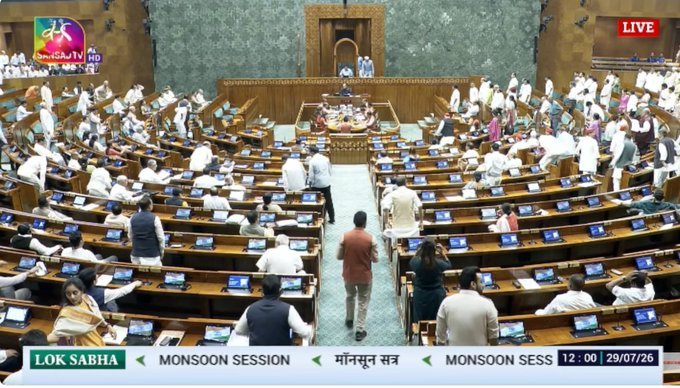
The government's clarification comes ahead of the proposed introduction of the Delimitation Bill in the Lok Sabha on Monday, amid growing political differences over the proposed changes to electoral representation.
Government Rejects Allegations of Gerrymandering
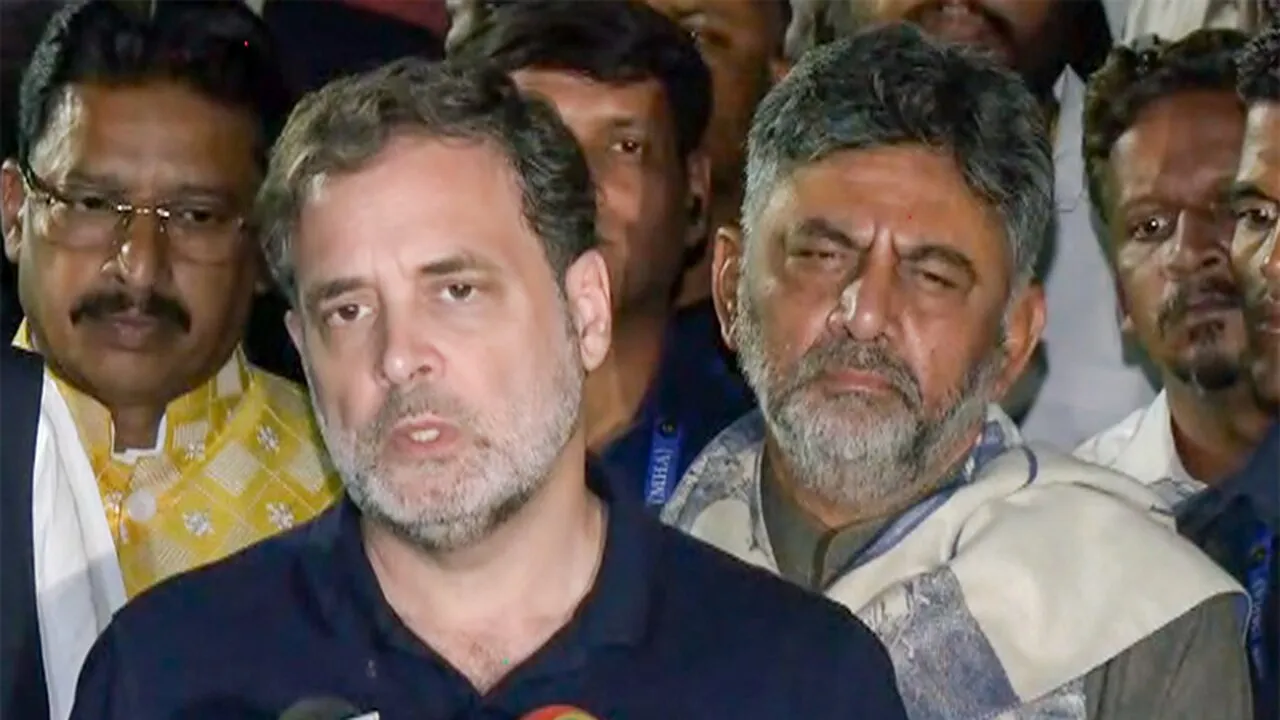
Government sources have also strongly rejected Congress leader Rahul Gandhi's allegations that the Centre could use delimitation to manipulate constituency boundaries for political advantage.
They asserted that the exercise would be conducted through an elaborate and transparent process, strictly following constitutional provisions, established legal procedures and prescribed regulations.
Questioning the Congress leader's criticism, sources said delimitation was a constitutional requirement envisaged by Dr B.R. Ambedkar. They noted that Ambedkar had recognised the need for periodic delimitation to ensure equitable representation and uphold the principle that every citizen's vote should carry equal value.
According to the government, the exercise would involve extensive consultations, adherence to established rules and regulations, and detailed public hearings before any final decisions are taken.
Sources indicated that the entire process was expected to take approximately two-and-a-half years to complete.
Rejecting allegations of politically motivated manipulation, they questioned how constituency boundaries could be illegally altered through a process involving such detailed scrutiny, consultations and public participation.
Assam Delimitation Linked to Historical and Geographical Factors
Government sources also accused Rahul Gandhi of presenting an incomplete picture of the delimitation exercise in Assam, arguing that his criticism did not adequately consider the state's historical and geographical circumstances.
They pointed out that delimitation in Assam took place after a gap of 47 years. According to the sources, immigration-related concerns and the agitation in the state were among the factors that had delayed the exercise.
They further said that delimitation could be undertaken in Assam only after the completion of the National Register of Citizens (NRC) exercise.
Apart from these historical and administrative considerations, the state's difficult geographical terrain and connectivity challenges also had to be taken into account while determining constituency boundaries.
Sources explained that locations appearing close to each other on a map might be difficult to connect through direct routes because of difficult terrain and inadequate transport infrastructure. As a result, residents in geographically nearby areas could sometimes be required to travel long and circuitous distances to reach one another.
They maintained that constituency boundaries could not be determined solely on the basis of geographical distance and that ground-level accessibility had to be considered to ensure effective representation.
Similar Challenges in Jammu and Kashmir and Hill States
Government sources said geographical considerations were equally important in Jammu and Kashmir, particularly in its remote and mountainous regions. They accused Rahul Gandhi of overlooking these practical difficulties while criticising the delimitation exercise in the Union Territory.
They also pointed out that similar challenges existed in other states, including Himachal Pradesh, Uttarakhand, Sikkim and Arunachal Pradesh.
In these regions, difficult mountainous terrain, limited road connectivity and accessibility constraints could influence how constituencies were demarcated.
According to the sources, the objective of delimitation should be to ensure that elected representatives can effectively serve their constituents, taking into account the actual conditions people face while travelling and accessing public services.
They emphasised that geographical proximity alone could not determine constituency boundaries, as accessibility, terrain and connectivity were equally important factors.
Political Debate Intensifies Ahead of Parliament Session
The government's response comes amid escalating political tensions over the proposed delimitation legislation. Rahul Gandhi and other Opposition leaders have questioned the Centre's intentions, alleging that the exercise could be used to influence electoral representation and alter the political balance.
The government, however, has maintained that the proposed expansion of legislative seats would increase representation across states and communities, including SCs and STs.
Sources reiterated that the exercise would remain within the constitutional framework, with transparency, consultations and public participation at key stages.
With the Bill scheduled to be taken up in the Lok Sabha on Monday, the debate over seat expansion, reserved representation and the process of constituency demarcation is expected to remain a major point of political discussion.
(Disclaimer :The content of this article is sourced from a news agency and has not been edited by the Mavericknews30 team.)