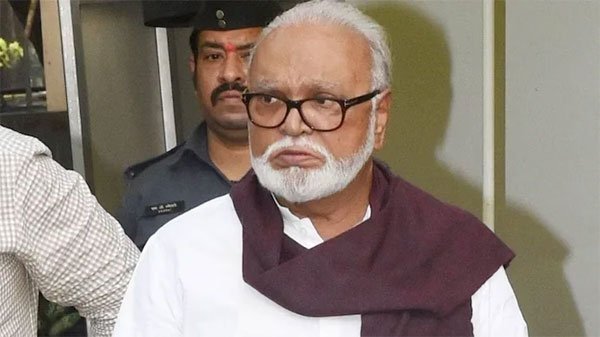
A Mumbai special court has discharged Maharashtra minister and NCP leader Chhagan Bhujbal and three others in the 2015 Kalina land scam case, holding that the prosecution failed to establish a criminal conspiracy or any specific act linking him to alleged irregularities in a library project. The court also found no sufficient evidence connecting a Rs 2.5-crore sponsorship received by a foundation associated with Bhujbal to the project.
Mumbai, Sept 2026 : A special court in Mumbai has discharged Maharashtra minister and NCP leader Chhagan Bhujbal and three others in the 2015 Kalina land scam case, ruling that the prosecution failed to establish any “meeting of minds” or specific overt act connecting the former Public Works Department minister to the alleged conspiracy.
Special Judge Mahesh K Jadhav, in a 70-page order, said there was no material showing that Bhujbal had instructed officials to manipulate project calculations, alter tender conditions or suppress rules to favour a private developer. The court observed that merely being the head of a department did not establish that he had instigated or assisted the alleged offences.
The prosecution had alleged that Bhujbal and others caused a loss of around Rs 79.2 crore to the Maharashtra government while processing the construction of a library at Mumbai University's Kalina campus under a build-operate-transfer (BOT) model. India Bulls Real Estate Ltd was allegedly favoured in the project.
The case also involved allegations that after the project was awarded to India Bulls, a Rs 2.5-crore sponsorship was routed through Indiabulls Realtech Ltd to the Chhagan Bhujbal Welfare Foundation in Nashik, with which Bhujbal was associated.
The court, however, said the prosecution had failed to establish a direct connection between the sponsorship and any official action by Bhujbal. It noted that the foundation was a registered organisation with charitable objectives, received sponsorship through banking channels and maintained audited accounts.
The judge observed that there was no statement from any official of the donor company indicating that Bhujbal had demanded the sponsorship in return for the library contract. There was also no communication from Bhujbal seeking the contribution or document showing that the amount was negotiated with reference to the project's value.
According to the court, the chronological proximity between the tender award and the sponsorship was insufficient to establish a criminal nexus.
The court also examined the government's decision-making process. The project proposal had been sanctioned at a committee meeting on February 25, 2010, after approval from the then chief minister and consideration of departmental reports, including observations from the Finance Department and explanations from the Public Works Department.
Bhujbal, who was then both PWD minister and deputy chief minister, participated in the decision as one member of the committee. The panel also included then Chief Minister Ashok Chavan, several cabinet ministers and senior bureaucrats.
The judge said ministers could convene meetings, seek files and project updates, transfer matters between offices and participate in collective government decisions. Such actions, the court held, become criminal only when evidence shows that they were carried out pursuant to a dishonest or illegal design.
The prosecution had argued that subordinate engineers could not have manipulated project calculations without Bhujbal's “invisible support”. The court rejected the argument as an assumption unsupported by specific evidence.
It examined whether the chargesheet contained any direction, communication, meeting, message, financial transaction or other material showing that Bhujbal had instructed officials to manipulate figures or prepare reports to benefit the proposed developer. The judge said no such specific material had been presented.
The court also found that the tender process did not substantiate the prosecution's allegations. Eleven developers had purchased tender documents, four submitted bids and two were found eligible. India Bulls Real Estate emerged as the highest bidder with an offer of Rs 1.06 crore.
There was no material, the court said, showing that Bhujbal selected India Bulls, communicated with the company regarding the tender or directed officials to modify eligibility conditions in its favour.
The three other accused discharged by the court were retired executive engineer Harish Patil, retired divisional deputy engineer Gajanan Sawant and private chartered accountant Ravindra Sawant, who was allegedly engaged to facilitate India Bulls' eligibility for the tender.
Two other accused, then PWD superintending engineer Anilkumar Gaikwad and PWD undersecretary Sanjay Solanki, had been discharged from the case in February 2021. Construction Department secretary Maniklal Shah died during the pendency of the proceedings.
Bhujbal's lawyer Sudarshan Khawase had argued that the BOT concept had originated in departments other than the PWD before Bhujbal's alleged involvement. The prosecution had opposed the discharge pleas.
The court's order clears Bhujbal of charges under the Prevention of Corruption Act and relevant provisions of the Indian Penal Code in this case. It also marks the end of the last pending corruption case against him before the special court, following earlier relief in cases concerning alleged irregularities linked to Maharashtra Sadan in Delhi and a housing project in Navi Mumbai.
The discharge order does not amount to a finding that no irregularities occurred in the project; rather, the court held that the material placed before it did not establish Bhujbal's criminal involvement in the alleged conspiracy.