Riga; September 2026: Latvia’s defence forces and civil institutions mobilised for Namejs 26; an exercise designed to test the country’s national defence plans.
Latvia’s Comprehensive National Defence System calls for confronting crises with the integration of military and civil institutions, leveraging the firepower of Latvia’s regular forces, and the size and presence of its National Guard, with the scale and speed of its police, medical and emergency services. Together, they can present a unified front against whatever aggression the Baltic nation might face.
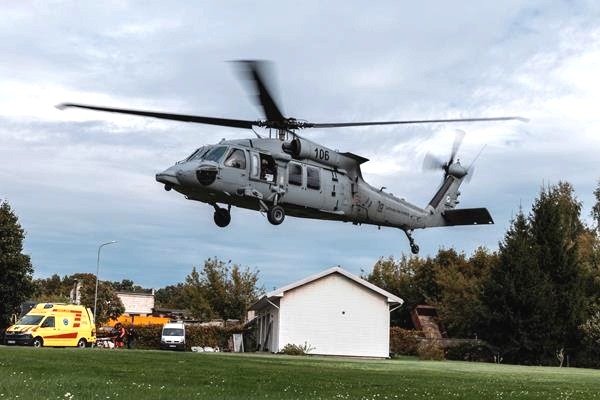
However, integration takes practice, and Namejs is a yearly venue for these institutions to train under demanding and realistic conditions. For this year’s iteration, regular and National Guard forces sparred in the forests near Jurmala, while the Latvian Air Force practised using its Black Hawk helicopters to evacuate simulated casualties to civilian hospitals.
Latvian Minister of Defence Raivis Melnis while addressing the media houses have said, that the comprehensive approach is particularly useful in countering hybrid warfare because it gives the state more options in countering this ambiguous threat. The Minister of Defence also said that Latvian defence companies that are providing arms and equipment to Ukraine in its fight for independence have received letters threatening attacks if they don’t cease their support. He added that the Latvian government was supporting the companies with advisors.
Latvian National Guard Lieutenant Colonel Ēriks Keisters said: “annual exercise Namejs is an exercise that is planned by the armed forces of Latvia when all of the National Guard and the regular forces are exercising their ability to defend our country, and defend our capital city”.
Latvian National Guard Lieutenant Colonel Ēriks Keisters said: “The whole idea is that not only the armed forces are responsible for defending our country, but we have Zemessardze, so civilians that are trained. We have reserve. And all of the different agencies, like state police, municipality police, are capable to work together. So, the coordination means understanding of, let’s say military tasks, so that we can actually defend the country and work together”, while further adding: “I would say that the main difference is that we have lost our freedom a few times. So, for us, this is something real. We know what is the difference between being free and being occupied. For us, it’s really real, and we are ready to defend our freedom”.
Latvian Minister of Defence Raivis Melnis further reiterated: “The basis for our defence is the comprehensive approach, where, across government, our whole society involvement is fundamental to ensure that we can defend. Because if we take the lessons from Ukraine, you will see that actually the whole government, society is involved. And the first thing, the real first thing, is resilience, which is people and country resilience. Doesn’t matter how strong the military forces are in that country. If there is no strong resilience and willingness from the people to support those forces, to stand for their country, to fight for freedom, then that will be really challenging for the military forces to fight. That’s why we use those exercises to bring the whole government and society into that, to train to test how we would then act during different crises and the war”.
Team Maverick.