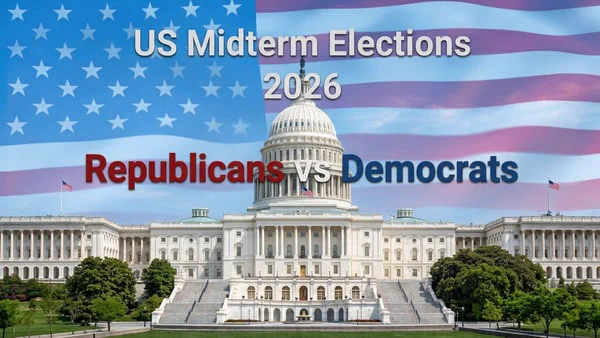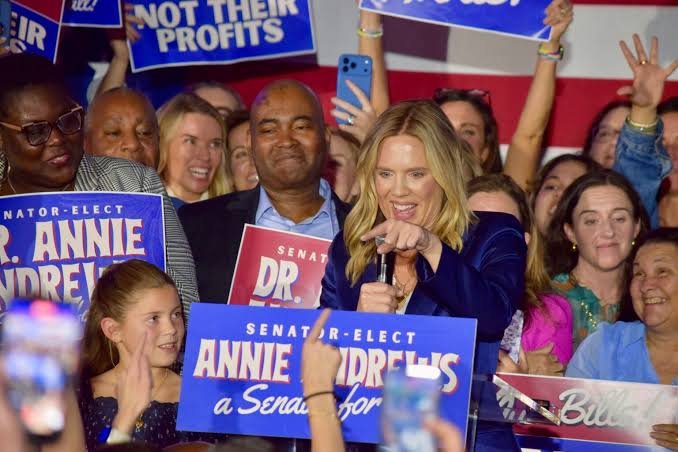
Washington, Nov 2026 : Democrats have secured control of both chambers of the US Congress in a sweeping victory in the 2026 midterm elections, dealing a major political setback to President Donald Trump and his Republican Party. A series of unexpected victories across traditionally Republican strongholds delivered a decisive rebuke to the Trump administration, giving Democrats the power to block legislation, scrutinise the government and challenge the President's agenda during the final two years of his term.
The Democratic victory was driven by voter dissatisfaction over rising living costs, tariffs and Trump's military conflict with Iran, which has pushed fuel prices higher. Economic concerns, allegations of corruption and growing opposition to the administration's policies emerged as major factors shaping the election outcome.
Despite his history of questioning election results, Trump initially adopted a conciliatory tone following the Democratic sweep. Speaking to The New York Times, he said he was "absolutely willing to accept those results" and promised to work with Democrats.
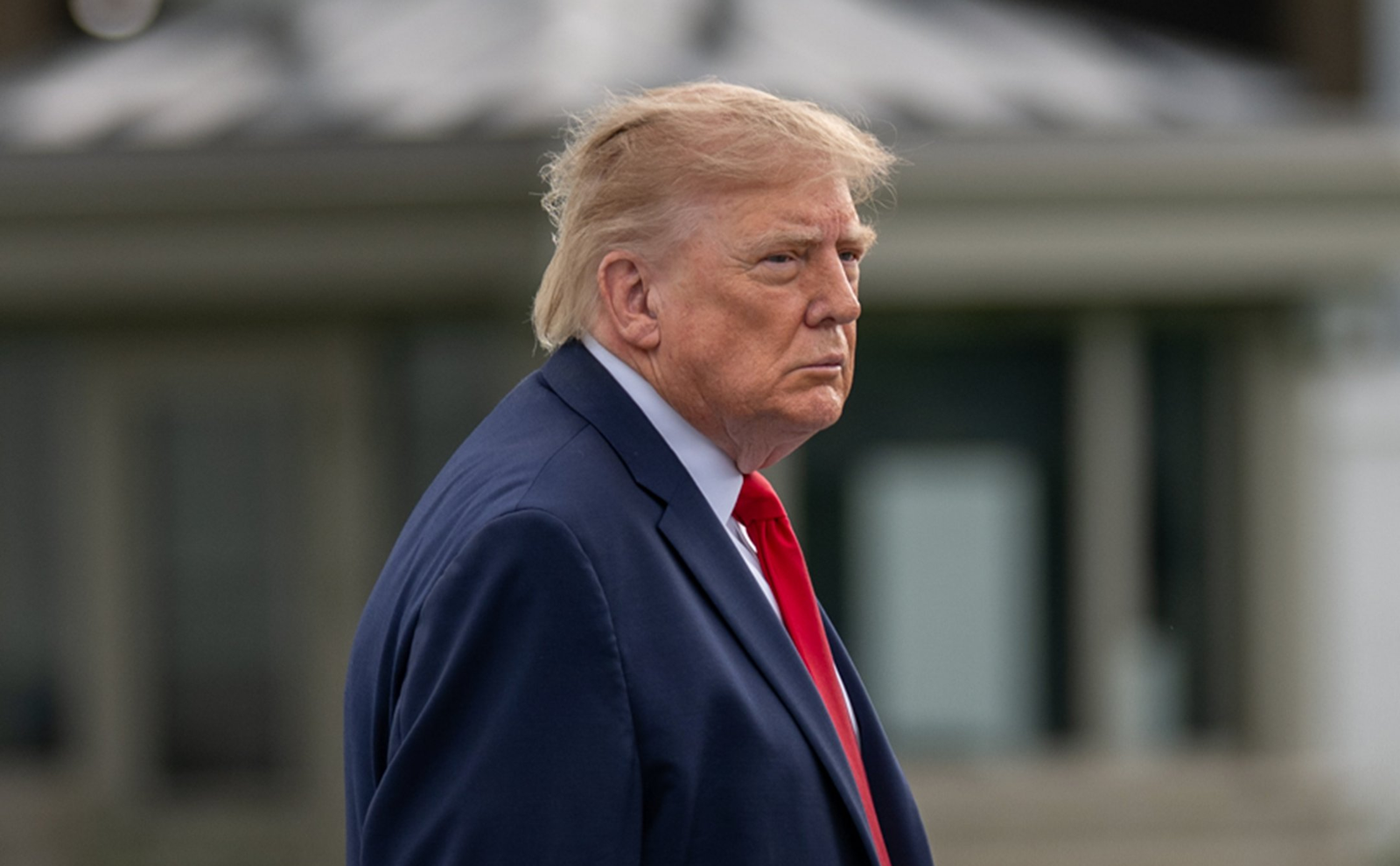
However, shortly afterwards, the 80-year-old President appeared to signal a confrontational approach towards the incoming Congress. In a social media post, he shared a picture of a red baseball cap carrying the word "VETO", suggesting that he could use his presidential powers to block legislation passed by Democrats.
Democrats Make Historic Gains in Senate Elections
The Democrats' decisive breakthrough in the Senate came with victories in Kansas and Iowa, taking the number of Republican-held seats captured by the party to six. The results marked an extraordinary political shift, particularly in states that have traditionally supported Republican candidates.
In Kansas, Methodist minister Adam Hamilton defeated Republican incumbent Roger Marshall, becoming the first Democrat elected to the US Senate from the conservative state since 1932.
Iowa also witnessed a significant political change, with Democrats winning a Senate seat in a state that had not elected a Democratic senator since 2008.
These victories followed Democratic successes in Texas, South Carolina, North Carolina and Ohio, where voters rejected Republican candidates despite Trump's efforts to mobilise his political base.
Texas emerged as one of the biggest surprises of the election. Democrat James Talarico defeated a Trump-backed candidate in the Senate contest, while Gina Hinojosa unseated Republican Governor Greg Abbott, ending decades of Republican control of the state's top office.
Democrats also retained important Senate seats, including Jon Ossoff's seat in Georgia and an open seat in New Hampshire.
Republicans had entered the election with a 53-47 majority in the Senate. The six-seat Democratic gain proved sufficient for television networks to project that the party would take control, although some contests remained unresolved at the time.
Democratic Wave Sweeps Republican Strongholds
The Democratic advance extended beyond the Senate, with the party also capturing the House of Representatives after winning several Republican-held congressional districts.
The gains stretched across Pennsylvania, New Jersey, Kentucky, Arizona and North Carolina. Several Democratic victories came in constituencies that Trump had won comfortably in the 2024 presidential election.
Republicans had attempted to protect their congressional majority through electoral boundary changes, but the strategy failed to prevent a broader Democratic surge.
One significant result came from Indiana, where Democrat J.D. Ford defeated Republican Congresswoman Victoria Spartz in a district Trump had carried by 17 percentage points in 2024. Political analysts had identified the constituency as a possible indicator of a wider Democratic breakthrough.
Georgia also witnessed a historic development, with former Atlanta mayor Keisha Lance Bottoms becoming the first Black woman elected governor in US history.
However, Republicans managed to secure victories in Florida. Trump-backed Byron Donalds won the governorship, becoming the state's first Black governor, while Ashley Moody retained a Senate seat for the Republicans.
George Washington University professor Todd Belt described the Democratic performance as "a big wipeout and a strong repudiation of Donald Trump and his policies". He pointed to voter concerns over the economy, corruption and the conflict with Iran as important factors behind the results.
Trump Faces Congressional Opposition
The Democratic takeover of the US Congress is expected to significantly alter the political balance in Washington. With control of the House and Senate, Democrats will have the ability to block Trump's legislative proposals and intensify congressional investigations into his administration.
Potential areas of scrutiny include allegations of corruption, the Iran war and immigration enforcement policies. Control of the Senate will also give Democrats greater influence over judicial appointments and nominations to senior government positions.
Democratic Congressman Robert Garcia, who is expected to lead the influential House Oversight Committee, issued a warning to Republicans following the results. "LAWYER UP," he posted on social media, signalling an aggressive approach towards congressional oversight.
House Democratic leader Hakeem Jeffries also celebrated the party's performance, declaring that Trump's MAGA movement was "on the run from sea to shining sea".
Jeffries could become the first Black Speaker of the House when the new Congress convenes in January, provided he secures the support of his Democratic colleagues.
Economy Emerges as Key Election Issue
For many voters, economic pressures remained the central concern during the 2026 US midterm elections. Rising household expenses, including rent, groceries, electricity bills and property taxes, contributed to dissatisfaction with the administration.
Taylor Cook, a 24-year-old voter from Los Angeles, highlighted the growing financial pressure on ordinary Americans, saying that rent, groceries, utility bills and property taxes continued to climb.
The results indicate that economic concerns, foreign policy and public scrutiny of the administration played a significant role in shaping voter choices.
With Democrats now positioned to control both chambers of Congress, Trump's ability to advance his legislative agenda is likely to face substantial resistance. The outcome also sets the stage for an intense political confrontation in Washington as the President enters the final two years of his term.
(Disclaimer :The content of this article is sourced from a news agency and has not been edited by the Mavericknews30 team.)