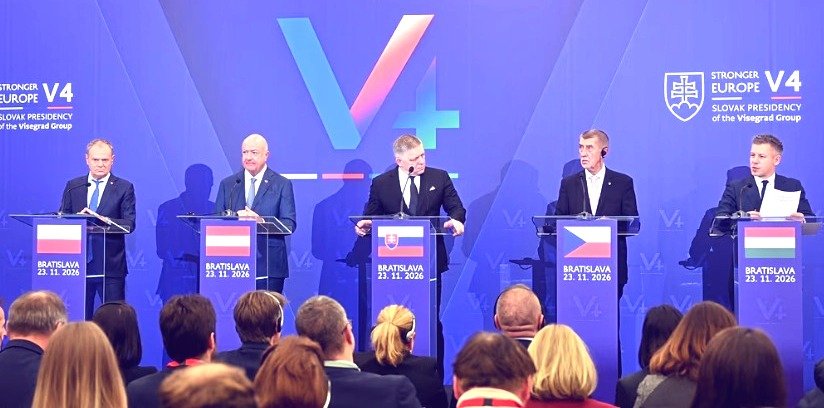
Bratislava; November 2026: The Prime Ministers of the Visegrád Four (V4) countries voiced concerns over the European Union's next seven-year budget proposal at a meeting in Bratislava, questioning spending priorities and plans to include funding for Ukraine. The leaders were meeting with the Austrian chancellor in Slovakia to discuss economic cooperation, migration and the draft of the budget.
Hungarian Prime Minister Péter Magyar said his government did not consider the proposal an acceptable starting point for negotiations. He said he had therefore written to European Council President António Costa to explain that he saw little point in holding a special council meeting scheduled for later in the week as "there is no point spending two days in Brussels not agreeing on anything".
Czech Prime Minister Andrej Babis also signalled his concerns over the proposed budget, saying he had expected the European Commission to show at least some sign that it wanted to save money. He has argued that maintaining a European Parliament in three locations was unnecessary and costly, while also voicing concerns over member state contributions.
Slovak Prime Minister Robert Fico, who hosted the meeting, said the leaders had not adopted a joint position on the budget during Monday's meeting, as this had not been the purpose of their discussions, although he noted that they were broadly aligned on the subject.
For his part, Polish Prime Minister Donald Tusk spoke mainly about security, saying that Poland was committed to peace but that recent events showed the impact of Russia's invasion of Ukraine on Poland. Tusk has underlined the importance of continuing support for Kyiv, arguing that the country's ability to defend itself was of strategic significance for Europe's security.
However, his Hungarian counterpart, Magyar, warned that "support for Ukraine should not be included in the EU budget". Magyar said there was no question that Ukraine deserved solidarity and noted that Hungary was already providing various forms of assistance to the Ukrainian people and government. But he has argued that financial support for Ukraine should not be incorporated into the bloc's budget in a way that would make contributions mandatory for all members.
On the same issue, Tusk said he did not think it was a good idea for the EU to finance support for Ukraine through joint borrowing - something the Hungarian government has already made clear that it would not take part in.
Furthermore, the leaders have stressed that regional cooperation was not only important but also achievable, given their shared positions on a number of key issues.
Fico said the V4 countries and Austria broadly agreed on key issues affecting the region, including cohesion policy, migration policy and agricultural strategies.
One of the main topics was how to deal with illegal migration. All the leaders called for strict rules and their consistent enforcement, while Fico also praised a plan for some EU member states to establish immigration return hubs in Rwanda.
Austrian Chancellor Christian Stocker said it was in Austria's interest to cooperate with its neighbours and that he wanted the country to be an ally of the V4. He added that closer cooperation would also help ensure that the rest of the EU better understood developments in central and eastern Europe and the strategic priorities shaping the region.
Earlier on Monday (23rd November 2026) -The European Commission has proposed a new round of economic sanctions against Russia as the country disregards calls for an energy ceasefire and continues its relentless attacks aimed at making Ukraine's winter unbearable. The proposal, unveiled on Monday afternoon, comes amid intensifying efforts to advance the peace negotiations into a multilateral format involving Ukrainian, Russian, European and US officials, although Moscow has yet to commit to taking part.
If approved by member states, it will mark the 22nd sanctions package since February 2022. Brussels aims for a deal in December before the holiday break. "We will continue to propose new sanctions until Russia shows genuine intent for lasting peace in Ukraine", Commission President Ursula von der Leyen said in a video statement. "Our position is clear: we are giving Ukraine the strength to secure peace – and Russia every reason to choose it".
The new sanctions seek to remove an additional 60 Russian banks from the SWIFT system, crack down on the crypto platforms that Moscow uses to bypass restrictions, and prohibit European companies from repairing Russian energy facilities, particularly oil refineries, which Ukraine's long-range strikes have significantly impaired.
The proposal also targets over 70 vessels from the "shadow fleet" that Moscow employs to bypass the oil price cap, currently set at $44 per barrel. More than 670 of these vessels have already been denied access to EU ports and services. The decrepit ships, which lack standard insurance and often sail under false flags, are considered a security and environmental threat.
Von der Leyen has revived a measure from the previous package that was left pending: an entry ban on Russian soldiers who have fought in Ukraine.
The first attempt in July fell short after France and Italy raised concerns about the administrative burden and legal responsibility for consular services. But a recent spike in hybrid attacks, many of them attributed to Russian services, has injected fresh energy into the issue. Denmark has asked for tighter visa rules after foiling a Russian plot to assassinate a US-Ukrainian rapper on Danish soil.
"Russian ex-combatants pose a security risk to Europe. They cannot be allowed to wander freely across our countries. Therefore, entry into the European Union will be off limits", von der Leyen have said.
The package introduces a novel dimension: sports and culture. The Commission wants to exclude Russian teams and athletes competing under the Russian flag and the display of official Russian symbols from all sports events inside the bloc. It also wants to prohibit Russians from providing financial donations to and holding posts in governing bodies of European-based sports federations.
In July, the International Olympic Committee (IOC) lifted its suspension on Russian athletes ahead of the 2028 LA Olympics, triggering an outcry across Europe. "Sports events cannot be a forum for propaganda activities", von der Leyen said.
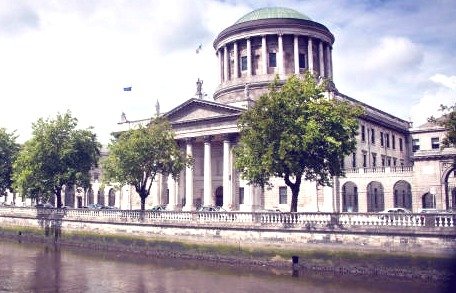
Notably absent from the Commission’s proposal is alumina, a key raw material used in aluminium production. The issue has come to prominence earlier this year after a media consortium exposed the links between Aughinish Alumina, a sprawling refinery in western Ireland, and Russia's military-industrial complex. Dublin came under intense pressure from Kyiv to cease the exports and was forced to launch a government probe.
The investigation reached no definitive conclusion because it did not find evidence to either confirm or refute a direct link between Irish-made alumina and Russian weapons. Though publicly Ireland has voiced that it would not "cherry-pick" EU sanctions, Brussels did not sense enough Irish support to move ahead with restrictions.
Monday (23rd November)'s proposal is the first since the Commission established a sanctions office within its Secretary General, bringing together officials from different departments.
Team Maverick.