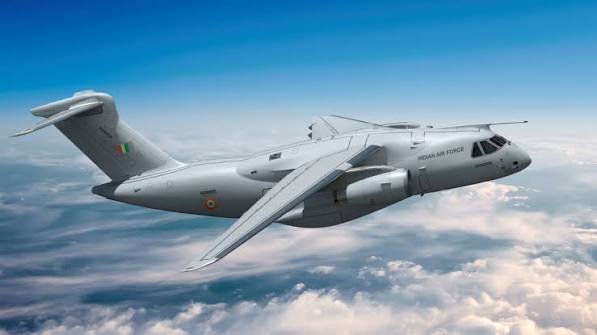
Proposed Nagpur assembly line could create a major aerospace manufacturing hub if the C-390 is selected to replace India’s ageing An-32 fleet
New Delhi, Oct 2026 : The Embraer-Mahindra C-390 Millennium has emerged as a strong contender for the Indian Air Force’s Medium Transport Aircraft (MTA) requirement, which seeks to replace the ageing An-32 transport fleet with a modern, high-performance platform.
The C-390 combines a 26-tonne payload capacity with jet-powered performance and multi-role flexibility, positioning it as a versatile option for military transport, airborne operations, humanitarian assistance and disaster relief missions.
As part of the partnership’s proposal for the Indian requirement, Embraer and Mahindra have identified Nagpur in Maharashtra as the proposed location for a final assembly line. The facility would be established if the C-390 is selected under the MTA programme and is expected to support aircraft assembly, systems integration, manufacturing engineering and the development of an indigenous aerospace supply chain.
The partnership is working with the Maharashtra government to develop the industrial infrastructure required for the proposed programme. If the proposal moves forward, Indian aerospace companies could become part of the global C-390 ecosystem, potentially expanding domestic capabilities in aircraft manufacturing, maintenance and long-term support.
High-capacity transport platform
India is considered a strategically important market for Embraer, with the company estimating that the Indian Air Force could eventually require between 60 and 80 C-390 aircraft. Such an order would represent a major opportunity in the global military transport aircraft market.
One of the aircraft’s principal strengths is its maximum payload capacity of 26 tonnes. Its 169-cubic-metre cargo hold is designed to accommodate military equipment, vehicles, supplies and other operational cargo.
The aircraft can carry up to 80 personnel in a troop transport configuration and as many as 64 paratroopers for airborne operations. Its large cargo compartment can also accommodate three to four light military vehicles or one to two heavier vehicles, depending on configuration and mission requirements.
The C-390 can additionally transport a helicopter in the Black Hawk class inside its cargo hold, providing another option for rapidly moving aviation assets over long distances.
Jet-powered performance
Powered by two IAE V2500-E5 turbofan engines, the C-390 can reach a cruise speed of up to 470 knots, or approximately 870 kmph. Its jet-powered design allows it to cover distances rapidly compared with conventional turboprop transport aircraft.
With a maximum 26-tonne payload, the aircraft has a stated range of around 1,080 nautical miles. At a 23-tonne payload, its range increases to approximately 1,470 nautical miles. Ferry range is listed at around 3,370 nautical miles and can reach about 4,570 nautical miles with internal auxiliary fuel tanks.
The aircraft is also designed to operate from semi-prepared, austere and damaged runways. This capability could be particularly relevant for India, where transport aircraft may be required to support remote border areas, island territories and forward operating locations.
Its take-off performance includes a runway requirement of approximately 1,524 metres with a 23-tonne payload and about 1,165 metres with a 16-tonne payload. Landing distance is listed at around 1,000 metres with a 26-tonne payload.
Multi-role capabilities
Beyond conventional cargo and troop transport, the C-390 has been designed as a multi-mission platform. It can be rapidly configured for medical evacuation, with capacity for approximately 50 to 80 stretchers depending on the configuration, along with medical personnel and specialised equipment.
The aircraft can also operate in the KC-390 tanker configuration, allowing it to conduct aerial refuelling missions. It is capable of both supplying fuel to other aircraft and receiving fuel from another tanker, providing additional flexibility for air operations.
Other potential missions include search and rescue, humanitarian assistance, disaster relief and aerial firefighting. Its modular interior allows operators to reconfigure the aircraft according to operational requirements.
Embraer has also highlighted the C-390’s ability to operate in challenging climatic and geographical conditions, including hot and dusty environments, high-altitude regions and extremely cold conditions. The aircraft has been demonstrated in demanding environments, including operations from unpaved surfaces and in Antarctica.
Modern systems and design
The C-390 measures 35.20 metres in length, has a height of 11.84 metres and a wingspan of 35.05 metres. It can operate at altitudes of up to 36,000 feet and carries approximately 23.9 tonnes of usable fuel in its wing tanks.
Its avionics include the Rockwell Collins Pro Line Fusion suite, while the aircraft is equipped with the Gabbiano T-20 tactical radar. Modern fly-by-wire flight controls are designed to support handling and operational efficiency.
The platform is also being promoted on the basis of lower maintenance requirements, high mission availability and reduced lifecycle costs. The C-390 has entered service with multiple air forces and secured orders from several NATO member countries, providing an expanding international user base for the aircraft.
Potential industrial impact
For India, the proposed programme could extend beyond the acquisition of transport aircraft. If the C-390 is selected, the planned Nagpur final assembly facility could become a significant aerospace manufacturing centre, supporting aircraft production, systems integration, maintenance, training and long-term logistics.
The project could also provide opportunities for Indian aerospace companies to participate in manufacturing and supply activities associated with the global C-390 programme.
The proposed industrial partnership between Embraer and Mahindra therefore combines the operational requirements of the Indian Air Force with a broader manufacturing and technology-development opportunity.
A final decision on the MTA programme will determine whether the proposed Nagpur facility moves forward. If selected, the C-390 would not only provide the IAF with a modern replacement for its ageing medium transport fleet but could also contribute to the expansion of India’s domestic aerospace manufacturing and support ecosystem.
Key Specifications And Capabilities of The Embraer C-390 Millennium
| Category | Specification / Capability |
|---|---|
| Aircraft Type | Twin-engine, jet-powered military transport aircraft |
| Maximum Payload | 26 tonnes |
| Cargo Compartment Volume | 169 cubic metres |
| Troop Capacity | Up to 80 troops |
| Paratrooper Capacity | Up to 64 paratroopers |
| Vehicle & Equipment Carriage | Multiple light or heavy military vehicles, or a Black Hawk-class helicopter |
| Maximum Cruise Speed | Up to 470 knots, approximately 870 km/h |
| Range with 26-ton Payload | 1,080 nautical miles |
| Range with 23-ton Payload | 1,470 nautical miles |
| Ferry Range | Up to 4,570 nautical miles with additional internal fuel tanks |
| Airfield Operations | Can operate from semi-prepared, austere and damaged runways |
| Take-Off Distance | 1,524 metres with a 23-tons payload |
| Landing Distance | Approximately 1,000 metres with a 26-tons payload |
| Engines | Two IAE V2500-E5 turbofan engines |
| Engine Thrust | 31,330 pounds of thrust per engine |
| Maximum Operating Altitude | 36,000 feet |
| Usable Fuel Capacity | 23.9 tonnes |
| Flight Controls | Advanced fly-by-wire flight-control system |
| Avionics Suite | Rockwell Collins Pro Line Fusion cockpit and Gabbiano T-20 tactical radar |
| Mission Reconfiguration | Rapid mission reconfiguration capability |
| Operational Advantages | Reduced maintenance requirements, high operational availability and lower lifecycle costs |
| Mission Roles | Cargo transport; troop movement; airborne assault operations; paratroops deployment; medical evacuation; aerial refuelling; search and rescue; humanitarian assistance; disaster relief; and aerial firefighting |
(Disclaimer :The content of this article is sourced from a news agency and has not been edited by the Mavericknews30 team.)