As drones become faster, more autonomous and increasingly diverse, India’s challenge is to ensure its proven defensive architecture evolves with the threat.
Anshuman Chatterjee, Indian Navy Veteran
The Ministry of Defence’s ₹770 crore contract with Bharat Electronics Limited for Improved Low Level Light Weight Radars (LLLR-I), announced on 21 October 2026, marks another step in strengthening the Indian Army’s air-defence capabilities. Designed to detect and track targets ranging from fighter-sized aircraft to mini and micro drones, the radars also offer target-prioritisation capability.¹
The contract follows in-principle approvals for AKASH TARANG anti-UAV electronic warfare equipment, Very Short Range Air Defence Systems (V-SHORADS), Medium Range Surface-to-Air Missiles (MRSAM) and jet-based kamikaze drones. These are not all contracted or fielded systems; they are elements of a broader acquisition pipeline.²
India already has a layered air-defence architecture. During Operation Sindoor, the Army and Air Force employed counter-UAS systems, electronic warfare, guns and missiles in complementary roles. The issue is therefore not whether layered defence is the right approach, but whether the next generation of procurements and upgrades is keeping pace with the changing face of drone warfare.³
The Threat Is Changing Faster Than the Procurement Cycle
The Russia–Ukraine war illustrates the speed of adaptation. Ukrainian defences evolved to counter propeller-driven Shahed-type attack drones through radar and acoustic detection, electronic warfare, mobile teams and interceptor drones. Russia has responded with changes to propulsion, navigation, payloads and tactics.
Jet-powered Geran-4 and Geran-5 variants reduce the time available for detection, classification and engagement. Ukrainian defence intelligence has also described a Geran-4 modification combining inertial and magnetic navigation with electro-optical terrain-image correlation, an approach intended to reduce dependence on satellite signals. These are reported capabilities, not proof that electronic warfare has become ineffective.⁴
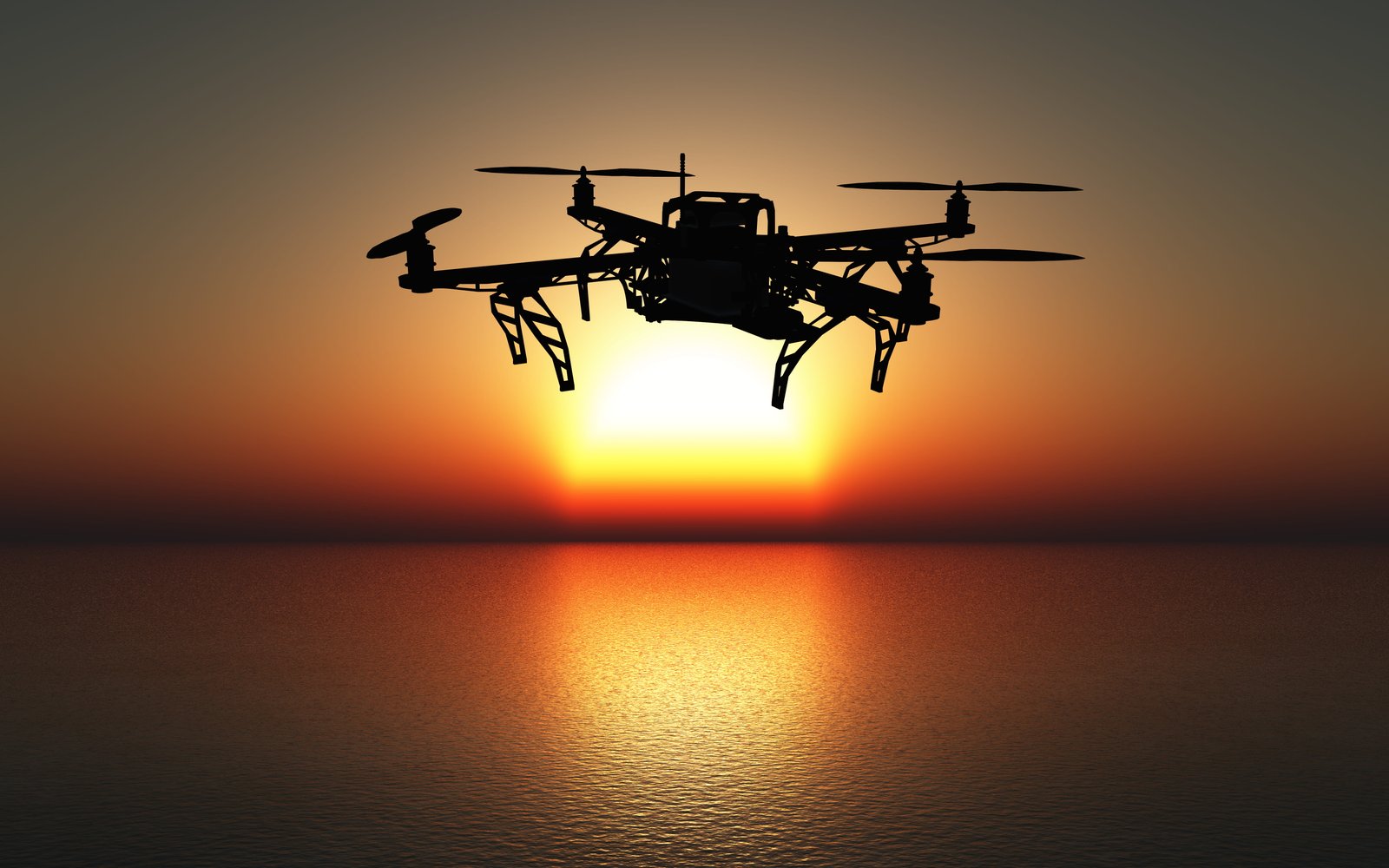
The threat is changing across several dimensions simultaneously: speed, altitude, radar signature, autonomy, numbers and tactics. A defensive system optimised for a slow quadcopter may be less suitable against a fast one-way attack drone. Equally, a jammer that disrupts a command link may have little effect on a drone following an autonomous route.
The Immediate Regional Context
For India, the challenge is not hypothetical. During Operation Sindoor in May 2025, Indian officials reported attempted drone intrusions at 36 locations involving approximately 300–400 drones. Preliminary examination of recovered debris suggested Turkish-origin ASISGUARD SONGAR systems among the platforms involved. Indian forces used kinetic and non-kinetic means to counter the intrusions.⁵
Pakistan’s defence links with Türkiye, including discussions on drone-related industrial cooperation, and its longstanding access to Chinese military technology warrant close attention. These links do not establish that every emerging foreign drone capability is already deployed by Pakistan. They do, however, underline the need to plan against a wider future mix of reconnaissance drones, decoys, loitering munitions and autonomous strike systems.⁶
Layered Defence Must Remain Adaptable
Layered air defence is an established Indian strength, not a new concept awaiting adoption. The challenge is to preserve that strength as the threat changes. No single radar, jammer, gun or missile can reliably and economically defeat every class of unmanned aircraft.
A resilient architecture combines surveillance radars, electro-optical and passive sensors, fused command-and-control information, electronic warfare and several kinetic engagement options. It must also provide overlapping coverage and redundancy: when one defensive method is defeated, disrupted or saturated, other layers should remain available.
The critical requirement is the ability to introduce new sensors, software, jammers and interceptors without rebuilding the entire network. This means interoperable interfaces, secure data exchange, flexible engagement management and realistic combined-system trials.
The Economics of Interception
The economics are as important as the engineering. Repeatedly using expensive missiles against cheap drones may be operationally justified in some circumstances, but can become unsustainable during prolonged saturation attacks. The appropriate response depends on the target, the probability of interception, ammunition stocks and the consequences of a successful strike.
Electronic warfare, guns, interceptor drones and, where mature and suitable, directed-energy systems can broaden the menu of responses. The objective is not always the cheapest engagement, but the most effective and sustainable combination of defensive layers.
What Should Future Procurements Demonstrate?
The new LLLR-I contract strengthens the detection layer; AKASH TARANG is intended to enhance electronic countermeasures; V-SHORADS and MRSAM address different engagement requirements. Their individual roles are clear. Public announcements, however, cannot by themselves establish how readily every new capability can be integrated into existing networks or upgraded against future threats.
Procurement specifications and trials should therefore test not only individual equipment performance but also system-level adaptability. Can the command network accept new sensors and interceptors? Can surveillance systems recognise changing target signatures? Can electronic warfare and kinetic effectors operate together under heavy electronic interference? Can multiple simultaneous threats be handled without exhausting costly weapons?
These are not allegations of shortcomings in current Indian capabilities. They are the practical questions by which the durability of future investment should be judged.
Conclusion
Operation Sindoor demonstrated the operational value of India’s layered air defence. The lesson from Ukraine is that this proven architecture cannot remain static. Its future strength will depend on the ease with which it absorbs new technology, new engagement methods and new tactics.
India’s counter-drone procurement strategy should therefore be measured not merely by the equipment acquired, but by how effectively its defensive layers continue to evolve. In an era when threats may change faster than procurement cycles, adaptability is itself a defensive capability.
The same question extends to the maritime domain. As warships confront increasingly varied unmanned aerial threats with finite sensors, weapons and ammunition, is integrated, adaptable layered counter-drone defence being adequately factored into the design, construction and modernisation of Indian naval ships? That question merits a separate examination.
https://www.pib.gov.in/PressReleasePage.aspx?PRID=2325933
https://www.pib.gov.in/PressReleasePage.aspx?PRID=2280728
https://www.pib.gov.in/PressReleasePage.aspx?PRID=2128746
https://gur.gov.ua/en/content/warsanctions-optychna-navihatsiia-nova-bch-ta-kompas-hur-publikuie-dani-pro-novu-modyfikatsiiu-vorozhykh-heran4.html
https://www.mea.gov.in/media-briefings.htm?dtl/39482/Transcript_of_Special_briefing_on_OPERATION_SINDOOR_May_09_2025
https://www.yahoo.com/news/turkey-pakistan-discuss-defence-industry-161826401.html