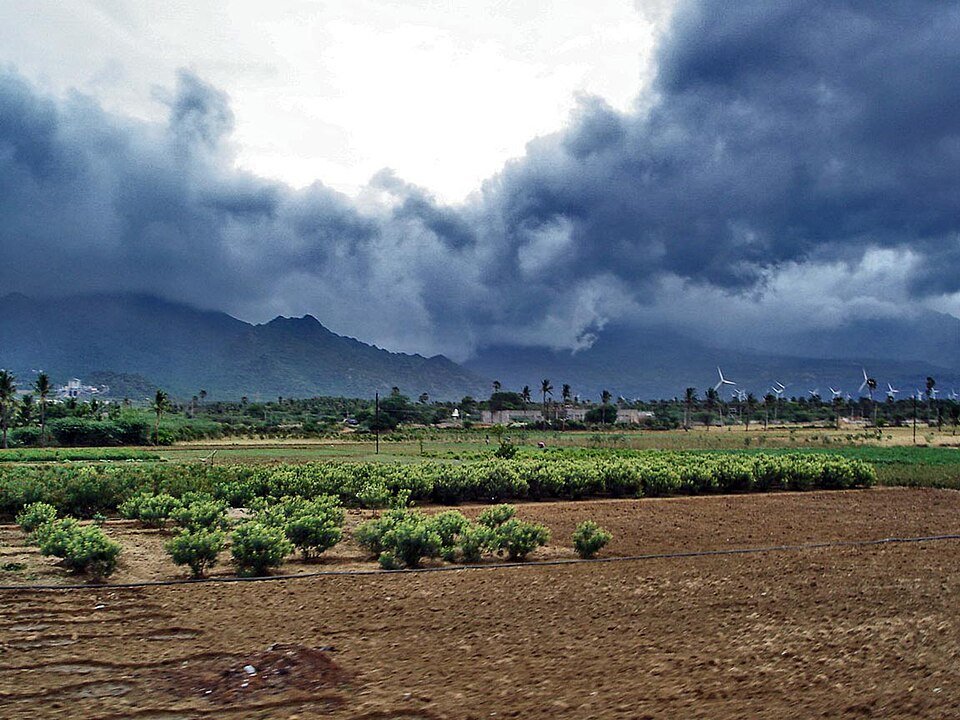
Chief Minister Dr. Mohan Yadav said that Madhya Pradesh has received 15% below-average rainfall during the current monsoon. While some districts have received deficient rainfall, some may experience heavy rainfall in the coming days. At present, half of the districts in the State have received normal rainfall. He directed officials to ensure that farmers and citizens face no difficulties due to these unusual weather conditions.
Chief Minister Dr. Yadav held discussions with ministers and senior officials at Mantralaya regarding the prevailing low rainfall and the circumstances arising from it. He directed, expressing concern over deficient rainfall in some districts, all concerned departments to ensure necessary preparedness to deal with the situation.
Chief Minister Dr. Yadav was informed that Madhya Pradesh received 483 mm of rainfall between June 1 and August 10, against the normal 571 mm for the period, reflecting a 15% deficit. Eastern Madhya Pradesh received 513.20 mm of rainfall, while Western Madhya Pradesh received 459.80 mm. The State's total average annual rainfall is 949.50 mm. As far as sowing is concerned, 84% of the targeted paddy area has been sown in the State.
Prioritise Crops Requiring Less Irrigation
Chief Minister Dr. Yadav directed that farmers be encouraged to opt for rabi crops requiring less irrigation as a precautionary measure. He specifically directed that adequate availability of seed for gram cultivation be ensured.
CM Dr. Yadav's Key Directions
Regularly monitor rainfall patterns and water storage levels.
Regularly monitor water levels in major water sources and reservoirs.
Keep disaster control rooms operational at the State and district levels to immediately record information related to waterlogging and damage, and assess the need to evacuate residents from waterlogging- and flood-prone areas to safer locations.
Make arrangements for relief camps as required in case of excessive rainfall.
Ensure adequate availability of fertilisers and seeds for farmers and make necessary preparations.
Bring the maximum possible number of farmers under crop insurance schemes.
Ensure uninterrupted power supply for irrigation.
Ensure timely maintenance and repair of roads after rainfall.
Issue timely warnings to residents of downstream areas whenever water is released from dams.
Take necessary measures to prevent infectious diseases during the monsoon and ensure adequate availability of medicines in every district.
Ensure transparent assessment of crops affected by excessive rainfall or waterlogging by Revenue Department teams and expedite compensation to farmers from the Disaster Relief Fund.
Take immediate action on complaints related to quality in the moong procurement completed so far.
Deploy special teams to resolve bottlenecks and complete pending work.
Take immediate action on complaints of black marketing.
Concerned departments should maintain necessary dialogue with farmers and farmer organisations.
Water Resources Minister Shri Tulsiram Silawat, Revenue Minister Shri Karan Singh Verma, Cooperation Minister Shri Vishwas Sarang, Social Justice Minister Shri Narayan Singh Kushwah and Public Health Engineering Minister Smt. Sampatiya Uikey were present at the meeting. Panchayat and Rural Development Minister Shri Prahlad Patel, Energy Minister Shri Pradyuman Singh Tomar and Agriculture Minister Shri Edal Singh Kansana joined the meeting virtually.
Chief Secretary Shri Ashok Barnwal, Director General of Police Shri Kailash Makwana and other senior officials were also present.
Dam Water Storage Status
The meeting was informed that the water storage level in dams across the State stood at around 49% as of August 10, which is 10% below the average. The average reservoir storage level over the past five years has been 59%, compared with 75% during the corresponding period last year.
There are 36 reservoirs in the State with storage levels of 50% or less, while 18 reservoirs have storage levels above 50% and up to 90%.