Kanpur, November 2026 : India's traditional knowledge system has the potential to offer the world a balanced approach to life, while the country's cultural and spiritual heritage can serve as a guiding force for global society, Rajya Sabha MP Dr Sudhanshu Trivedi said on Saturday.
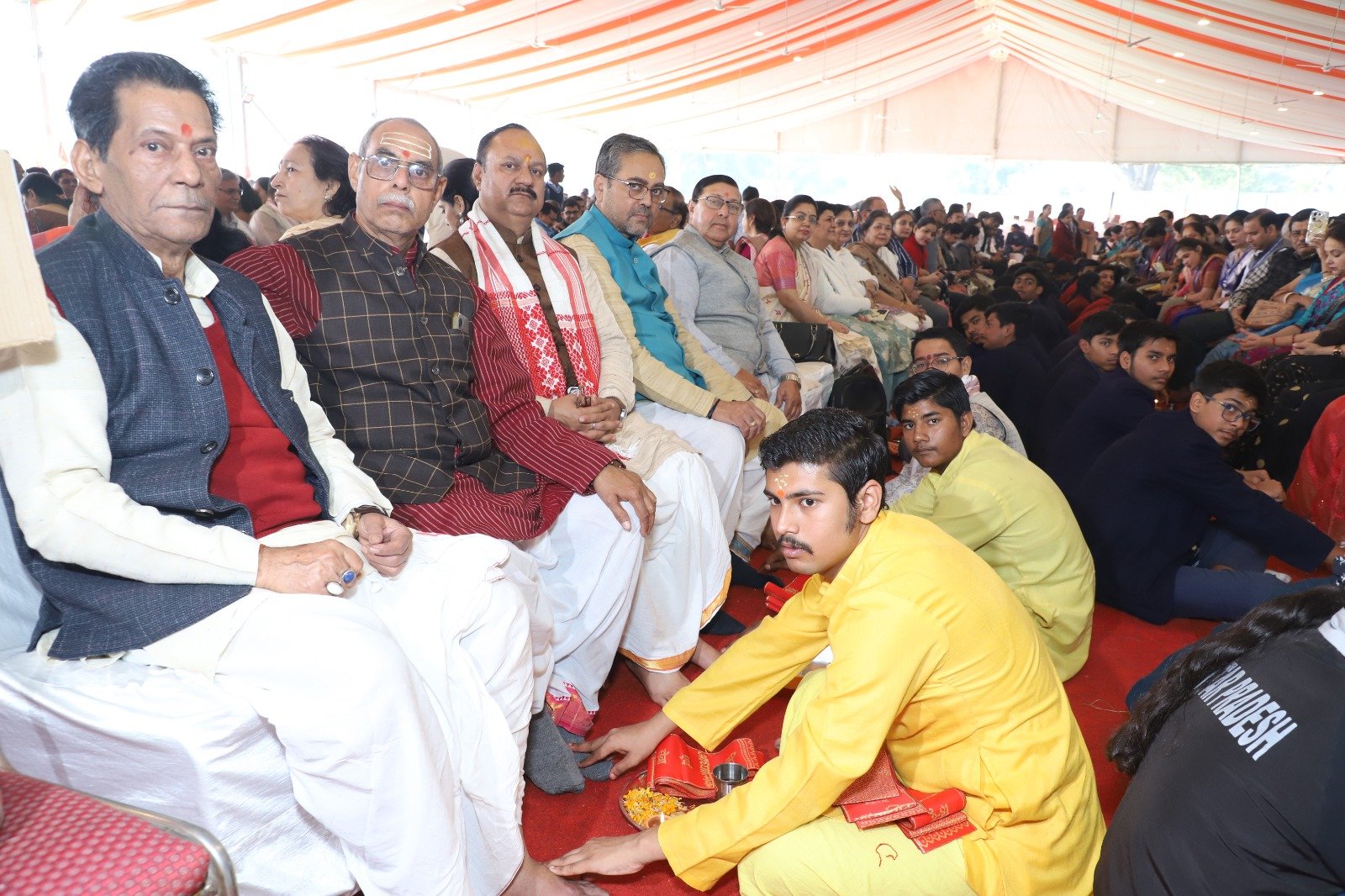
He was speaking at the ‘Acharya Vandanam’ programme on the third day of the Hindu Spiritual and Service Fair, organised at Brajendra Swaroop Park in Kanpur. The event celebrated India's traditional Guru-Shishya (teacher-disciple) relationship and recognised the contribution of teachers to society.
Around 550 principals and teachers from nearly 100 schools across the city participated in the programme.
Yoga, the Gita and Defence Self-Reliance Strengthen India's Global Standing
Dr Trivedi said that although technology and access to information were expanding rapidly, information alone could not build a society. Wisdom, discernment and strong values were equally important.
Referring to yoga, the teachings of the Bhagavad Gita and the ideas of Maharishi Aurobindo, he said India's knowledge tradition had established a distinctive identity across the world. He also credited Prime Minister Narendra Modi's efforts with giving yoga international recognition.
Citing the COVID-19 pandemic, Trivedi praised India's family system and its role during difficult times. He also highlighted projects such as the BrahMos missile programme and the defence corridor as symbols of the country's strategic self-reliance.
He said India's cultural and spiritual heritage was not merely a matter of national identity but could also provide direction to the wider world.
Trivedi Questions Opposition's Stand on Women's Reservation and Delimitation
Turning to political issues, the Rajya Sabha MP called on opposition parties to clarify their positions on women's reservation and delimitation.
Taking a swipe at the Samajwadi Party-Congress alliance, he said contradictions were visible in the opposition's claims of unity. He also argued that politics centred on PDA (Pichhda, Dalit, Alpsankhyak) should move beyond slogans and reflect meaningful action.
Teachers Are Nation Builders: Mukul Kanitkar
Speaking at the programme, Mukul Kanitkar, a member of the Rashtriya Swayamsevak Sangh's All India Prachar Team and its All India Vimarsh chief, highlighted the importance of the traditional Guru-Shishya relationship.
He described teachers as builders of society and the nation, saying that their role went beyond providing academic instruction.
Kanitkar observed that the internet, Google and ChatGPT could provide information, but genuine knowledge could be developed only through the guidance of a teacher.
Explaining the importance of respect for teachers, he compared students' ability to acquire knowledge with a vessel's capacity to collect rainwater. Just as a wide and deep vessel can gather more water, he said, reverence for teachers helps develop a student's capacity to receive and understand knowledge.
550 Principals and Teachers from 100 Schools Honoured
The ‘Acharya Vandanam’ programme was organised to express gratitude towards teachers in keeping with India's traditional respect for the Guru.
Around 550 principals and teachers representing nearly 100 schools in Kanpur participated in the event. Teachers were felicitated in recognition of their contribution, with the programme also highlighting the importance of strengthening the younger generation's connection with India's traditional education system.
Among those present were former teacher Om Shankar Tripathi; Deepak Rajey of Pt. Deendayal Upadhyaya Vidyalaya; Acharya Anil Kumar of BNSD Shiksha Niketan; retired Dr V.N. Tripathi of GSVM Medical College; dance teacher Rambabu Bhatt; Shashi Prakash Mishra, coach of Sanjeev Pathak, popularly known as ‘Bobby Bhaiya’; Krishna Bihari Pandey; Angad Singh; Gunwant Singh Kothari; Rajkumar Lohia; Neetu Singh; and Arvind Dixit.
The programme brought together educators and dignitaries to recognise the role of teachers in preserving cultural values and shaping future generations. Its central message focused on the continuing relevance of the Guru-Shishya tradition in an age increasingly influenced by technology and digital information.