New Delhi, November 2026 : The Cockroach Janta Party (CJP) on Saturday appealed to opposition parties and Members of Parliament to take a “principled stand” and vote against the proposed Constitution (131st Amendment) Bill, 2026, along with the Delimitation Bill, 2026, and the Union Territories Laws (Amendment) Bill, 2026. The outfit warned that political parties supporting the proposed legislation would be committing what it described as a “grave betrayal” of the people's mandate.
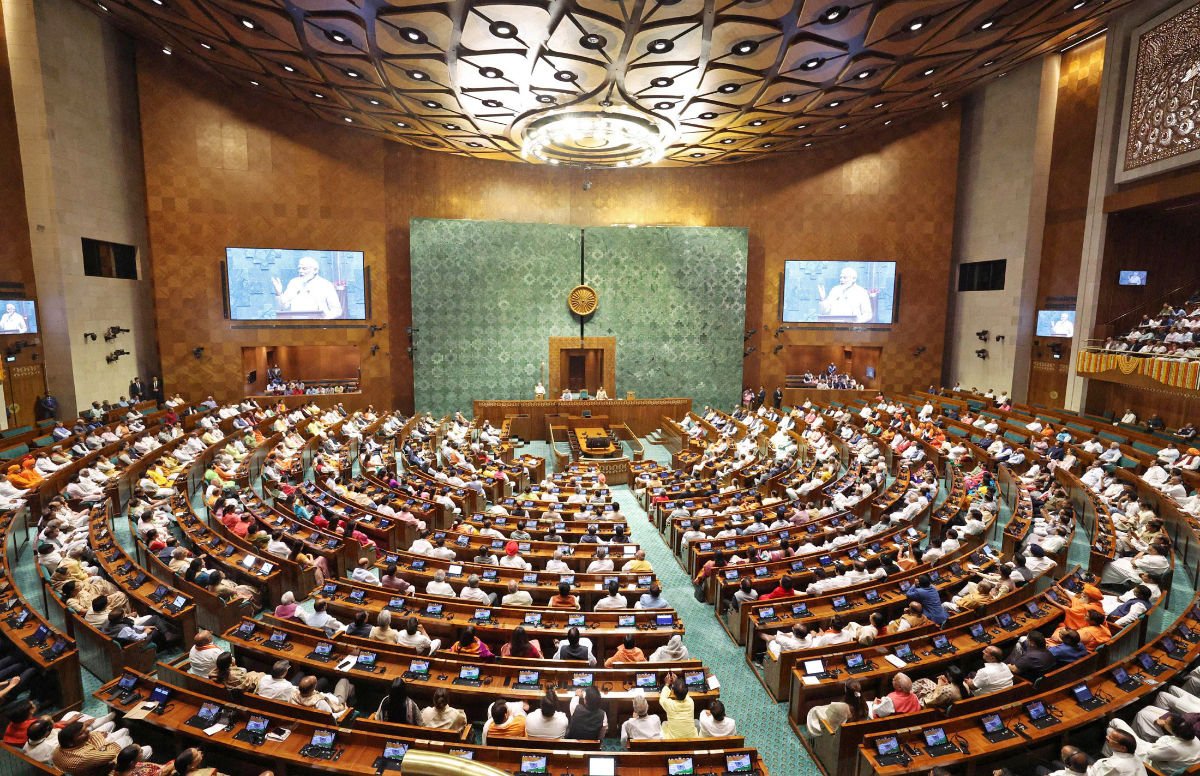
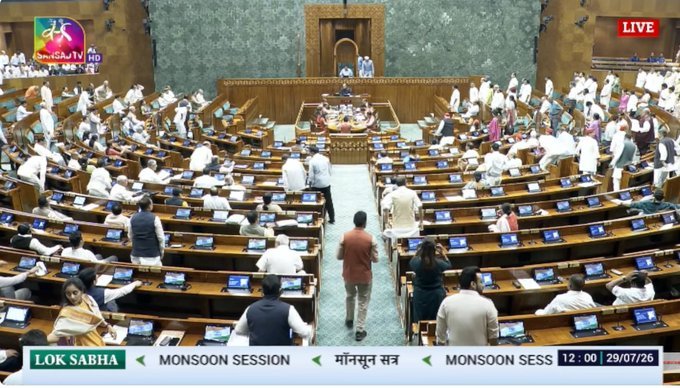
The appeal comes ahead of the special session of Parliament scheduled from November 30 to December 3, during which the proposed legislation is expected to be taken up. The CJP called on opposition parties to oppose the Bills, arguing that the proposed delimitation exercise could have far-reaching implications for India's electoral system and democratic representation.
“The nation will be closely watching the proceedings of Parliament. Any party or politician that enables this exercise will be committing a grave betrayal of the people’s mandate, and that betrayal will not be forgiven this time,” the organisation said in a statement.
CJP Raises Concerns Over Gerrymandering
The CJP alleged that supporters of the proposed legislation were diverting attention from what it considers the most serious concern associated with delimitation: the possibility of partisan redrawing of parliamentary and state Assembly constituencies to benefit the ruling party.
Describing this practice as gerrymandering, the outfit argued that electoral boundaries could be drawn in ways that give one political party an advantage over others, even without changing the overall number of votes cast.
According to the CJP, access to polling booth-level results, electoral rolls and historical voting patterns could make it possible to design constituency boundaries that systematically influence electoral outcomes.
“By concentrating voters in certain constituencies and dividing them across others, the political outcome can be influenced even without any change in the overall number of votes cast,” the statement said.
The organisation expressed concern that, in the absence of adequate safeguards and independent scrutiny, the proposed redrawing of constituency boundaries could create a lasting electoral advantage for the Bharatiya Janata Party (BJP).
It cautioned that the consequences of such an exercise, if its concerns materialised, would extend beyond the next general election. Constituency boundaries can shape political representation for decades, the CJP said, adding that boundaries designed to favour an incumbent government could prevent future changes in public opinion from being fairly reflected in Parliament.
Questions Raised Over Delimitation Commission
The outfit also questioned the proposed role of the Election Commission in the delimitation process. Referring to protests over alleged irregularities in the Special Intensive Revision (SIR) of electoral rolls and other electoral processes, the CJP raised concerns about public confidence in the exercise.
“A Delimitation Commission involving Chief Election Commissioner Gyanesh Kumar, described as having already eroded public trust, will not give anyone confidence in the process,” the statement said.
The organisation argued that an exercise affecting electoral representation across the country would require credible safeguards, transparency and independent scrutiny to ensure that constituency boundaries were not drawn to favour any political party.
CJP Questions Opposition Parties' Change in Position
CJP co-convener Ashutosh Ranka also criticised the reported change in position of parties such as the Dravida Munnetra Kazhagam (DMK) and the Nationalist Congress Party (Sharadchandra Pawar). He referred to arguments made by some parties in support of the legislation, including the proposed 50 per cent increase in the number of seats across the country.
“Some parties are defending their switch in favour of the Bill, saying that there will be a 50 per cent increase in the number of seats all over the country. They have no clue what gerrymandering they are signing up for. Check Assam’s electoral boundaries for reference,” Ranka said.
CJP co-convener Saurav Das similarly urged opposition parties to consider the long-term consequences of their decisions. He warned that any political position that, in the CJP's assessment, benefited the BJP at the expense of democratic principles would have serious consequences for future generations.
“If parties in the Opposition act in any manner that benefits the BJP and its sinister designs for our democracy, then that will be a grave betrayal of the people. The youth will be paying because of their unholy, principle-less politics,” Das said.
CJP Says Women's Reservation Should Not Be Used as a Cover
The CJP also addressed the government's stated association of the proposed legislation with women's reservation. The outfit said it unequivocally supported reservation for women, describing it as a measure that should be backed by every citizen and political party.
However, it argued that women's reservation and delimitation were separate issues and alleged that the reservation provision was being used to divert attention from concerns over the redrawing of electoral boundaries.
“Women's reservation has already been passed by Parliament and yet remains unimplemented. Using it as a cover to manipulate electoral boundaries is a cynical distraction from the real issue: the partisan redrawing of India's constituencies,” the statement said.
The organisation warned that political parties choosing what it called “unprincipled politics” over constitutional principles would face scrutiny from young citizens, who, it said, could bear the consequences of the decisions for generations.
In its final appeal, the CJP urged opposition parties to stand together against what it described as the manipulation of India's electoral map and vote against the Delimitation Bill when it comes before Parliament.
“Stand with the people of India and show your loyalty to the democratic ideals of this country,” the statement said.