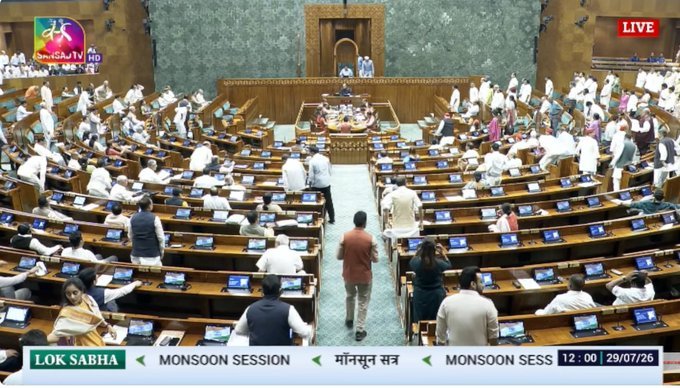
New Delhi: India's proposed delimitation exercise has brought two important questions to the centre of national debate: how parliamentary representation should evolve with the country's changing population and how women can receive a stronger role in legislative decision-making. The proposed Delimitation Bill, 2026, and the Constitution (132nd Amendment) Bill, 2026, seek to address these issues by expanding the strength of the Lok Sabha and State Legislative Assemblies while facilitating the implementation of 33 per cent reservation for women.
The proposals could significantly reshape India's electoral and political landscape. Supporters see them as an opportunity to improve representation, strengthen democracy and provide more space for women in politics. Critics, however, have raised concerns about the timing, constitutional implications, political balance between states and the possibility of using delimitation as a tool for electoral advantage.
Why Does India Need Delimitation?
Delimitation is the process of redrawing electoral constituency boundaries and determining how seats are distributed. Its purpose is to ensure that constituencies have broadly comparable populations and that representation keeps pace with demographic changes.
India's parliamentary seat allocation has remained largely frozen since the 1971 Census. Constitutional amendments extended the freeze to encourage states to pursue population stabilisation. However, population growth has not been uniform across the country. Some states have experienced faster growth, while several southern states have made substantial progress in controlling population growth.
This has created a debate over whether representation should be determined solely by population or whether the country's demographic achievements and regional balance should also be protected.
How Could Lok Sabha Seats Increase?
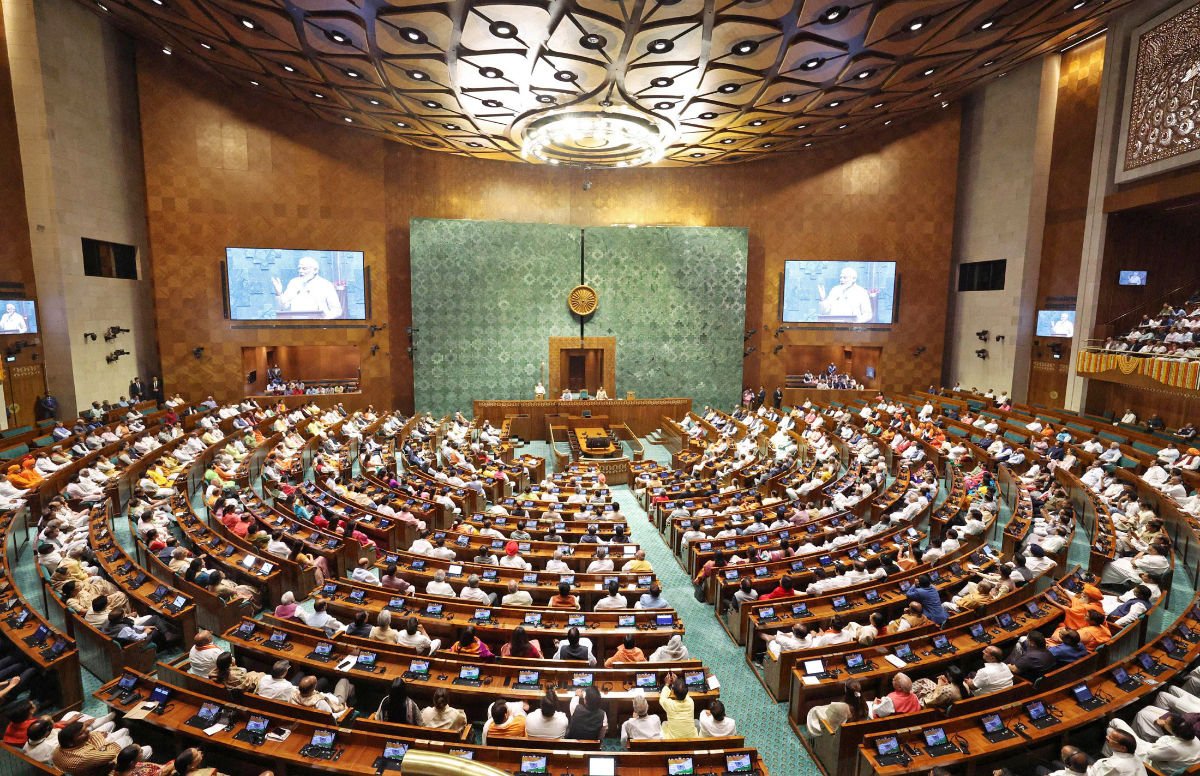
The latest proposal provides for a 50 per cent increase in the number of Lok Sabha seats allocated to every state and Union Territory. The proposed constitutional amendment would raise the maximum strength of the House to 850 members, comprising up to 815 representatives from states and 35 from Union Territories.
For perspective, the present Lok Sabha has 543 elected members. A 50 per cent increase would take its strength to approximately 815 elected members, subject to the proposed constitutional limits and the final delimitation exercise.
The following examples illustrate what a uniform 50 per cent increase could mean for some states:
| State | Present Lok Sabha seats | Illustrative seats after 50% increase |
|---|---|---|
| Uttar Pradesh | 80 | 120 |
| Maharashtra | 48 | 72 |
| West Bengal | 42 | 63 |
| Bihar | 40 | 60 |
| Tamil Nadu | 39 | Approximately 59 |
| Madhya Pradesh | 29 | Approximately 44 |
| Karnataka | 28 | 42 |
| Gujarat | 26 | 39 |
| Kerala | 20 | 30 |
| Telangana | 17 | Approximately 26 |
These are illustrative calculations, not official final allocations. Actual figures will depend on the legislation, rounding and the Delimitation Commission's decisions.
The proposed framework also seeks to preserve the existing relative share of representation among states until 2051. This is intended to address concerns that states which successfully controlled population growth could lose their relative influence in Parliament.
Women's Reservation: A Major Opportunity
The Constitution (106th Amendment) Act, 2023, popularly known as the Nari Shakti Vandan Adhiniyam, provides for one-third reservation for women in the Lok Sabha and State Legislative Assemblies. Its implementation was linked to a future Census and subsequent delimitation.
The new proposals seek to bring this reservation into effect through the proposed delimitation exercise. If implemented, women would have access to approximately one-third of the seats in the expanded legislatures. For an illustrative Lok Sabha strength of 815 elected members, this would amount to around 272 seats.
The benefits could extend beyond numbers. Greater representation could encourage more women to participate in debates on education, healthcare, employment, public safety, infrastructure and social welfare. It could also create opportunities for women from different economic and social backgrounds to enter public life.
The Constitution provides for the inclusion of women from Scheduled Castes and Scheduled Tribes within the overall one-third reservation framework.
The Advantages of the Proposed Changes
One of the major advantages is the possibility of improving representation. A larger Lok Sabha could provide more parliamentary seats and potentially reduce the number of people represented by an individual MP.
The expansion of State Assemblies could also create opportunities for stronger local representation. More elected representatives may be able to focus on regional issues, monitor development projects and raise public concerns.
Women's reservation could address the long-standing underrepresentation of women in legislatures. It may encourage political parties to identify and develop more women leaders, while giving women voters greater representation in decision-making institutions.
The proposed uniform increase in seats could also offer a measure of protection to states that fear losing their relative parliamentary share because of differences in population growth.
Concerns and Challenges
Despite these potential benefits, the proposals raise several important questions.
First, delimitation must be carried out transparently and independently. The Delimitation Commission's composition, methodology, public consultations and decisions will be closely scrutinised. Political parties and citizens must have confidence that constituency boundaries are drawn fairly.
Second, increasing the number of seats will require additional parliamentary infrastructure, administrative resources and public expenditure. A larger House will also need effective arrangements to ensure that debates, committees and legislative business remain productive.
Third, women's reservation alone cannot guarantee meaningful political empowerment. Political parties will need to support women candidates, provide opportunities for leadership and ensure that elected representatives can function independently. The rotation of reserved constituencies will also require careful planning so that representatives have sufficient time to build relationships with voters.
There are also concerns about linking women's reservation with delimitation. Critics argue that the reservation should be implemented without unnecessary delay, while the delimitation exercise should be examined separately and through wider consultation.
Balancing Representation and Democratic Aspirations
India's democratic institutions must evolve with the country's changing requirements. A growing population, regional development needs and the aspirations of women all make a strong case for reviewing parliamentary representation.
At the same time, delimitation must protect the federal balance and ensure that every state has confidence in the process. Women's reservation should translate into meaningful participation rather than remain only a numerical target.
The proposed Bills therefore represent an important debate about the future of Indian democracy. Their success will depend not merely on increasing the number of seats, but on ensuring fairness, transparency, regional balance and genuine political empowerment.
Ultimately, parliamentary constituencies must be strengthened in line with the country's changing requirements and the aspirations of women. The objective should be a more representative Parliament in which every region and every section of society has a meaningful voice.
Team Maverick