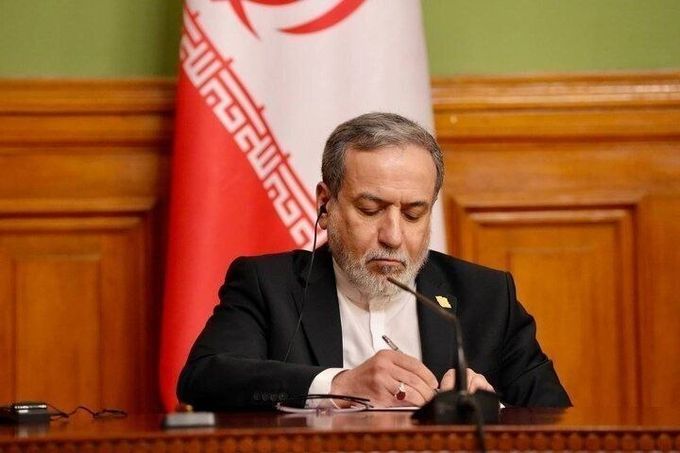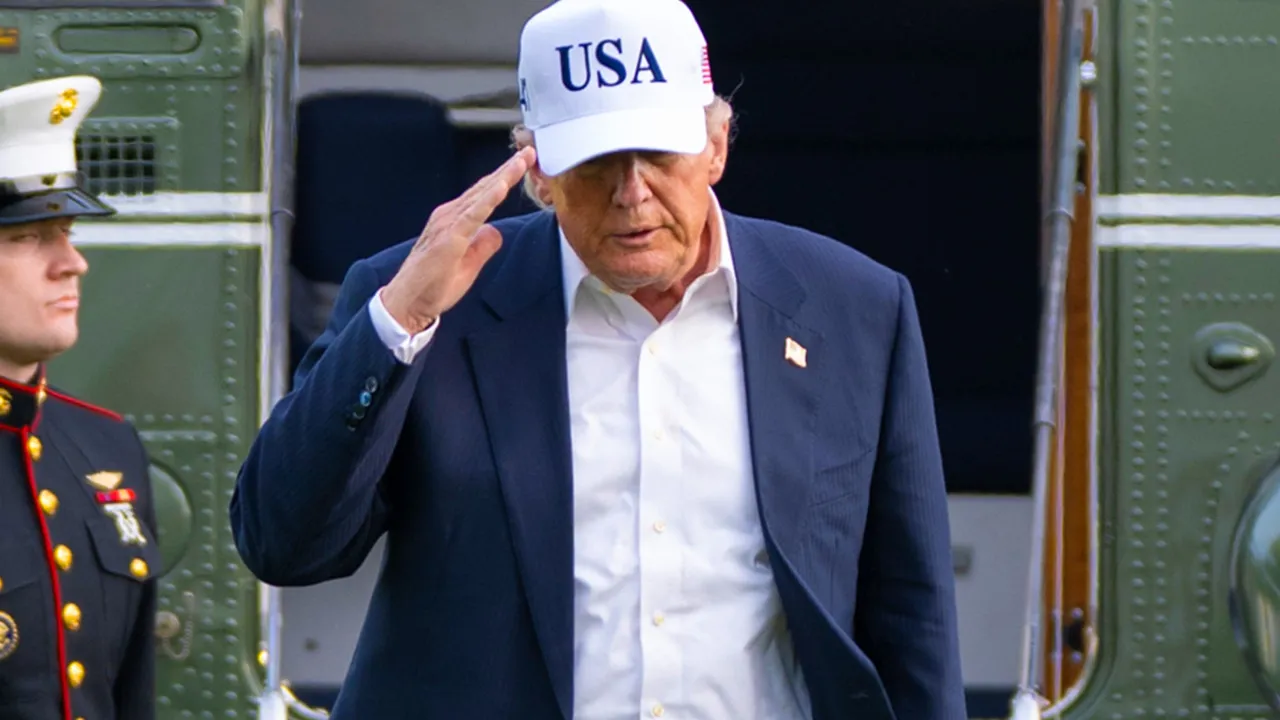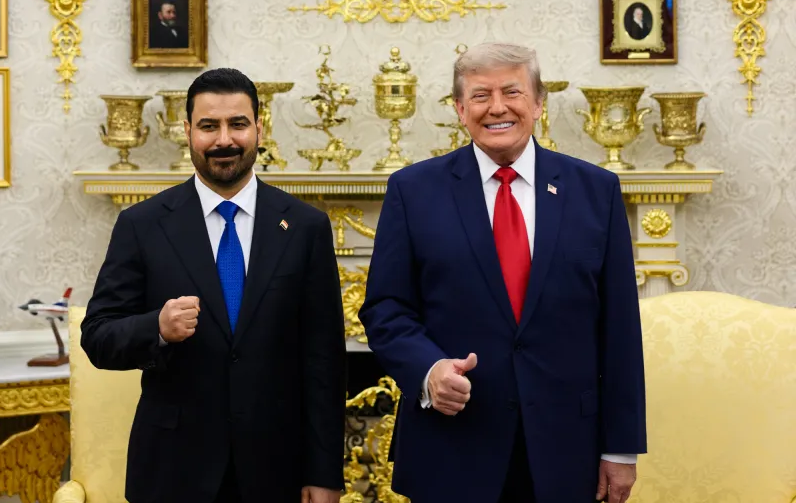
Washington, November 2026 : US President Donald Trump has expressed support for Iraqi Prime Minister Ali al-Zaidi's efforts to curb oil smuggling, tackle corruption and bring weapons under government control, as Baghdad seeks to strengthen federal authority across the country. The campaign, however, has triggered opposition from the Kurdistan Regional Government (KRG), which has questioned the measures adopted by the federal administration.
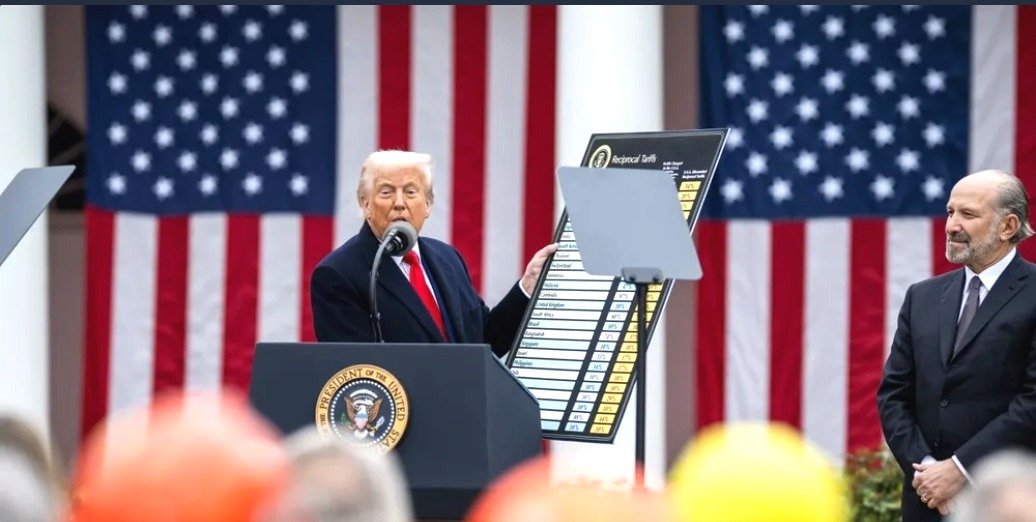
In a post on his social media platform Truth Social on Friday, Trump backed Zaidi's efforts to "bring all weapons under the exclusive control of the state". He also endorsed the vision of a "united, prosperous, and strong Iraq that makes its own political decisions".
Trump's statement came three days after Zaidi directed federal authorities to take control of border crossings in the Kurdistan Region and introduced requirements for federal approval of oil exports, according to Iraqi news outlet 964media.
The measures followed an investigation into suspected smuggling involving the state-owned North Oil Company. They also directed the federal Oil Ministry to manage oilfields located in areas under Kurdish security control across Diyala, Kirkuk, Salahuddin and Nineveh provinces.
Baghdad Seeks Greater Control Over Borders and Oil
Zaidi has defended the measures as part of the federal government's responsibility to enforce national authority over borders and natural resources.
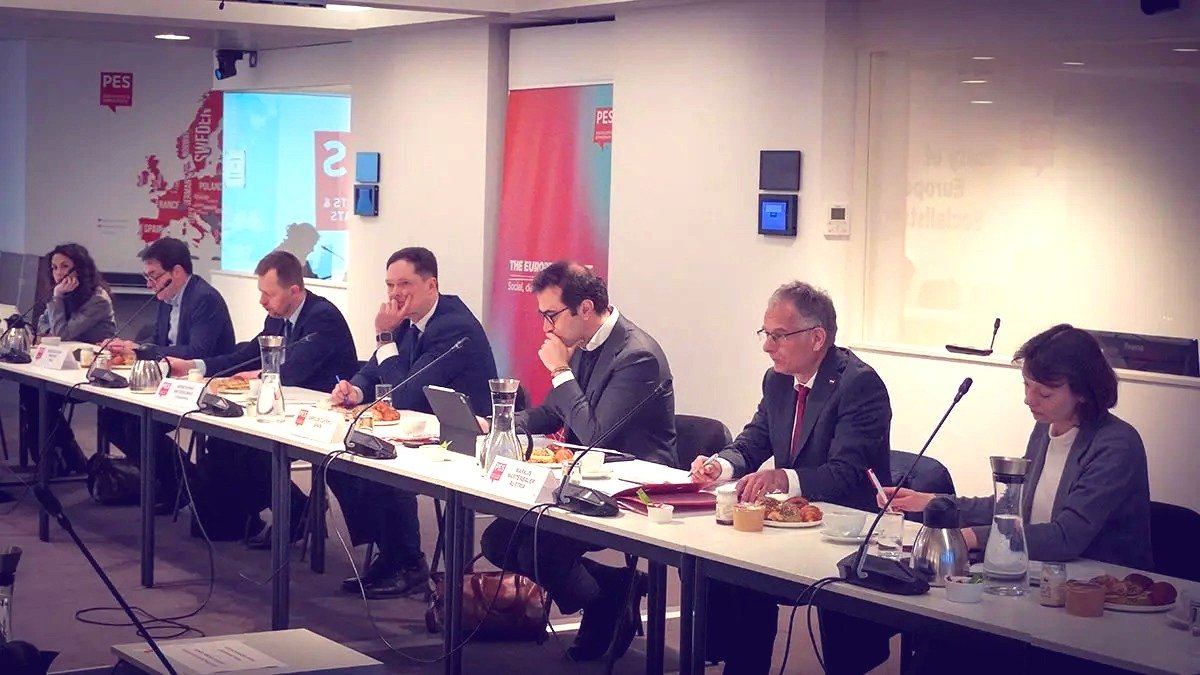
During a meeting with European Union ambassadors on Thursday, he said his administration would ensure federal control over border operations and oil-related activities, according to an account from his office reported by 964media.
The Prime Minister's office had also stated a day earlier that the measures were not being implemented at the direction of any foreign government.
Trump's endorsement adds public US support to the Iraqi leader's stated objectives of strengthening state institutions and ensuring that political and security decisions remain under national authority.
Kurdish Government Raises Constitutional Concerns
The Kurdistan Regional Government has challenged Baghdad's approach, arguing that the measures undermine Iraq's federal structure and the constitutional rights of the autonomous region.
Following a Cabinet meeting chaired by KRG Prime Minister Masrour Barzani on Wednesday, the regional government rejected military threats and called for disputes with the federal administration to be resolved through negotiations.
At the same time, it expressed support for efforts to eliminate corruption and illicit trade, saying it would continue cooperating with Baghdad.
"We call for the comprehensive eradication of corruption and oil smuggling across all of Iraq," the regional government said in its statement. It maintained that its constitutional obligations must be accompanied by recognition of its constitutional rights.
The KRG's position reflects its support for action against illegal activities while opposing measures that it believes could weaken the region's constitutionally recognised powers.
Senior Officials Face Action
The federal campaign has also resulted in action against senior officials. According to the Organized Crime and Corruption Reporting Project (OCCRP), Zaidi removed the head of the Border Ports Authority, suspended the director general of the North Oil Company and dismissed several senior security officials.
These actions form part of the administration's broader efforts to address suspected corruption and smuggling and strengthen oversight of key government institutions.
Long-Running Dispute Over Oil Resources
The latest developments have brought renewed attention to a long-standing disagreement between Baghdad and the Kurdish authorities over control of oil production, exports and revenue.
The dispute has continued for nearly two decades. Kurdish authorities signed contracts with foreign companies under a regional oil law adopted in 2007. However, Iraq's Federal Supreme Court ruled that the law was unconstitutional in 2022, according to OCCRP.
The disagreement over resource management has remained a major point of friction between the federal government and the Kurdistan Region.
With Zaidi seeking to enforce federal authority and the KRG insisting on its constitutional rights, negotiations are likely to remain important in resolving the dispute.
Trump's statement signals support for the Iraqi Prime Minister's stated objectives, but Baghdad and the Kurdish authorities remain divided over how those goals should be pursued.