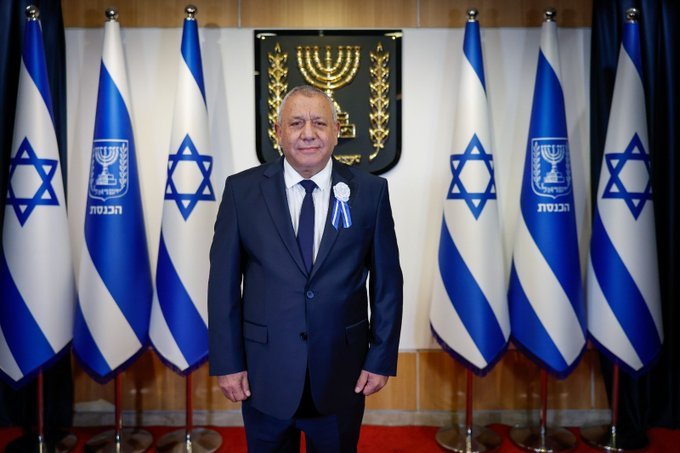
Jerusalem, November 2026 : Israeli opposition bloc leader Gadi Eisenkot has said he intends to form a new government within the eight days remaining in his mandate, accusing Prime Minister Benjamin Netanyahu's Likud party of engaging in unity negotiations without any genuine intention of reaching an agreement.
In a social media post, Eisenkot said representatives of the two sides had held five meetings over the past two weeks. However, he alleged that Likud had failed to make concrete proposals or show willingness to compromise on key issues.
These included removing far-right parties from the government, establishing a state commission of inquiry into the October 7, 2023, attack and passing legislation to ensure broader military service.
Eisenkot accused Likud of deliberately prolonging the negotiations in an attempt to divide the opposition and push the country towards another election. He said his bloc had already offered significant compromises on judicial reform and the proposed commission of inquiry, Xinhua news agency reported.
Likud rejected Eisenkot's allegations, accusing him of playing a political double game. The party claimed that he was simultaneously working to assemble an alternative coalition, distributing ministerial portfolios and preparing to depend on Arab parties. Likud described those parties as supporters of terrorism.
Meanwhile, former Prime Minister Naftali Bennett, who leads the opposition faction Together, said he preferred the formation of a national unity government. However, he indicated that if such an arrangement could not be achieved, his bloc would pursue another option, which he described as less desirable.
The political developments come amid continuing calls for unity within Israel's political leadership. Earlier this month, Netanyahu called for the formation of a national unity government, arguing that the country needed to remain united in the face of what he described as an increasing threat from Iran.
Speaking after the first session of Israel's newly elected parliament, Netanyahu warned that the country could soon face intense international pressure to accept a nuclear-armed Iran and the continuation of its current regime.
He accused the Iranian leadership of posing an existential threat to Israel and said international pressure could make the formation of a united political front particularly important.
“In the very near future, we're going to be confronted by international pressure to accept a nuclear-armed Iran and the preservation of this terror regime that seeks to annihilate us,” Netanyahu said.
With Eisenkot's mandate nearing its end, the coming days are expected to be crucial in determining whether opposition negotiations can produce a new government or whether Israel will face another election.