New Delhi, Nov 2026 : Congress president Mallikarjun Kharge on Saturday strongly criticised the Central government's revised Delimitation Bill, describing it as a major "threat" to democracy and accusing the BJP-led government of seeking to concentrate political power in its own hands. He also raised concerns over the proposed expansion of the Lok Sabha, the representation of Scheduled Castes (SCs) and Scheduled Tribes (STs), and the role of the Election Commission of India (ECI) in conducting the delimitation exercise.
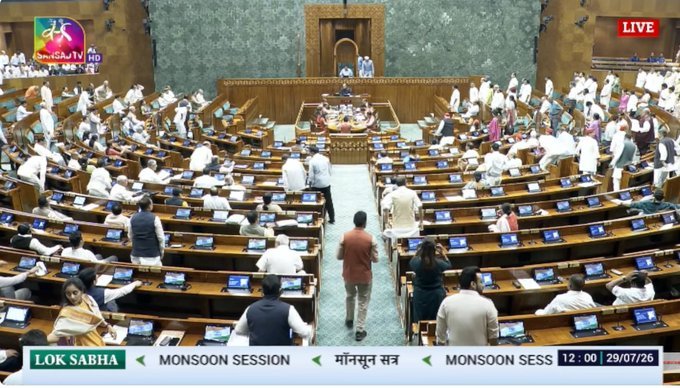
The revised Bill was approved by the Union Cabinet on Friday and is expected to be introduced during the special session of Parliament beginning November 30. The proposal has triggered political debate over constituency boundaries, parliamentary representation and the balance of power between states and communities.
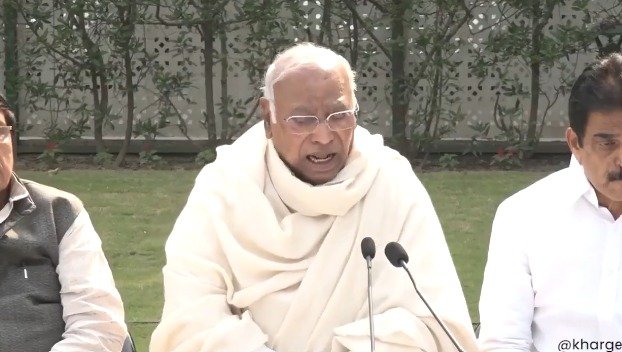
Addressing reporters at 10 Rajaji Marg in New Delhi, Kharge said leaders of the INDIA bloc had met to discuss the implications of the proposed constitutional amendment. He said the Opposition alliance was concerned about the possible consequences of the legislation and would collectively raise its objections during the upcoming parliamentary session.
Describing the proposed legislation as a serious concern, Kharge alleged that the government wanted to weaken democratic institutions and consolidate authority.
"The Bill being brought by the (Narendra) Modi government poses a very big threat to democracy," he said.
"It is a threat because the government wants to destroy democracy and take all power into its own hands," he added.
Kharge Questions Proposed Expansion of Lok Sabha
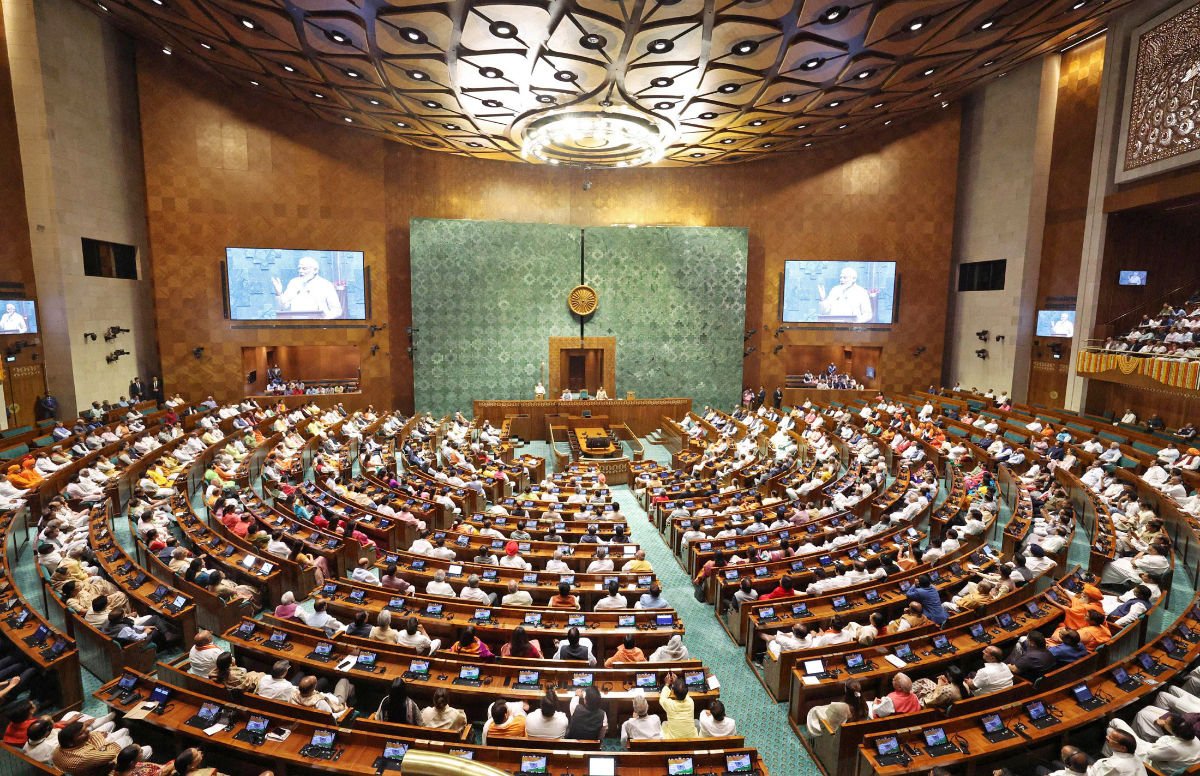
Referring to the proposal to increase the strength of the Lok Sabha to a maximum of 850 members, the Congress president alleged that the government intended to use the delimitation exercise to strengthen its political position.
Kharge claimed that increasing the number of parliamentary seats to 850 could enable the ruling party to consolidate its hold on power for an extended period. He questioned the government's intentions and said the proposed framework needed closer scrutiny before Parliament considered it.
The proposed expansion of the Lower House has become a major point of discussion in the wider delimitation debate, particularly in relation to how seats would be distributed among states and how the existing balance of representation would be maintained.
Concerns Over Representation of SCs and STs
Kharge also questioned whether the revised legislation adequately protected the political representation of Scheduled Castes and Scheduled Tribes. He alleged that the Bill did not clearly guarantee an increase in the number of seats reserved for these communities in accordance with changes in their population.
Referring to Article 330 of the Constitution, which provides for reservation of seats for Scheduled Castes and Scheduled Tribes in the Lok Sabha, he argued that the proposed framework should clearly explain how their representation would be protected.
"The 2026 Census is about to come out, but they have not said anything about it yet," Kharge said.
He argued that if delimitation were based on updated population figures, areas where the SC and ST populations had increased could receive additional reserved representation. However, he alleged that the government's proposed approach did not adequately address this concern.
Kharge further claimed that the amendment appeared to prioritise the government's immediate political interests rather than ensuring what he described as a fair share of representation for disadvantaged communities.
Questions Raised Over Election Commission's Role
The Congress president also objected to the proposed role of the Election Commission of India in the delimitation process. Questioning the credibility of the poll panel, he criticised Chief Election Commissioner Gyanesh Kumar and alleged that entrusting the exercise to the Commission could lead to political manipulation.
Kharge expressed concern over how constituencies might be classified as general or reserved during the exercise. He alleged that the authorities could exercise undue influence over such decisions, affecting the representation of different communities.
"This is not acceptable to us. (Chief Election Commissioner) Gyanesh Kumar is standing in the dock of the accused. And if all this is happening under his leadership, then there will be even more manipulation," he said.
He also referred to the Opposition's allegations of irregularities in electoral processes, claiming that the Election Commission had not adequately addressed concerns about impartiality. Kharge questioned the government's decision to entrust the delimitation responsibility to an institution whose functioning, according to him, was already under scrutiny.
Kharge Alleges Political Manoeuvring Ahead of Bill's Reintroduction
Kharge also questioned the timing of the revised legislation, alleging that the BJP had been preparing the political ground to secure the numbers required for its passage.
He recalled that an earlier attempt to bring the legislation had failed in April and accused the ruling party of subsequently working to weaken Opposition unity.
The Congress president alleged that political developments involving the Trinamool Congress (TMC), the Nationalist Congress Party (NCP) and the Shiv Sena were part of efforts to divide Opposition parties and isolate their leaders.
"Last time, when they brought that Bill, it failed in April. So now, they are engineering the TMC split, breaking the NCP, breaking the Shiv Sena, breaking all parties and isolating them, while waiting until their numbers are in place," he said.
Kharge further questioned whether the government had secured sufficient support for the revised legislation, adding that the final position of different political parties remained uncertain.
INDIA Bloc to Raise Objections in Parliament
Warning that the proposed legislation could cause "very big harm" to the country if passed in its present form, Kharge reiterated that the Congress and other INDIA bloc constituents opposed the government's approach.
He said the Opposition alliance would work collectively to present its concerns during the special session of Parliament and seek clarity on the proposed changes.
The Congress president's remarks followed discussions among INDIA bloc leaders in New Delhi on the revised delimitation proposal.
With Parliament set to take up the issue from November 30, the debate is expected to focus on the expansion of the Lok Sabha, the distribution of parliamentary seats, safeguards for SC and ST representation, and the institutional arrangements for carrying out delimitation.