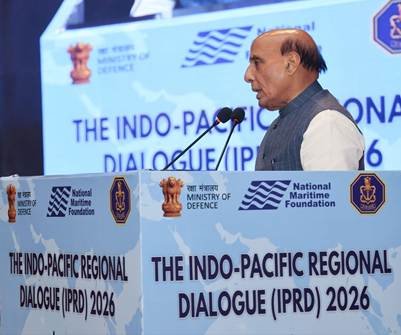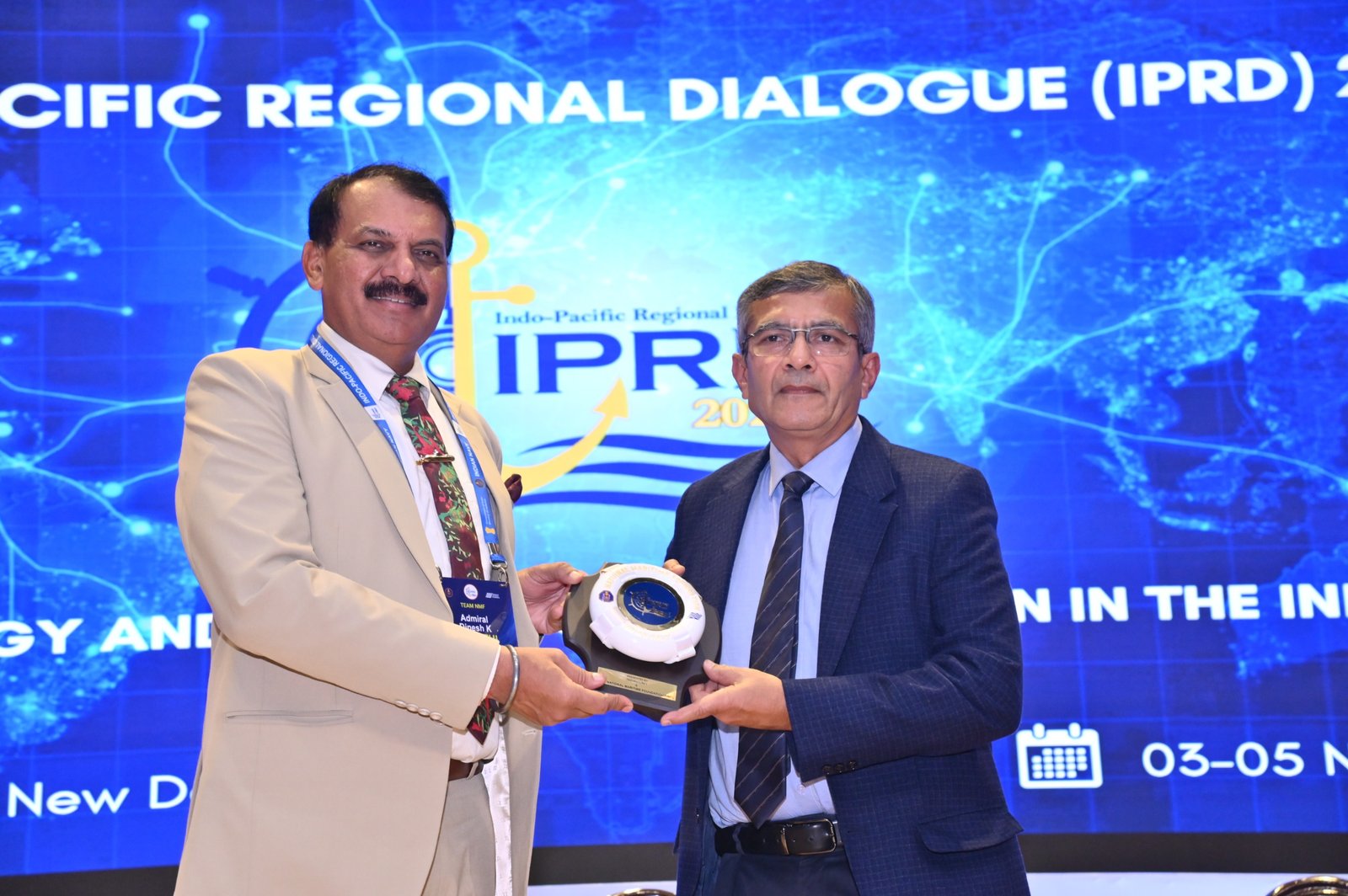
The three-day Indo-Pacific Regional Dialogue 2026 (IPRD-2026), the Indian Navy’s annual apex-level international strategic dialogue, concluded on 05 Nov 2026 in New Delhi. Organised in association with the National Maritime Foundation (NMF), the conference examined ‘Science, Technology and Academic Cooperation in the Indo-Pacific’ through five professional thematic sessions and senior-level interactions intended to identify practical pathways for regional maritime cooperation.
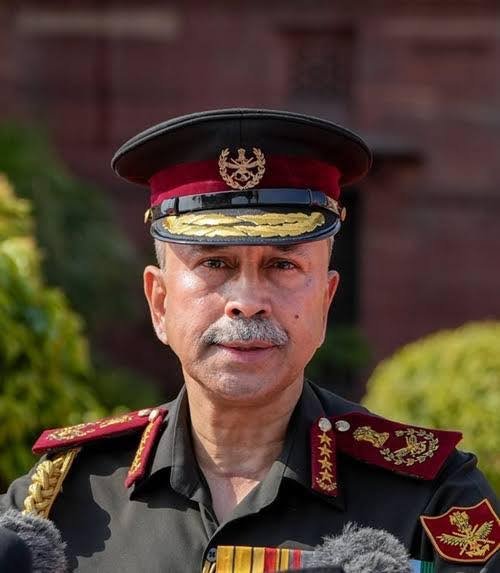
The concluding day opened with a Special Address by Gen NS Raja Subramani, Chief of Defence Staff, after which the CDS had an engaging interaction with the audience. This was followed by a session on ‘Collaborative Approaches to Ocean Governance and Maritime Resilience’, moderated by VAdm Sanjay Jasjit Singh (Retd), Director-General, United Service Institution of India. In this session, Professor Deo Florence Onda of the University of the Philippines addressed a cooperative plan to share Filipino experience and expertise in ocean governance. Dr Marie Bourrel-McKinnon, former Chief of Staff in the International Seabed Authority, examined equitable deep-sea research partnerships and resource governance. Mr Ramraj Narasimhan, from the Coalition for Disaster Resilient Infrastructure (CDRI), provided an overview of the implementation of the Infrastructure for Resilient Island States (IRIS) programme, while Ms Sofia Furstenberg-Stott of Future Maritime, Sweden, considered how the interface between marine science and shipping operations could be strengthened. The session brought together four dimensions of a common challenge: the need to link scientific capability with governance, make research partnerships more equitable, strengthen the resilience of vulnerable island states, and ensure that scientific knowledge informs the decisions of maritime industry and public institutions.
The final session of IPRD-2026 was centred on the theme, ‘Transformative Maritime Technologies and Dual-Use Implications’. This session was moderated by Rear Admiral Guninder Singh Jawanda (Retd), Indian Navy. In this session, speakers addressed distinct facets of the sessional theme. Ms Dongyoun Cho of the International Institute for Strategic Studies (IISS), Germany, examined a practical framework for Indo-Pacific cooperation on artificial intelligence and quantum technologies in the maritime domain. Dr Eva Pejsova from the Brussels School of Governance addressed EU–Indo-Pacific mechanisms for the responsible governance of dual-use maritime technologies. Captain Mark Blaine (Retd), South African Navy, from Stellenbosch University discussed a cooperation roadmap to help small and medium navies adapt to these technologies, while Commodore Arun Golaya (Retd) considered operational Navy-to-Navy cooperation for their responsible adoption. The discussions reflected the dual character of emerging maritime technologies and examined the potential for collaborative research, practical capacity-building and institutional arrangements that allow partners with differing resources and requirements to participate meaningfully in technological change.
The Valedictory Address by Shri Rajesh Kumar Singh, Defence Secretary, Government of India, brought the mega three-day conference to a fitting and memorable closure. Over its three days, the IPRD-2026 witnessed participation by a wide spectrum of military practitioners, policy makers, representatives from the maritime industry, diplomats from India and friendly foreign countries, academia, media, eminent citizens, and New Delhi’s vibrant student community. Over forty experts and distinguished speakers from twenty countries shared their perspectives on the IPRD’s unifying theme of ‘Science, Technology and Academic Cooperation in the Indo-Pacific’, providing greater specificity to actionable outcomes under the Science, Technology and Academic Cooperation pillar of the Indo-Pacific Oceans Initiative. The conference also bolstered the Indian Navy’s committed stance on enhancing regional maritime security and promoting collaborative approaches to strengthen maritime resilience, thus providing a clearer expression to India’s maritime vision of MAHASAGAR (Mutual and Holistic Advancement for Security and Growth Across Regions).