DRDO’s Extended Range Air Defence System is designed to counter aircraft, cruise missiles and other aerial threats while strengthening India’s multi-layered air defence network
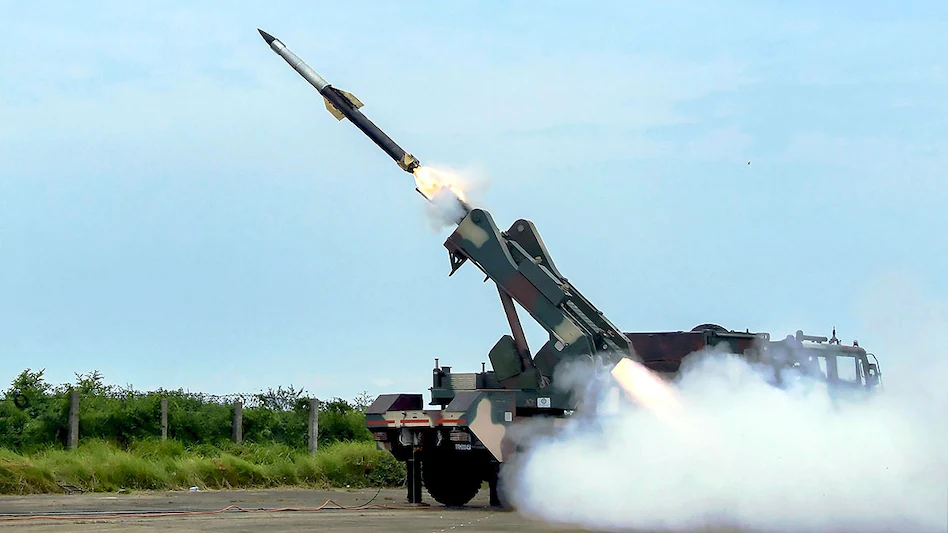
New Delhi, Oct 2026 : India has achieved a major milestone in the development of an indigenous long-range air defence capability with the successful maiden flight test of the Kusha missile system, also known as the Extended Range Air Defence System (ERADS) or XRSAM.
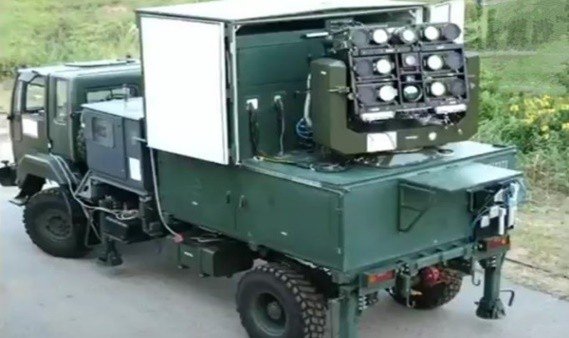
Developed by the Defence Research and Development Organisation (DRDO) for the Indian Air Force (IAF), Kusha is intended to form an important layer of India’s future integrated air defence architecture. The mobile, truck-mounted and canisterised system has been conceived to protect large areas against a broad range of modern aerial threats.
The system is expected to complement existing air defence capabilities, including the Barak-8 Medium Range Surface-to-Air Missile (MR-SAM), the Russian S-400 Triumf and India’s ballistic missile defence architecture. It is also being linked to the country’s emerging multi-layered national air defence framework under Mission Sudarshan Chakra.
Three-tier interceptor architecture
A key feature of Kusha is its planned three-interceptor configuration. The M1 interceptor is designed for engagements at ranges of up to around 150 km, while the M2 is expected to extend the engagement envelope to approximately 250 km. The most advanced M3 interceptor is planned for ranges of around 350-400 km.
The three missiles are designed around a common kill vehicle but use different booster configurations to achieve their respective ranges and performance requirements.
The system is intended to engage a variety of targets, including fighter aircraft, airborne early-warning and control platforms, sea-skimming anti-ship missiles, stealth aircraft and ballistic missiles during their terminal phase. Long-range surveillance and fire-control radars are expected to provide the detection, tracking and engagement capabilities required for such missions.
From approval to flight testing
The Kusha programme received approval from the Cabinet Committee on Security in May 2022. In September 2023, the Ministry of Defence granted Acceptance of Necessity for the procurement of five IAF squadrons at a projected cost of Rs 21,700 crore.
The system is intended to bridge a significant capability gap between India’s approximately 80-km-range MR-SAM and the S-400, whose interceptors provide substantially longer-range coverage.
Development moved into hardware production in August 2024, when DRDO began fabrication of the first M1 missiles. Orders were placed for critical components, including airframes, rocket motors, kill vehicles and telemetry systems, signalling a shift from design activities towards physical system development.
In May 2025, Bharat Electronics Limited began manufacturing the system prototype. Development plans envisaged completion of the prototype within 18 months, followed by extensive user evaluation and testing.
The programme reached a major milestone on July 23, 2026, when DRDO conducted the first flight test from APJ Abdul Kalam Island off the Odisha coast. During the test, the missile intercepted an electronic target representing a high-speed, high-altitude aerial threat.
The trial provided an opportunity to validate key elements of the missile’s design, radar integration and overall engagement chain. However, the maiden flight is only the beginning of a longer qualification process.
More trials ahead
Additional M1 trials are expected before the more advanced M2 and M3 interceptors enter their respective testing phases. The complete system will also have to undergo extensive evaluation covering missiles, launchers, radars, command networks and operational integration.
Given the complexity of developing a long-range air defence system and earlier schedule changes, phased induction of the complete Kusha family is expected to extend towards the end of the decade.
A naval derivative of the system is also under consideration. If developed, such a version could supplement the Indian Navy’s existing long-range surface-to-air missile capabilities and provide another application for the underlying technology.
Networked air defence
The significance of Kusha extends beyond the interceptor missiles themselves. The system is expected to operate as part of a networked air defence environment and integrate with the IAF’s Integrated Air Command and Control System.
Such integration would allow Kusha batteries to receive information from multiple sensors and coordinate engagements with other air defence assets. This network-centric approach is increasingly important as modern aerial threats become faster, more manoeuvrable and harder to detect.
The evolution of air warfare has brought new challenges, including stealth aircraft, cruise missiles, unmanned aerial systems, drone swarms and potentially hypersonic weapons. Consequently, the effectiveness of an air defence system depends not only on missile range and speed but also on radar performance, target discrimination, communications, command-and-control infrastructure and battle-management capabilities.
Strategic significance
Kusha is expected to strengthen India’s ability to create overlapping layers of air defence alongside systems such as the S-400, MR-SAM and indigenous ballistic missile defence components.
Long-range systems such as the US THAAD, Russia’s S-400 and China’s HQ-9 have been developed and refined over several years. Kusha represents India’s effort to establish a domestically designed and integrated long-range area-defence capability tailored to the requirements of its armed forces.
The programme also reflects the growing emphasis on indigenous defence production and reducing dependence on imported critical military technologies.
If development and qualification progress according to plan, Kusha could become an important component of India’s long-range air defence architecture during the 2030s. Its eventual induction would add another layer to the country’s defensive network while strengthening domestic expertise in missile technology, advanced radars, propulsion, command-and-control systems and integrated aerospace engineering.
(Disclaimer :The content of this article is sourced from a news agency and has not been edited by the Mavericknews30 team.)