Charging infrastructure network to be developed along highways
Pune, October 2026 : Clean and green transportation is a major priority for Maharashtra as it moves towards the goal of a developed India. Maharashtra is making rapid progress in electric vehicle manufacturing, with Pune, Chhatrapati Sambhajinagar and Nagpur emerging as important centres for the EV industry. Chief Minister Devendra Fadnavis expressed confidence that Maharashtra would become one of the country's leading hubs for electric vehicle manufacturing in the coming years.
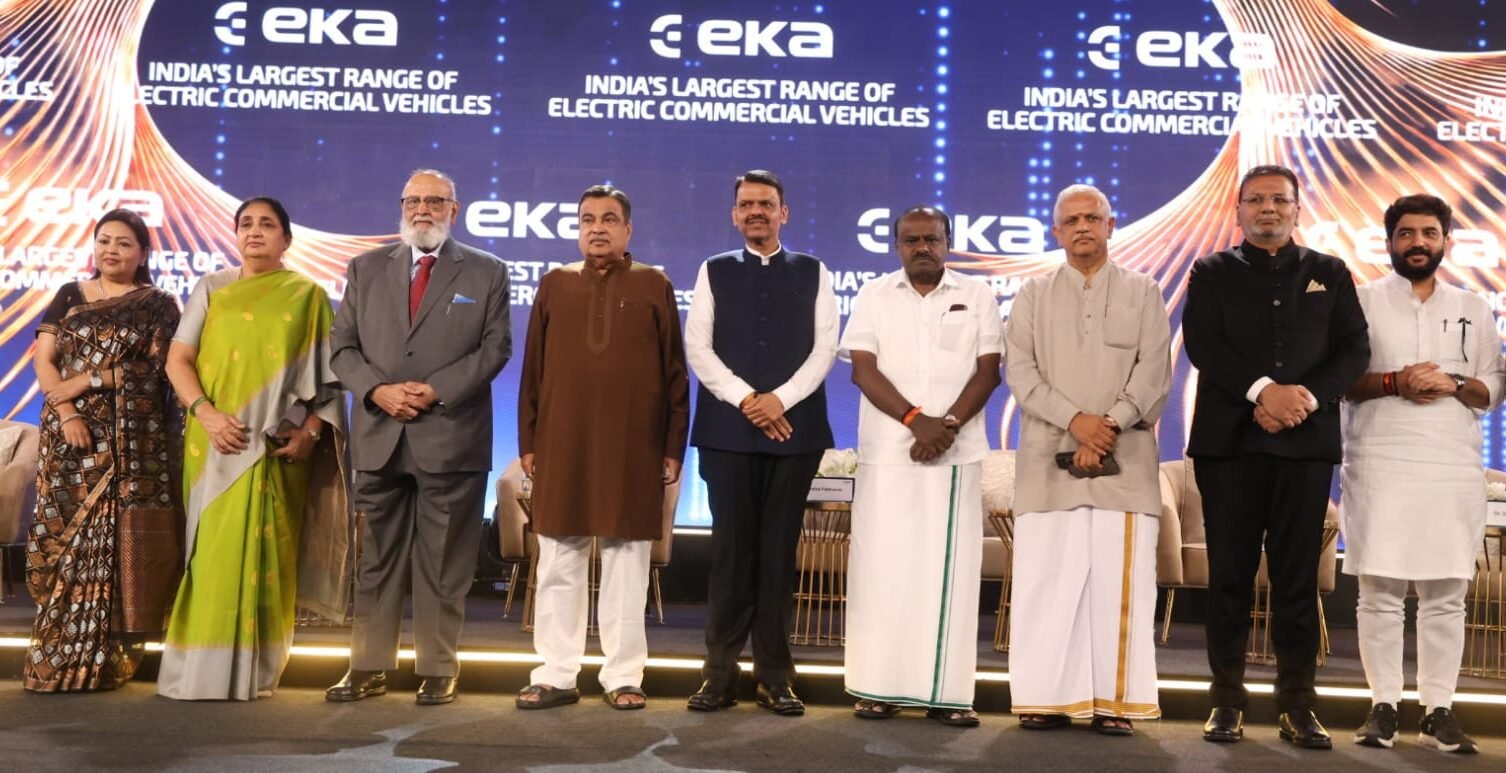
He was speaking at the inauguration of six new manufacturing facilities of EKA Mobility and the Pinnacle Group in Pune. Union Minister for Road Transport and Highways Nitin Gadkari, Union Minister for Heavy Industries and Steel H.D. Kumaraswamy, Deputy Chief Minister Sunetra Ajit Pawar, Higher and Technical Education Minister Chandrakantdada Patil, Union Minister of State for Civil Aviation and Cooperation Murlidhar Mohol, B.L. Santosh, senior industrialist Dr Abhay Firodia, EKA Mobility Founder and Chairman Dr Sudhir Mehta, Sunanda Mehta and other dignitaries were present on the occasion.
The Chief Minister said electric vehicles would help reduce pollution as well as dependence on imported fossil fuels. The automobile industry is an important driver of employment generation and the growth of ancillary industries. Maharashtra will require 50,000 electric buses over the next three years, and he urged industries in the state to increase their production capacity to meet this demand.
The state government is also focusing on increasing the use of green energy to support the expansion of electric vehicles. The share of renewable energy in power generation will be increased in the coming years. The state government has prepared a comprehensive plan to develop an effective charging infrastructure for electric vehicles. In collaboration with vehicle manufacturers, a network of charging facilities will be established along major highways across Maharashtra. The state government will take responsibility for providing the required land, permissions and infrastructure, Fadnavis said.
The Chief Minister also noted that women account for 50 per cent of the workforce at one of the Pinnacle Group's manufacturing facilities, where they have been provided employment opportunities along with specialised training. He appreciated the company's model under which every employee is also a stakeholder in the organisation.
He said efforts would be made to provide electricity to electric vehicles at affordable rates. The new manufacturing facilities of the Pinnacle Group would help meet the growing demand for electric vehicles within Maharashtra itself and strengthen the state's position as a major EV manufacturing hub, he added.
India Should Aim for Global Leadership in Electric Vehicle Manufacturing: Nitin Gadkari
India's economy is among the fastest-growing in the world, and the automobile industry is the backbone of the country's industrial sector. The automobile industry makes a significant contribution to industrial expansion, employment generation and exports. Therefore, Indian automobile manufacturers should aim to secure a leading position globally. There are major opportunities in the domestic and international markets for manufacturing electric vehicles, trucks and buses, Union Minister Nitin Gadkari said.
He said the Central Government was committed to reducing India's dependence on imported fossil fuels and promoting indigenous alternative fuels, biofuels, ethanol and hydrogen. Given the growing demand for electric vehicles, production capacity needs to be expanded, particularly in the electric bus and truck segments.
The automobile industry should focus on batteries, research, innovation and the development of indigenous technologies. Farmers should not remain merely food providers but should also become providers of energy and fuel. Along with making electric vehicle charging facilities more affordable, efforts are needed to reduce logistics costs, pollution and fuel imports. Gadkari urged the industry to aim for 100 per cent indigenous electric vehicle manufacturing and establish India's position in the global market.
Gadkari further said that while adopting changing technologies in the automobile sector, it was important to connect startups, young engineers, researchers and educational institutions with the industry. Technology could also be developed to increase the cargo-carrying capacity of electric trucks, keeping in mind the weight of their batteries.
He stressed the need for policy-level efforts to expand electric vehicle charging facilities along highways and reduce electricity tariffs. In the coming years, vehicles running entirely on bioethanol and hydrogen-powered trucks would enter the market. He expressed confidence that alternative fuels and indigenous technologies would help make India self-reliant and strengthen its economy.
Focus on Indigenous Manufacturing, Electric Vehicles and Investment in Modern Technology: H.D. Kumaraswamy
Under the leadership of Prime Minister Narendra Modi, India is rapidly emerging as a major global manufacturing power. The initiatives of Atmanirbhar Bharat and Viksit Bharat 2047 are providing strong support to indigenous manufacturing, technological innovation and sustainable mobility.
The growing manufacturing capacity in electric commercial vehicles, automobile components and engineering reflects the increasing confidence of Indian industry, Union Minister for Heavy Industries H.D. Kumaraswamy said.
The automobile and auto-components industries are important pillars of the country's industrial development and generate employment on a large scale. Through various schemes, the Central Government is encouraging domestic manufacturing, the electric vehicle industry, battery production and charging infrastructure.
He urged Indian industries to increase investments in electric vehicles, batteries, power electronics, automotive software, lightweight materials and hydrogen technology. India should not merely be a participant in the transformation of the global mobility sector but should aspire to lead it, he said.
Maharashtra Is a Preferred Destination for International Industries: Deputy Chief Minister Sunetra Ajit Pawar
Strong industrial infrastructure, a skilled workforce and a government supportive of industry are making Pune and Maharashtra preferred destinations for international investment, Deputy Chief Minister Sunetra Ajit Pawar said.
She described the joint venture between the VDL Group and Pinnacle Industries as an important milestone in Pune's industrial development.
Recalling that late Ajit Dada firmly believed in industrial growth, employment generation and skill development, she expressed confidence that electric buses manufactured by the company would soon be seen on the roads of Pune and Mumbai. This would give a boost to environment-friendly public transportation, she said.
She congratulated the EKA Group for providing women with equal employment opportunities in manufacturing, research, development and software. She urged every company in the state to offer similar opportunities to women.
She also said that the five manufacturing facilities in Pune were generating thousands of jobs and providing young people with opportunities to acquire modern skills.
In his introductory address, company Founder and Chairman Dr Sudhir Mehta provided detailed information about the group's journey so far, its contribution to the industrial sector and its future expansion plans.
He expressed gratitude to the Central and state governments for the support extended to the industrial group.
Representatives of various industrial groups, entrepreneurs and citizens were present on the occasion.