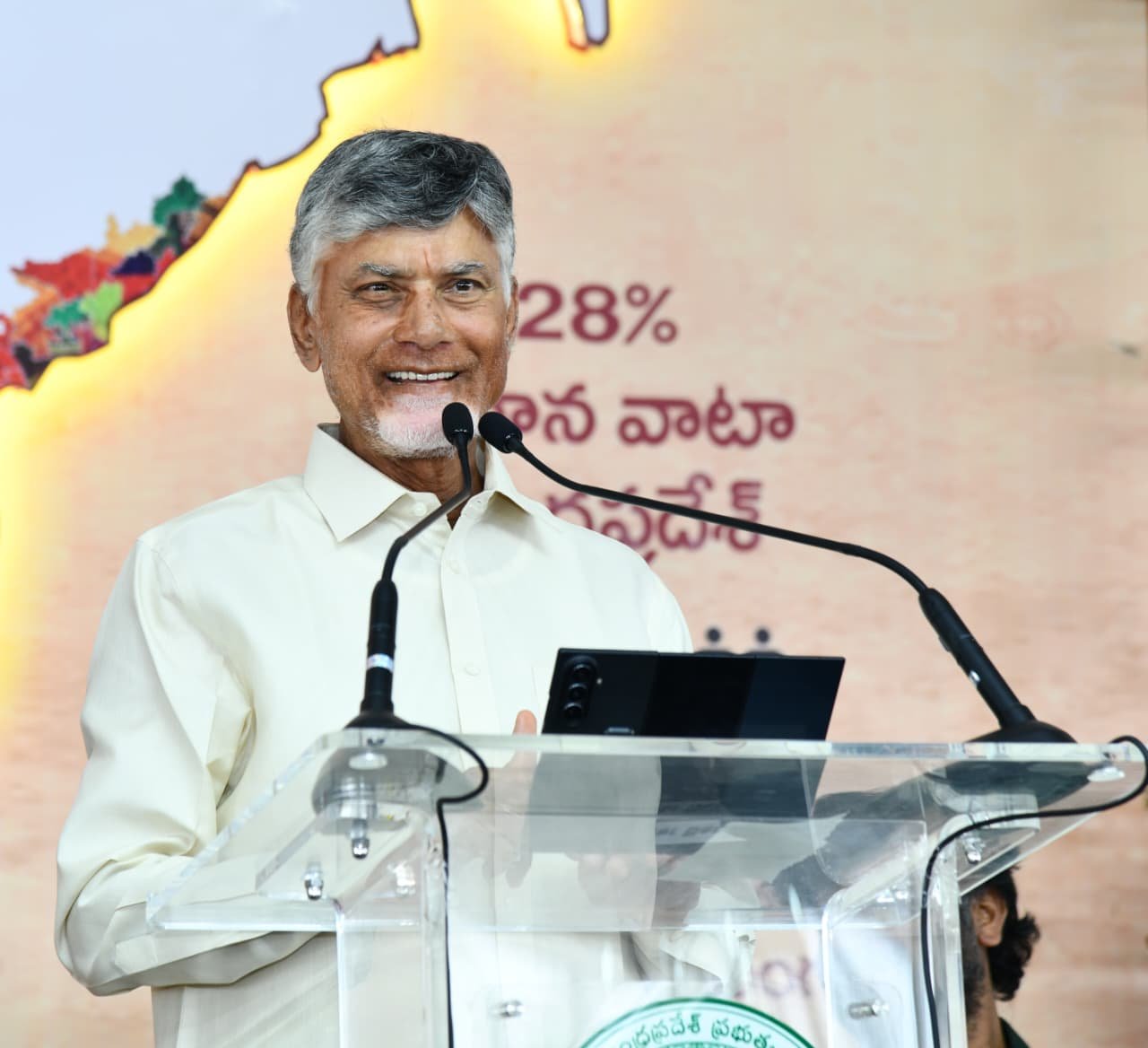
Amaravati, Aug 2026 : Andhra Pradesh Chief Minister N. Chandrababu Naidu on Tuesday directed officials to take comprehensive measures to ensure that the impact of the El Niño crisis does not translate into an additional financial burden on people, while stressing the need to protect the state’s economic growth targets.
Naidu suggested setting up a dedicated committee to examine the potential impact of the weather phenomenon on prices, water availability, agriculture and the wider economy. He also asked the Planning Department to prepare detailed contingency plans to ensure that Andhra Pradesh continues to meet its Gross State Domestic Product (GSDP) targets despite the challenges posed by deficient rainfall.
The Chief Minister issued the directions during a meeting at the Camp Office in Amaravati, where officials of the Planning Department presented the state’s July 2026 monthly economic report.
Naidu called for a comprehensive contingency strategy covering critical areas such as water availability, agricultural production and value addition to farm and other products. He noted that the state has been experiencing deficient rainfall due to the impact of El Niño, resulting in inadequate inflows into the Krishna River.
As a result, major reservoirs, including Srisailam and Nagarjuna Sagar, have not yet reached their full levels. The Chief Minister pointed out that the state had already diverted floodwaters from the Godavari to meet the requirements of the Krishna Delta. With groundwater levels also declining in several areas, he directed officials to coordinate closely with different departments and implement measures to prevent any decline in economic output.
Naidu stressed the importance of analysing available data comprehensively and identifying gaps before taking corrective action. He directed officials to make every effort to achieve the state’s ambitious 15 per cent growth target, while ensuring that economic activity remains resilient in the face of weather-related challenges.
The Chief Minister also emphasised the need to protect Andhra Pradesh’s export performance. He directed officials to ensure that exports to international markets are not adversely affected and called for regular monitoring of economic indicators at the district, constituency and mandal levels.
According to Naidu, providing detailed reports at the grassroots level would enable the government to identify problems quickly, monitor progress and take corrective measures wherever necessary. He called for an integrated approach that connects state-level planning with implementation at the field level.
Technology integration across government departments was another key area highlighted by the Chief Minister. He called for wider adoption of technology-driven systems, similar to those implemented by the Commercial Taxes Department, to improve efficiency, monitor performance and ensure that government targets are achieved.
Naidu directed all departments to focus on effective resource management and maximise the utilisation of available resources. He said government programmes should be based on measurable standards and must produce tangible outcomes.
“Every plan formulated by the government should contribute to increasing the state's growth rate,” he stressed, underlining the need for outcome-oriented governance.
Despite the challenges posed by El Niño, Andhra Pradesh has maintained a strong economic growth trajectory, according to the July 2026 monthly economic report presented to the Chief Minister. The state recorded 10.7 per cent growth in the second quarter of 2025-26, reflecting continued economic momentum.
The report noted that Andhra Pradesh’s growth rate has remained above the national growth rate for the past two years. The state’s GSDP growth rate increased from 6.5 per cent in 2023-24 to 9.9 per cent in 2025-26, indicating sustained expansion across key sectors.
The agriculture sector emerged as one of the major contributors to growth. During the second quarter of 2025-26, agriculture recorded a growth rate of 13.5 per cent, while the industrial and services sectors grew by 10.6 per cent and 9.9 per cent, respectively.
The livestock sector also recorded notable progress, with meat production increasing by 9.6 per cent and egg production rising by 5.1 per cent. The services sector witnessed strong activity in areas such as information technology, transportation and trade.
Andhra Pradesh’s export performance also remained encouraging. General exports grew by 10.5 per cent to Rs 16,322 crore, while exports from Software Technology Parks of India (STPI) increased by 32.2 per cent. Registration of commercial vehicles also recorded substantial growth of 51.6 per cent, indicating increased economic and commercial activity.
The government’s emphasis on technology-driven administration has also contributed to improved revenue mobilisation. GST collections increased by 21 per cent to Rs 13,282 crore, reflecting stronger collection mechanisms and improved technological integration.
Investment activity in the state has likewise shown positive momentum. The grounding of mega projects worth approximately Rs 2.88 lakh crore recorded a growth of 75.4 per cent, while investments in the Micro, Small and Medium Enterprises (MSME) sector, estimated at around Rs 60,000 crore, registered growth of 73.6 per cent.
Tax and non-tax revenues have also shown significant improvement, strengthening the state’s financial position.
Naidu stressed that the government must maintain this growth momentum while ensuring financial discipline and continuing welfare programmes for the people. The challenge, he said, is to balance economic expansion, resource management and welfare commitments while protecting citizens from additional financial pressure caused by external factors such as El Niño.
The Chief Minister’s directions underline the government’s focus on proactive planning, technology-based monitoring and coordinated action across departments to safeguard Andhra Pradesh’s economic performance and achieve its ambitious growth targets.