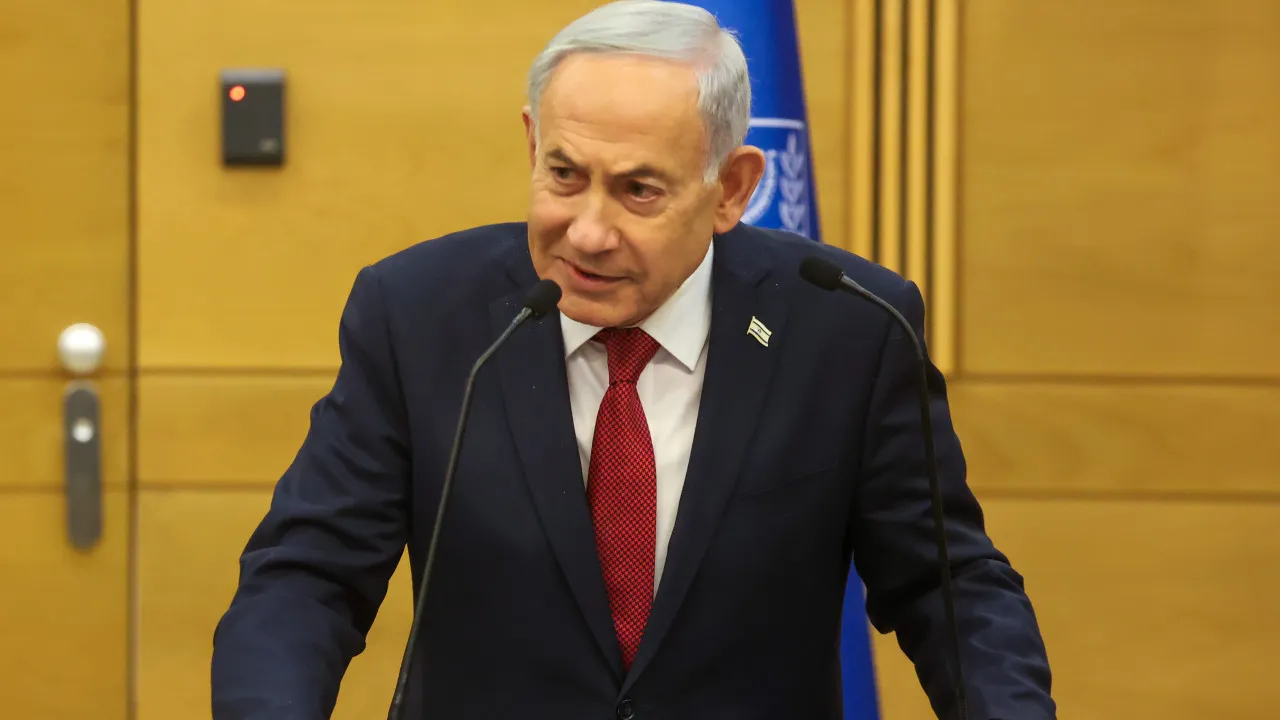
Jerusalem, November 2026 : Israeli Prime Minister Benjamin Netanyahu has offered to let Opposition leader Gadi Eisenkot serve as Prime Minister first under a proposed national unity government, with Netanyahu willing to take the position of alternate Prime Minister at the beginning of its term.
In a statement posted on social media platform X on Saturday, Netanyahu said he was prepared to set aside the principle that the leader of the largest political party should head the government. He noted that his Likud party had received approximately 250,000 more votes than Eisenkot's Yashar party, Xinhua News Agency reported.
Netanyahu called for negotiations to be accelerated to facilitate the formation of a unity government. He said both sides would need to demonstrate a willingness to compromise and reach agreements on important issues, including military conscription.
President Isaac Herzog tasked Eisenkot with forming a government after the October 27 election resulted in a hung parliament, with neither Netanyahu's bloc nor Eisenkot's camp securing a majority. Eisenkot has until December 6 to form a government, with the option of seeking an additional 14 days.
Earlier, Eisenkot said he intended to form a government within the eight days remaining in his mandate. He accused Likud of participating in unity negotiations without a genuine commitment to reaching an agreement.
In a post on social media, Eisenkot said the two sides had held five meetings over two weeks but had failed to make meaningful progress. He alleged that Likud had refused to present concrete proposals or compromise on key issues.
These included excluding far-right parties from the proposed government, establishing a state commission of inquiry into the October 7, 2023, attack and introducing legislation to broaden compulsory military service.
Eisenkot further accused Likud of deliberately delaying negotiations in an attempt to divide the opposition and push the country towards another election.
Likud rejected the allegations and accused Eisenkot of engaging in what it described as a political double game. The party claimed that he was already working to assemble an alternative coalition, allocating ministerial portfolios and preparing to rely on Arab parties. Likud also made allegations about those parties' positions on terrorism.
The political negotiations are taking place alongside changes in the parliamentary landscape. On November 17, Israel's parliament elected a new speaker opposed to Netanyahu, giving his opponents greater control over the legislative agenda as efforts to form a new government continued.
With the deadline approaching, the proposed unity arrangement remains dependent on agreement over leadership, coalition partners and major policy questions.
(Disclaimer :The content of this article is sourced from a news agency and has not been edited by the Mavericknews30 team.)