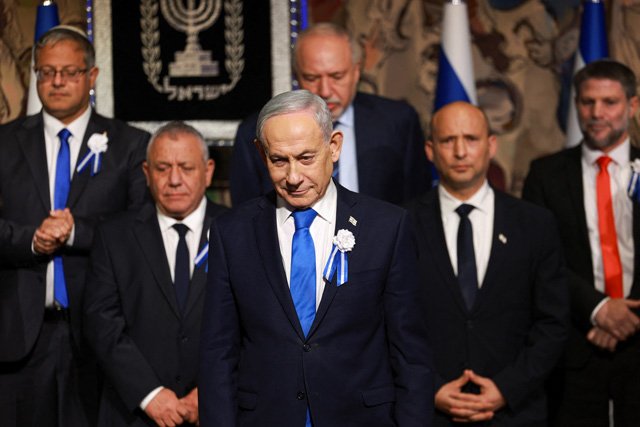
JERUSALEM, Nov 2026 : Israeli Prime Minister Benjamin Netanyahu has criticised opposition leader Gadi Eisenkot's efforts to form the next government with the support of Arab-majority parties Ra'am and the Joint List, describing the proposed coalition as a "dangerous government".
In a post on social media platform X, Netanyahu accused his political rivals of seeking to secure power with the backing of parties he characterised as supporters of terrorism. The Likud leader strongly opposed their possible inclusion in the next administration.
"Shame! It is forbidden to form a dangerous government with the terror supporters of Ra'am and the Joint List!" Netanyahu wrote.
His remarks come amid intense political negotiations following Israel's October 27 elections, which produced a hung parliament. Neither of the two main political blocs secured the 61 seats required for a majority in the 120-member Knesset, leaving the formation of the next government dependent on support from smaller parties.
Eisenkot has received the mandate from President Isaac Herzog to form the next government, despite Netanyahu's Likud-led bloc securing more seats in the election. According to the reported figures, Netanyahu's right-wing bloc won 53 seats, while Eisenkot's Yashar alliance secured 48.
However, Eisenkot received recommendations from political representatives commanding the support of 67 parliamentary seats, compared with 46 for Netanyahu. The recommendations included backing from Arab political factions Ra'am and the Joint List, which together account for 19 seats. Their support helped Eisenkot secure the presidential mandate on November 8.
Following his appointment, Eisenkot and his allies have begun coalition negotiations to gather sufficient parliamentary backing to form a government and win a confidence vote in the Knesset.
According to Israeli newspaper Haaretz, Eisenkot has an initial 28-day period to complete the process. If he fails to present a government for a confidence vote by December 6, Herzog may grant him an additional 14 days, provided there are indications that coalition negotiations are making progress. This could extend the deadline to December 20.
Eisenkot's reported 67-seat backing comprises 48 seats from the Jewish-led opposition alliance, including Yashar, Together, The Democrats and Yisrael Beiteinu. Ra'am contributes eight seats, while the Joint List accounts for another 11.
Netanyahu, meanwhile, received recommendations representing 46 seats, fewer than the 53 secured by his right-wing bloc in the election. The difference is attributed to United Torah Judaism (UTJ), which holds seven seats but decided not to endorse his bid to form the government.
The coming weeks will be critical for Eisenkot as he attempts to translate the parliamentary recommendations into a functioning coalition. Netanyahu's criticism has brought renewed attention to the political divisions over the possible participation of Arab parties in Israel's next government.
The negotiations will determine whether Eisenkot can assemble a majority and secure a confidence vote, or whether the political deadlock following the October election will continue.
(Disclaimer :The content of this article is sourced from a news agency and has not been edited by the Mavericknews30 team.)