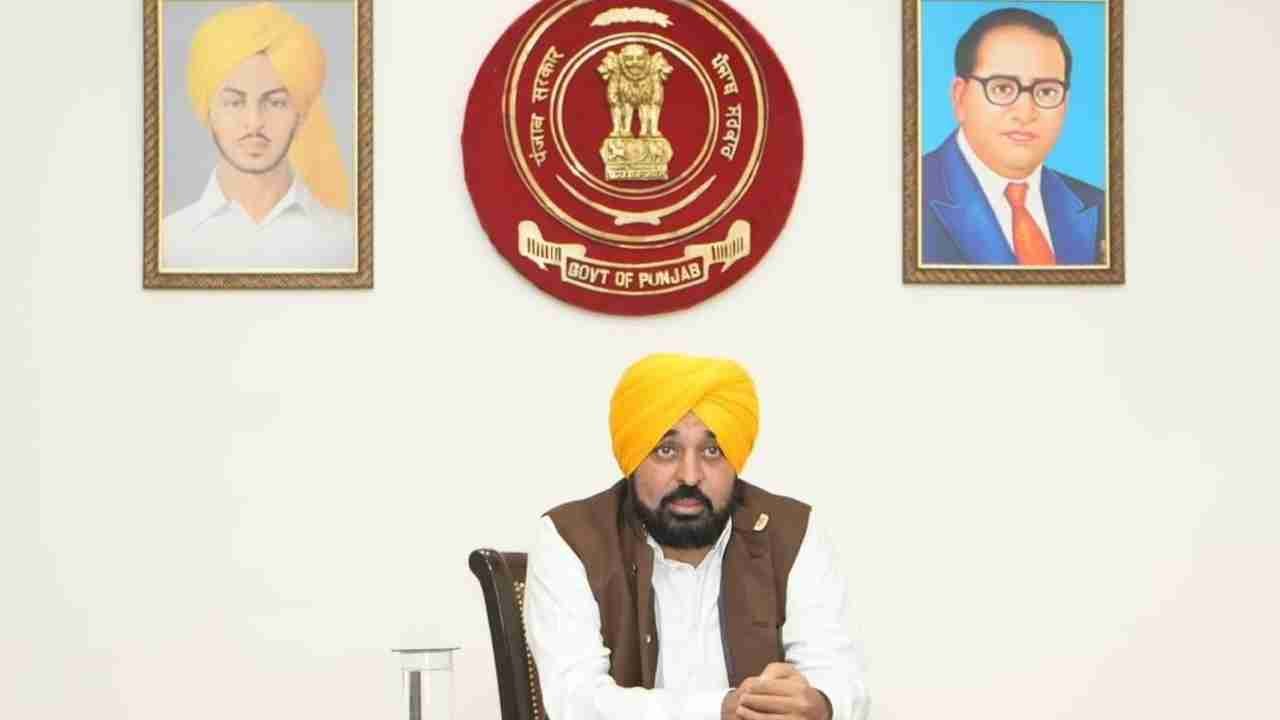
Chandigarh, September 2026: The Punjab Cabinet, headed by Chief Minister Bhagwant Singh Mann, on Sunday strongly criticised the BJP-led Central Government, alleging that it was repeatedly undermining Punjab’s constitutional rights and established procedures.
The Cabinet objected to the appointment of Justice Ashwani Kumar Mishra as Chief Justice of the Punjab and Haryana High Court without waiting for the state government’s views. It passed a resolution demanding that the appointment and swearing-in process be kept on hold until Punjab’s opinion is obtained and duly considered.
Posting on X, Chief Minister Mann alleged that the appointment without the state government’s consent amounted to a violation of the established Memorandum of Procedure and constitutional norms. He also accused the Centre of withholding more than Rs 9,000 crore in Rural Development Fund (RDF) dues, delaying the flood relief package announced for Punjab and changing the rules governing the Bhakra Beas Management Board (BBMB).
“The BJP-led Central Government is stabbing Punjab and its three crore people in the back,” Mann said, accusing the Centre of repeatedly interfering with the state’s rights.
The Chief Minister’s Office said the Centre’s alleged interference had reached an unprecedented level, claiming that Punjab had repeatedly been deprived of its rights under the Constitution and various rules and laws.
The state government alleged that changes made to the BBMB rules had ended the traditional practice of ensuring that the Member (Power) was selected from Punjab, thereby weakening the state’s representation over its rivers and dams. It also referred to the Centre’s proposal to centralise Panjab University, which Punjab had strongly opposed.
The Cabinet further alleged that the Centre had withheld more than Rs 9,000 crore in RDF dues owed to Punjab, affecting farmers who are among the intended beneficiaries of infrastructure created through these funds. It also pointed out that a Rs 1,600-crore relief package announced by the Prime Minister following the devastating floods in Punjab in 2025 had not yet been released.
Referring to a notification dated September 5, 2026, the Cabinet said the President of India, through the Ministry of Law and Justice, had ordered the appointment of Justice Ashwani Kumar Mishra as Chief Justice of the Punjab and Haryana High Court without obtaining the views of the Punjab Government.
The Cabinet cited Paragraph 6 of the Memorandum of Procedure for the Appointment and Transfer of Chief Justices and Judges of High Courts. According to the state government, the provision requires the Union Minister of Law and Justice to obtain the views of the concerned state government after receiving the recommendation for appointment from the Chief Justice of India. These views are then to be considered before the proposal is submitted to the Prime Minister, who advises the President on the appointment.
The Chief Minister’s Office also referred to a July 25, 2026, Press Information Bureau statement in which the Union Minister of State for Law and Justice reportedly said that appointments to the higher judiciary involve a continuous and collaborative process between the executive and judiciary, requiring consultation with constitutional authorities at both the state and Centre levels.
According to the Punjab Government, the Supreme Court Collegium, through its resolution dated August 6, 2026, had recommended the appointment of Justice Ashwani Kumar Mishra, then Acting Chief Justice of the Punjab and Haryana High Court, as its Chief Justice. On August 12, Punjab received a communication from Union Minister of State for Law and Justice Arjun Ram Meghwal seeking the state’s views under Paragraph 6 of the Memorandum of Procedure.
The Cabinet alleged that the Centre notified the appointment without waiting for Punjab’s response, describing the move as a disregard of the prescribed procedure and constitutional norms.
It further argued that there is no clearly specified deadline for the state government or Governor to communicate their views in the case of a Chief Justice appointment.
The Cabinet also cited the 2024 case involving Justice Gurmeet Singh Sandhawalia. It claimed that although the Supreme Court Collegium had recommended his appointment as Chief Justice of the Madhya Pradesh High Court, the proposal was not notified for more than two months, allegedly because the Madhya Pradesh Government’s recommendation had not been received. His appointment was subsequently changed to the Himachal Pradesh High Court.
The Punjab Cabinet said the contrasting handling of judicial appointments created a perception of unequal treatment when judges from Punjab were considered for appointments outside the state compared with appointments of judges from other High Courts to Punjab.
The Cabinet said such developments had compelled the state government to raise concerns over Punjab’s constitutional rights and fair treatment within India’s federal structure.
It maintained that transparency, procedural safeguards and judicial fairness required the appointment and swearing-in process to remain suspended until Punjab’s views were formally received and duly considered by the competent authority. Only thereafter, it said, should the matter proceed in accordance with the established Memorandum of Procedure.